Shirley Temple From Child Star to Diplomat and the Architectural Legacy of a Hollywood Icon

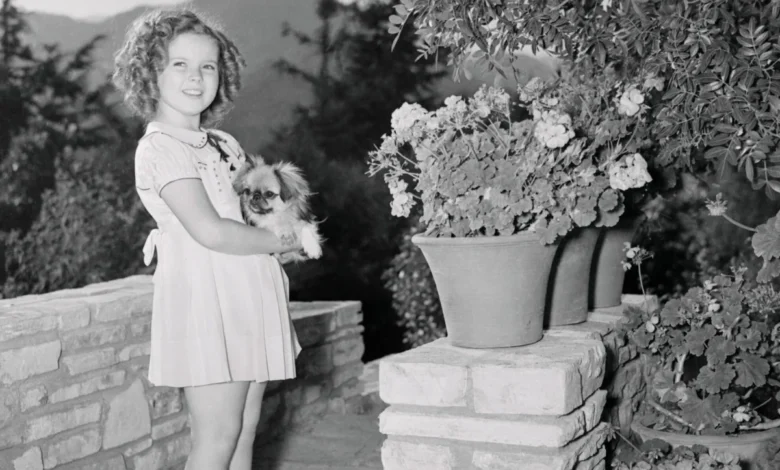
Shirley Temple remains one of the most significant figures in the history of American cinema, serving as a cultural touchstone whose influence extended far beyond the silver screen. Born on April 23, 1928, in Santa Monica, California, Temple began her film career at the age of three, eventually becoming the most successful child actor in the world. Her trajectory—from a precocious performer who saved a major film studio from bankruptcy to a high-ranking United States diplomat—represents a unique chapter in American history. While her curly hair and dimpled smile are her most recognizable traits, her life was also characterized by a sophisticated relationship with architecture, design, and the domestic spaces that shielded her from the intensity of global fame.

The Economic and Cultural Phenomenon of the 1930s
In 1934, the release of the Fox Film Corporation feature Stand Up and Cheer! launched Shirley Temple into a level of stardom that had rarely been seen before. Between 1935 and 1938, she was the number-one box office draw in the world, consistently outperforming adult superstars such as Clark Gable, Joan Crawford, Robert Taylor, and Greta Garbo. This was not merely a matter of popularity; it was a matter of economic survival for the film industry.

At the time of Temple’s rise, the Fox Film Corporation was facing severe financial distress. The revenue generated by Temple’s films, which included hits like Bright Eyes, The Little Colonel, and Heidi, provided the capital necessary for the studio to merge with Twentieth Century Pictures, forming the powerhouse 20th Century Fox. By the mid-1930s, Temple was earning a salary of $1,250 per week, a figure that eventually rose to $10,000 per week—an astronomical sum during the Great Depression.

The cultural impact of Temple was equally profound. President Franklin D. Roosevelt famously credited her with helping to maintain American morale during the nation’s darkest economic era. "During this Depression, when the spirit of the people is lower than at any other time, it is a splendid thing that for just 15 cents an American can go to a movie and look at the smiling face of a baby and forget his troubles," Roosevelt remarked. This sentiment highlighted her role not just as an entertainer, but as a symbol of resilience and optimism.

The Architecture of a Child Star’s Life
As Shirley Temple’s fame reached a fever pitch, her family sought to provide her with a sense of normalcy through their residential choices. The demand for Temple was so high that her parents, Gertrude and George Temple, had to meticulously manage her environment to protect her privacy.

One of the most notable aspects of her childhood estate was the sheer volume of adoration she received from the public. At the height of her career, Temple received thousands of fan letters and gifts every week. This influx was so great that the family eventually required a dedicated cottage on their property specifically to store and organize these items. This "gift cottage" served as a physical manifestation of her global impact, housing everything from handmade dolls to elaborate toys sent by admirers from every corner of the globe.

The Temple family lived in several notable residences in Southern California. In the early 1930s, they resided in a modest home in Santa Monica, but as her earnings grew, they moved to a more secure and expansive estate in Brentwood. This home, located on Rockingham Avenue, was designed to be a sanctuary. It featured a white-walled, red-tiled roof aesthetic typical of the California Colonial Revival style. The property included a playhouse that was a miniature version of a real home, complete with electricity and plumbing, allowing Temple to play in a world that mirrored her own reality but on a scale suited to a child.

Transition to Interior Design and Personal Evolution
As Temple matured, her interests shifted from the performance arts to the decorative arts. Following her retirement from films in 1950 at the age of 22, she briefly pursued a career in interior design. This transition was a logical progression for a woman who had spent her childhood on meticulously crafted film sets and in a series of elegant homes.

Her eye for design was characterized by a preference for classic, functional elegance. This period of her life served as a bridge between her identity as "America’s Little Darling" and her future role as a serious public servant. Her involvement in interior design also reflected a desire for agency and a way to define her own space—literally and figuratively—after years of being directed by studio executives and choreographers.

A Chronology of Diplomatic Achievement
The most remarkable transformation in Shirley Temple’s life occurred when she entered the realm of international relations. Using her married name, Shirley Temple Black, she embarked on a second career that lasted over two decades and took her to the highest levels of the U.S. government.

- 1969: President Richard Nixon appointed her as a delegate to the 24th United Nations General Assembly. In this role, she focused on environmental issues and refugee problems, surprising critics who initially doubted her qualifications.
- 1974–1976: She served as the United States Ambassador to Ghana. During her tenure, she became immensely popular in the West African nation, proving her skill at "soft diplomacy" while handling complex bilateral trade and aid agreements.
- 1976–1977: She was appointed the first female Chief of Protocol of the United States, overseeing all diplomatic ceremonies and visits to the White House.
- 1989–1992: President George H.W. Bush appointed her as the United States Ambassador to Czechoslovakia. This was perhaps her most significant assignment, as she served during the Velvet Revolution, which saw the fall of communism in the country. She was present in Prague when the transition to democracy occurred, earning praise for her calm and professional handling of a volatile political situation.
Supporting Data and Broader Impact
The scale of Shirley Temple’s legacy can be quantified through both her cinematic and political achievements. In the 1930s, "Temple Mania" resulted in a merchandising empire that was unprecedented. The Shirley Temple doll, manufactured by the Ideal Novelty and Toy Company, saved that company from bankruptcy and became one of the most successful toys in history, selling millions of units.

In the political sphere, she broke through significant gender barriers. Her appointment as Chief of Protocol was a milestone for women in the State Department. Throughout her diplomatic career, she was known for her rigorous preparation. Colleagues often noted that she would arrive at briefings with more notes and data than many career diplomats, a work ethic she likely developed during her years of memorizing scripts and dance routines as a child.

Analysis of her impact suggests that Temple was the first modern "multi-hyphenate" celebrity who successfully pivoted from entertainment to a high-level professional career without the scandals that often plague child stars. Her ability to transition into diplomacy was aided by her international recognition; leaders around the world felt they already knew her, which she utilized as a tool for American interests.

The Woodside Estate and Final Years
In her later years, Shirley Temple Black settled in Woodside, California, an affluent community in Northern California. Her home there, a sprawling ranch-style estate, reflected her mature taste and her need for a quiet life away from the Hollywood limelight. The house was filled with artifacts from her diplomatic travels and memorabilia from her childhood, though she famously kept her Oscars and awards in a relatively modest display, prioritizing her family life and her work for the government.

Her death in 2014 at the age of 85 marked the end of an era. She left behind a legacy that is studied by both film historians and political scientists. The "Shirley Temple" brand remains a multi-million dollar industry, but her true contribution was her proof that an individual could redefine their identity and serve their country with the same dedication they once gave to the arts.

From the gift cottage in Brentwood to the embassies in Accra and Prague, the spaces Shirley Temple inhabited tell the story of a woman who was both a product of the American dream and one of its most effective architects. Her life remains a testament to the power of resilience, the importance of professional evolution, and the enduring impact of a public figure who uses their platform for the greater good.