Spanish Singer-Songwriter Judeline Reflects on the Global Phenomenon of Karol G’s Chart-Topping Hit BbY WoW and Her Breakthrough Collaborative Era

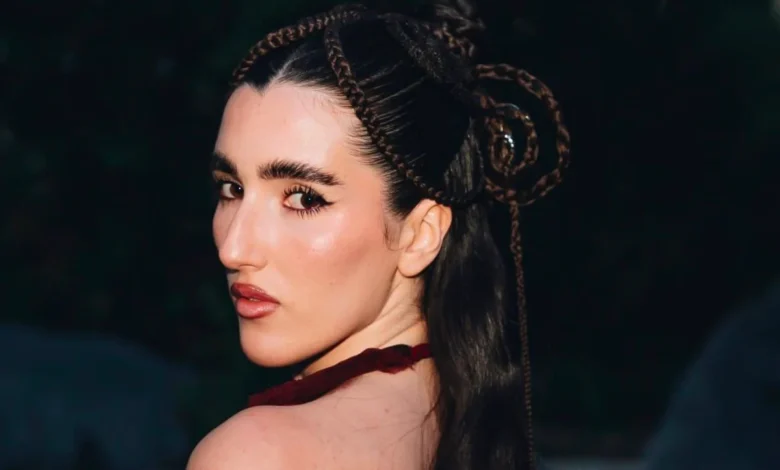
The contemporary landscape of global Latin music is defined by cross-continental partnerships, bridging the vibrant sounds of South America, the Caribbean, and Europe. Among the most successful recent manifestations of this cultural exchange is the track "BbY WoW," a smooth club-oriented single spearheaded by Colombian superstar Karol G. The song has rapidly ascended international music charts, capturing the number one position on the Spotify global charts and dominating the Billboard Global 200. Driven by robust streaming numbers that include 78 million listens on Spotify and 37 million views on YouTube, the track has established itself as a commercial juggernaut.
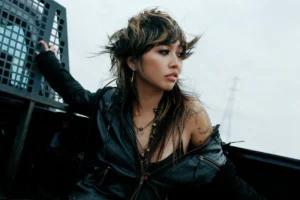
However, the international triumph of "BbY WoW" is not solely a testament to Karol G’s formidable star power. The track’s distinctive auditory palette is shaped by a trio of diverse musical talents, notably the dreamy-eyed Spanish producer-artist Rusowsky and the enchanting Spanish singer-songwriter Judeline. While Rusowsky’s innovative production aesthetics have long been celebrated within Madrid’s avant-garde music circles, Judeline’s involvement runs even deeper. As a primary architect of the soundscape for Karol G’s acclaimed studio album No Me Arrepiento de Sentir Tanto, Judeline served as one of the Colombian artist’s most trusted creative confidantes during the record’s development.
Despite co-writing "BbY WoW" alongside her contributions to three other tracks on the album—including "Matadora," "Te Llevas To," and "Final Feliz"—Judeline admits that the sheer magnitude of the single’s success came as a surprise. Reflecting on the track’s meteoric rise from her home in Spain, the artist candidly addressed the unpredictability of the modern streaming ecosystem.
"I didn’t expect it at all," Judeline shared in a recent interview. "I knew it was going to go well because obviously, the exposure Karol has is huge. But I think what’s really lovely is that no one knows what song is going to connect most with people, so we’ve been celebrating."
The Genesis of a Cross-Atlantic Collaboration
The journey toward No Me Arrepiento de Sentir Tanto began long before the album debuted at the upper echelons of the international charts. For Karol G, the creative process involved stepping outside her familiar recording environments to tap into the emerging European alternative scene. This led her to connect with Judeline and Rusowsky, two artists who have been instrumental in spearheading a new wave of alternative pop and electronic music in Spain, alongside peers like Ralphie Choo.
For Judeline, sharing this milestone with longtime friend and collaborator Rusowsky adds a deeply personal dimension to her recent success. Having crossed paths when Judeline first arrived in Madrid to pursue her musical ambitions, the two artists have watched their respective careers evolve in tandem.
"Being on this song with Rusowsky makes me a thousand times happier than if I were on it alone," Judeline noted. "We’ve grown up together throughout our careers. When I look back, the evolution we’ve had is super beautiful, hand-in-hand with both him and Ralphie Choo. And with Karol too, because she has such a beautiful energy and was so kind to me during the process. I’m happy this is happening with people who, besides being great artists, I consider friends."
The collaborative ecosystem fostered during the creation of the album was characterized by an organic, low-pressure dynamic. Despite Karol G’s status as a global powerhouse preparing for high-profile performances such as Coachella, her approach in the studio was marked by profound humility, sweetness, and emotional vulnerability. Judeline notes that both artists were navigating similar emotional terrain during the writing sessions, creating an environment where mutual vulnerability transformed the recording studio into a therapeutic space.
"It was very organic, honestly," Judeline explained regarding the songwriting sessions. "I hadn’t written for other people in a long time; I’d kind of put it aside, but I felt that it could be a good thing with Karol. She gave me such good energy, and I also felt like I had space to contribute something. We were both going through something very similar emotionally, and we were at a very similar point in our lives. I think that’s why we connected."
Bridging Perspectives: Literal Realism Meets Ethereal Metaphor
One of the defining artistic elements of No Me Arrepiento de Sentir Tanto is the palpable presence of female authorship across its tracklist. Karol G has frequently emphasized that several songs on the project distinctly reflect feminine perspectives, narratives, and emotional processing—a dynamic that Judeline compares to literary or cinematic storytelling.
"I think there are things that only a woman can write, yes," Judeline observed. "Like in a movie, it’s very noticeable when a character is written by a woman or a man. I think music is the same."
This collaboration of distinct writing styles yielded a fascinating creative tension between Karol G’s literal, direct lyricism and Judeline’s penchant for poetic, metaphorical imagery. While Judeline’s characteristic ethereal lyricism occasionally risks ambiguity, the pairing with Karol G’s direct narrative approach established a balanced equilibrium that resonated widely with listeners.
"Sometimes, I need a bit more of a sense of being literal," Judeline admitted. "My lyrics are always very metaphorical and ethereal… So I learned a lot from Karol and her songwriters. They had a way of explaining that was very direct, and when they needed a more poetic and mysterious touch, well, there I was."
This synthesis is prominently displayed on tracks like "Final Feliz," which Judeline initially drafted alongside producer Tyler Spy during a period of personal heartbreak. Recognizing that Karol G was navigating analogous emotional complexities at the time, Judeline shared the demo with the Colombian star. Upon hearing it, Karol G recorded her own vocals, embedding her distinct energy into the composition and cementing its place on the final album tracklist.
The Sonic Architecture of BbY WoW
At the core of "BbY WoW"’s infectious appeal is its strategic use of an iconic auditory foundation: the legendary Coolie Dance Riddim. A staple of Caribbean dancehall and hip-hop production, this classic beat has underpinned numerous past global hits, most notably Nina Sky’s 2004 club anthem "Move Ya Body."
Rather than relying solely on the nostalgic, high-energy propulsion of the riddim, however, the track introduces an emotional duality that defines its broad cultural resonance. Judeline points to this contrast as the secret to the song’s universal appeal, describing the single as a manifestation of "sad reggaeton."
"I think that beat is iconic, wherever you put it," Judeline said. "But I think what makes the song special is that the beat is iconic and it’s going to make you dance a lot, obviously, but there’s a sensitivity and a feeling that’s kind of like sad reggaeton… There’s someone who wants to dance and wants to go to the club but who is brokenhearted and can connect with the song in the same way. I think it’s very universal in terms of feelings."
This emotional depth carried over into other standout collaborations on the album. On tracks like "Te Llevas To," Judeline’s ethereal tendencies were pushed to the forefront, while upbeat cuts like "Matadora" allowed her to explore a bolder, more playful persona alongside Karol G.
Broader Cultural Impact and Future Horizons
Beyond her triumphs in the recording studio, Judeline’s artistic footprint is expanding into other mediums. She recently made her acting debut in the film La Bola Negra, directed by renowned Spanish filmmakers Los Javis. Transitioning into the cinematic arts has opened new creative avenues for the singer, who expressed enthusiasm about pursuing future acting projects.
This multidisciplinary expansion mirrors a broader cultural renaissance currently taking place in Spain. Across sports, music, and film, Spanish artists and creators are achieving unprecedented international recognition, fostering a renewed sense of national pride and cultural export.
"I’m super proud of Spain right now, honestly," Judeline reflected. "I feel like in sports, music, and film, we’ve had big wins. It’s been a super nice year. There are special things happening and that more people are looking at this country in a cultural sense."
As she prepares to bring her current touring cycle to a close, Judeline plans to pivot away from the rigorous demands of the live performance circuit to focus on artistic consumption and incubation. By immersing herself in cinema, literature, and music, the rising star intends to gather fresh inspiration for her next musical era.
"I need to find inspiration and peace," she concluded. "Once the tour is done, I’m excited to be able to immerse myself in art, watch movies, listen to music, read books—absorb everything I can to inspire me to create the next era in the best way possible."