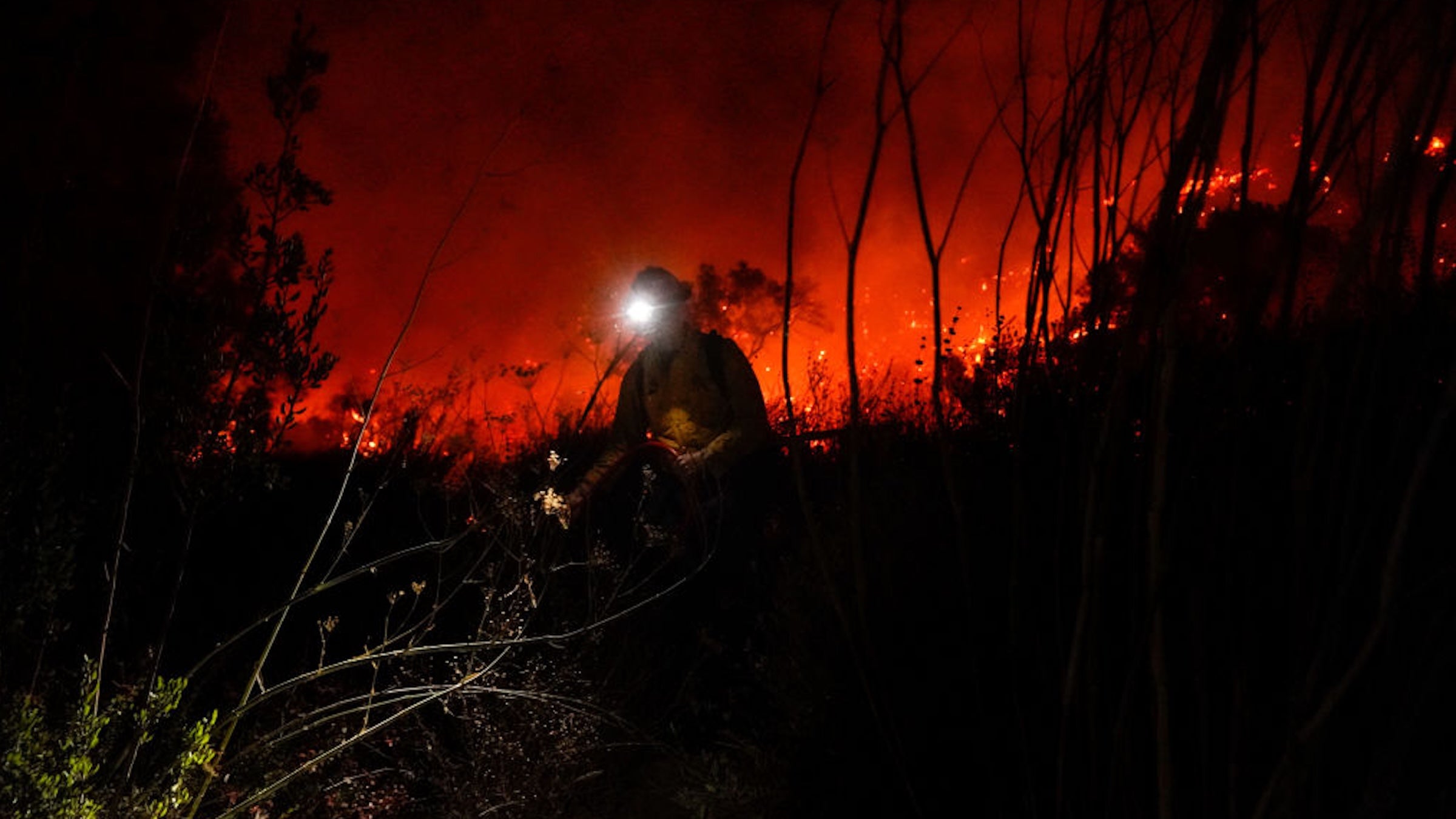
As the 2026 wildfire season reaches a critical juncture, outdoor enthusiasts and fire management experts are sounding the alarm regarding the increased risks facing hikers and campers in the American West. In June 2026, an incident near Arizona’s Vermillion Cliffs National Monument served as a stark reminder of how quickly the wilderness can transform from a recreational haven into a life-threatening environment. A traveler on a remote highway received an emergency SOS message indicating that the Rock Canyon Fire, burning near the Arizona-Utah border, had triggered immediate evacuations for those on the Arizona National Scenic Trail. This event underscores a broader national crisis, as experts predict that 2026 could be one of the most volatile and destructive wildfire seasons in recent United States history.
The convergence of several factors—extreme multi-year droughts, a significantly overstretched firefighting workforce, and a controversial restructuring within the U.S. Forest Service—has created a "perfect storm" for catastrophic blazes. To address these rising dangers, veteran fire managers Bill Kaage and Riva Duncan have provided a comprehensive framework for survival and response for those caught in the backcountry. Kaage, who retired in 2022 as the chief for the National Park Service Division of Fire and Aviation, brings four decades of experience to the table. Duncan, a former U.S. Forest Service Fire Chief and current president of the advocacy group Grassroots Wildland Firefighters, offers a perspective grounded in both high-level strategy and the on-the-ground realities of modern wildland firefighting.
The Landscape of Risk: Contextualizing the 2026 Season
The 2026 season follows a decade of escalating fire behavior. According to data from the National Interagency Fire Center (NIFC), the average number of acres burned annually has nearly doubled since the 1990s. The 2026 forecast is particularly grim due to the "triple threat" of environmental and administrative challenges. First, the restructuring of the Forest Service has led to shifts in how crews are deployed, with some critics arguing that local knowledge is being sacrificed for centralized management. Second, staffing shortages continue to plague the industry; Grassroots Wildland Firefighters reports that many veteran sawyers and hotshots are leaving the profession due to low pay and mental health burnout. Third, the "megadrought" affecting the Southwest has reached record levels, leaving timber and brush with moisture content levels lower than kiln-dried lumber.
Against this backdrop, the survival of individuals in the backcountry depends less on luck and more on an informed, clinical response to fire behavior.
Immediate Response: The Critical First Minutes
The moment a wildfire is spotted in the backcountry, the window for safe egress begins to close. Expert advice dictates that the first action must be communication. If cellular service is available, dialing 911 is the immediate priority. One of the most common mistakes made by hikers is the assumption that a fire has already been reported. In remote areas, a single hiker might be the only witness to a lightning strike or a new ignition for several hours.
Bill Kaage emphasizes the importance of data collection during this initial report. "If you have a map or a GPS device, note your exact coordinates and the estimated location of the smoke," Kaage advises. He also suggests noting the "color of the smoke and the type of vegetation involved." White smoke often indicates light fuels like grass, while dark, thick smoke suggests heavy timber or brush. This information is vital for fire managers determining the initial attack strategy.
Simultaneously, hikers must assess their own position relative to the topography. Being "above the fire" or "in a canyon" significantly increases risk. The immediate protocol is to stop all recreational activity, pack gear quickly but efficiently, and begin moving toward a known exit point. Duncan notes that groups must pace themselves based on their slowest member, as panic-induced separation can lead to secondary search-and-rescue emergencies.
Topography and Fire Behavior: The Downhill Mandate
One of the most dangerous misconceptions in wilderness survival is the idea that one should run uphill to escape a fire. Physics and fire behavior dictate the opposite. Fires travel significantly faster uphill than they do on level ground or downhill. This is due to two primary factors: convective heat and radiant heat.
As heat rises, it "pre-heats" the vegetation above the flames, drying it out and making it much easier to ignite. This creates a chimney effect, especially in narrow canyons or steep slopes. "We all remember that heat rises," Duncan explains, "but the radiant heat from the flames also dries out the vegetation uphill. That dried-out vegetation becomes immediate fuel." Furthermore, mountain winds typically flow upslope during the heat of the day, effectively pushing the fire toward the summit.
The strategic directive is clear: move downhill. By moving toward lower elevations, hikers are moving away from the path of pre-heated fuels and toward areas where fire spread is generally slower.
Seeking a Safety Zone: The "One Foot in the Black" Philosophy
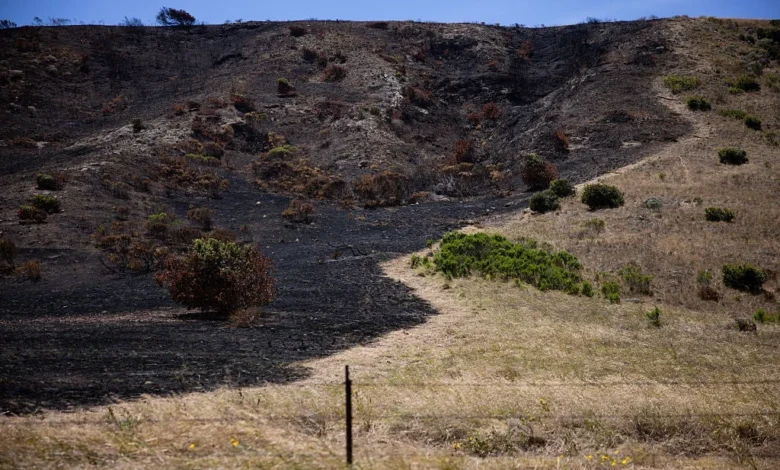
If outrunning a fire becomes impossible, the focus shifts from evacuation to survival in place. Firefighters use a mantra known as "keeping one foot in the black." This refers to the "black"—areas that have already been consumed by fire. While it may seem counterintuitive to step into a scorched landscape, a thoroughly burned area is often the safest place to be because the fuel has already been exhausted.
"It becomes your zone of safety," Kaage says. However, not all burned areas are created equal. Duncan warns that a "cool" burn might leave behind unburned shrubs or lower tree branches that can re-ignite if the wind shifts. A "safe" black area is one where the fire burned "hot," leaving only ash and mineral soil.
Other potential safety zones include:
- Rocky Scree Slopes: Large areas of rock with no vegetation can provide a buffer, provided there is no brush growing between the stones.
- Wet Meadows and Bogs: High-moisture areas can resist ignition, though they do not protect against smoke inhalation.
- Dirt Roads and Ditches: These can serve as a last resort, providing a break in the fuel load.
The Hollywood Myth: Water and Airway Protection
Popular media often depicts survivors submerged in rivers or breathing through wet cloths. Experts warn that these tactics can be fatal. While a river might protect the skin from flames, it does nothing to protect the lungs from superheated gases. In steep canyons, the air above a river can become a conduit for convective heat, leading to "airway burns" that cause the throat to swell shut within minutes.
Duncan highlights a critical danger regarding wet cloths: "The heat can turn the moisture in the cloth into steam, which can burn your airway or lungs more severely than dry air." The recommendation is to use a dry cloth or garment to filter out large ash particles, though this will not filter out carbon monoxide or other toxic gases.
Regarding hydration, Kaage stresses that the body must be hydrated to regulate its internal temperature. "Let your body do the work of cooling you from within," he says. Dehydration leads to confusion and physical collapse, both of which are death sentences in a fire environment.
Gear Management and Apparel
In a life-or-death race against a fire front, weight is the enemy. While hikers are generally loath to abandon expensive equipment, there is a point where a heavy pack becomes a liability. Kaage suggests keeping the pack as long as it contains survival essentials—water, communication devices, and first-aid kits—but ditching it the moment speed becomes the deciding factor in survival.
Furthermore, the material of one’s clothing can determine the severity of injuries. Most modern hiking gear is made of synthetic fibers like polyester or nylon. These materials have low melting points; in the presence of intense radiant heat, they can melt onto the skin, causing horrific injuries. Duncan advocates for natural fibers—wool, cotton, or silk—which do not melt and provide a better (though still limited) degree of protection against radiant heat.
The Broader Impact: Policy and Future Outlook
The 2026 wildfire crisis is not merely a matter of bad luck; it is the result of long-term environmental trends and policy decisions. The restructuring of the Forest Service, mentioned by experts, has come under intense scrutiny in Washington D.C. as lawmakers debate the "Wildfire Response and Staffing Act of 2026." This proposed legislation aims to decouple fire management budgets from other forestry activities to ensure that "fire borrowing"—the practice of stripping funds from prevention programs to pay for suppression—is permanently ended.
The implications for the public are clear: the era of "passive" wilderness recreation is over. Hikers must now take an active role in fire intelligence. This includes using technology like the FEMA app for real-time National Weather Service updates and opting into local county emergency alerts.
As the Rock Canyon Fire and the Santa Rosa Island Fire (which burned 18,000 acres in June) demonstrate, the 2026 season is testing the limits of our national response infrastructure. For those who venture into the backcountry, survival is no longer just about carrying a map and a compass; it is about understanding the thermodynamics of a landscape in flux and having the discipline to execute a survival plan when the horizon turns to smoke. The advice from Kaage and Duncan serves as a vital blueprint for navigating a world where the wilderness is increasingly defined by the presence of fire.
Related posts: