Manchester United: Players to return to training on Tuesday but uncertain if Michael Carrick will be in charge

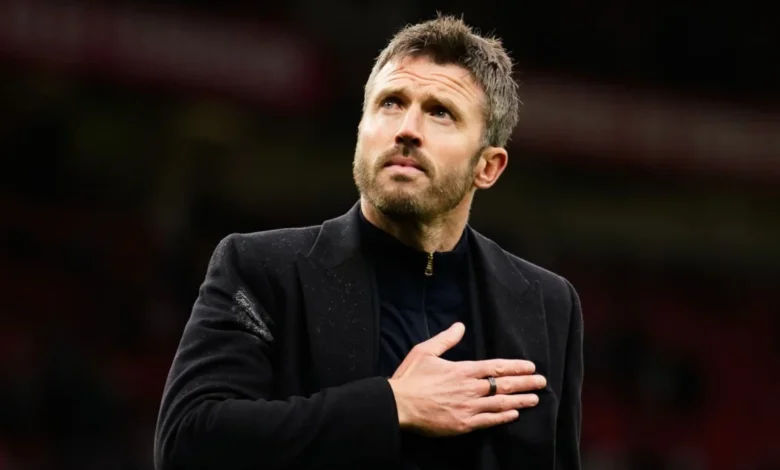
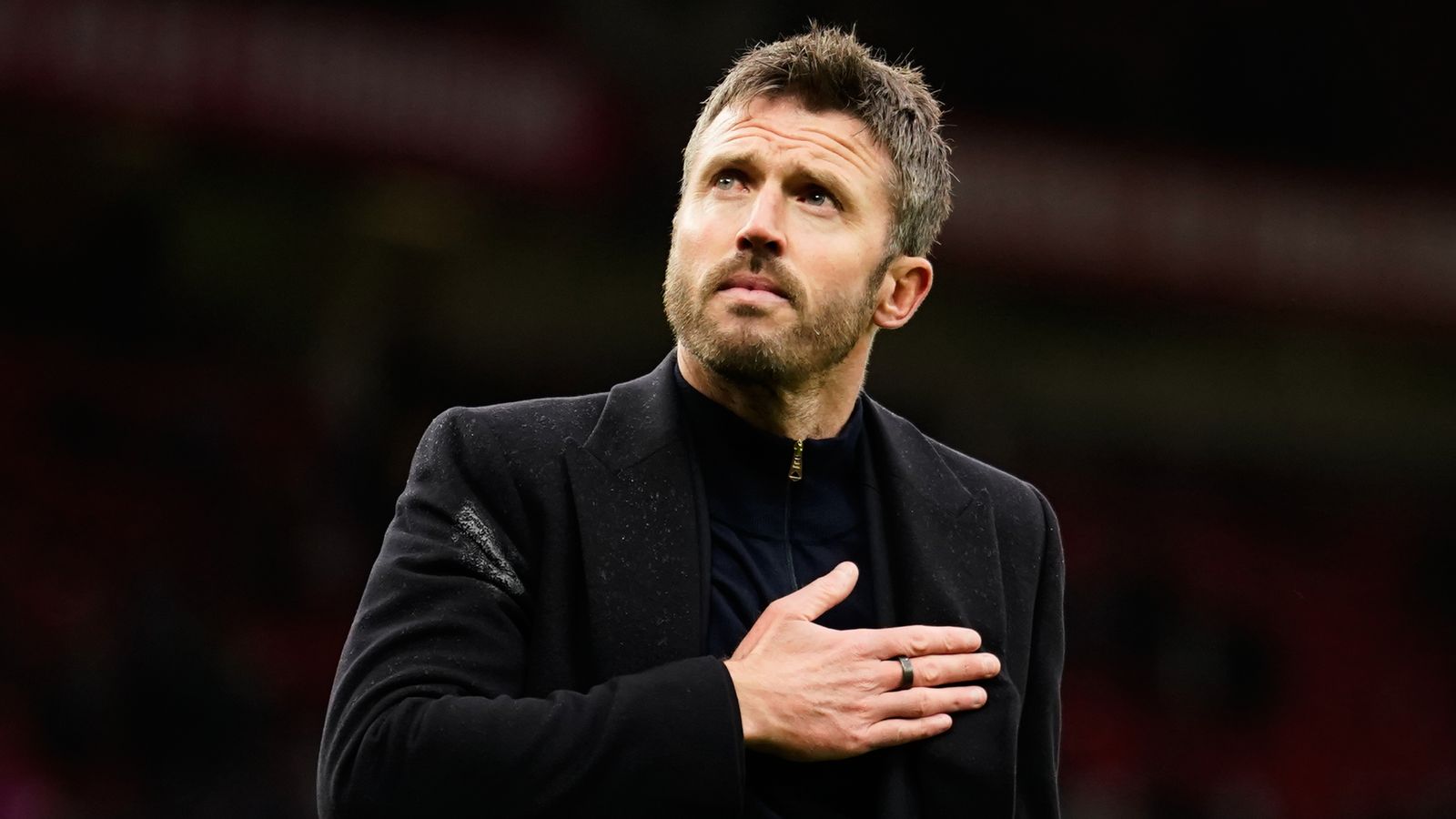
The atmosphere at the Carrington training complex on Monday was described as bizarre and tense, as Manchester United’s senior leadership convened to deliberate on the club’s immediate direction. Chief Executive Omar Berrada and Director of Football Jason Wilcox were present at the base to assess the fallout from Sunday’s sobering 3-0 defeat at the hands of Bournemouth at Old Trafford. While players were officially afforded a day off, the presence of senior management, alongside a focused, behind-closed-doors appearance by Carrick at an U21 fixture against Hull City, underscored the gravity of the situation. With the first team scheduled to return to training this Tuesday, the question remains whether Carrick will be the individual tasked with leading the session or if the club is on the precipice of a significant managerial change.
A Season of Unprecedented Struggle
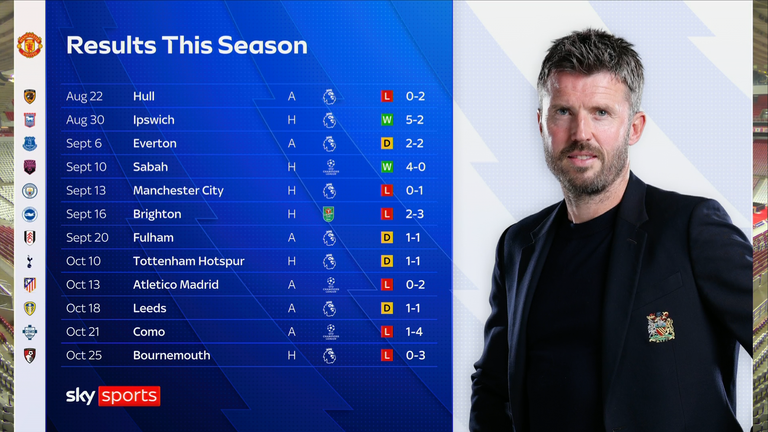
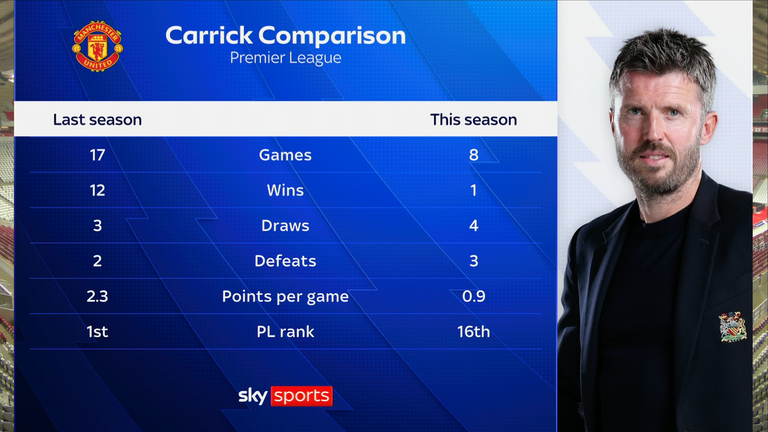
The current campaign has been statistically catastrophic for Manchester United, marking their worst start to a Premier League season in the club’s modern history. After seven matches, the side sits in 16th place with a meager seven points, hovering just one point above the relegation zone. This decline is particularly jarring given the high expectations established during the previous season.
Following the departure of Ruben Amorim in early 2026, Carrick was appointed on an interim basis in January. His initial tenure was hailed as a tactical masterclass; he stabilized a fragmented dressing room and secured 12 victories in 17 matches, ultimately guiding the club to a third-place finish and a return to the prestigious Champions League. That performance saw him nominated for the Premier League Manager of the Season award and culminated in the club handing him a long-term contract extension until 2028. However, the current reality stands in stark contrast to that success. United are currently winless in eight games across all competitions, a streak that has alienated the fanbase and placed the hierarchy under immense pressure to act.
The Breakdown of Authority and Form
The recent slide has been exacerbated by internal friction. The decision to drop club captain Bruno Fernandes for the Bournemouth defeat was a defining moment, coming in the wake of Fernandes openly questioning the tactical approach following a heavy 4-1 loss in the Champions League to Como. The fallout from that selection choice was evident on the pitch against Bournemouth, where the side looked devoid of both structure and morale.
Tactical rigidity and a perceived lack of cohesion have become the central themes of the current malaise. While the board is reportedly conducting a comprehensive review of the "next steps," the delay in making a definitive decision regarding Carrick’s future suggests a complex internal debate. The club is balancing the necessity for immediate performance improvements against the potential for long-term disruption.
Chronology of a Crisis
The timeline of the current instability can be traced back to the final weeks of the previous season, but the pressure intensified sharply in October 2026.
- Mid-October 2026: The Champions League defeat to Como exposed deep-seated defensive vulnerabilities and tactical limitations, leading to public questioning of the manager’s approach by key players.
- Late October 2026: A 3-0 home defeat to Bournemouth served as a catalyst for a crisis meeting at Carrington.
- Monday, October 26, 2026: Omar Berrada and Jason Wilcox met at the training ground to discuss the future of the coaching staff. Michael Carrick was present on-site to watch the U21s but reportedly held no formal discussions with the executive team.
- Tuesday, October 27, 2026: Scheduled return to first-team training, with the managerial position still officially held by Carrick but subject to ongoing review.
The Complexity of a Managerial Transition
Industry analysts suggest that the delay in sacking a manager who is clearly under pressure often points to two distinct possibilities. First, the club may be struggling to secure a high-caliber successor. The "worst-case scenario" for a club of Manchester United’s stature is to dismiss a manager without a clear, superior alternative already lined up, which would leave the team in a state of administrative limbo.
Second, the club is acutely aware of the emotional connection between Michael Carrick and the supporters. Carrick is a club legend, and his popularity remains a significant factor in the decision-making process. The board is reportedly keen to handle any potential separation with the same level of dignity and decorum that was afforded to Ole Gunnar Solskjaer in 2021. There is a clear mandate from ownership—including Sir Jim Ratcliffe—to ensure that if a change is made, it is done in a manner that avoids further alienating the match-going public.
Broader Implications and Tactical Analysis
The problems at Manchester United are widely viewed as systemic rather than merely a product of the current head coach. Critics, including former players and pundits, have pointed to a recurring cycle of underperformance that spans multiple managers, suggesting that the issue lies in the recruitment, culture, and structural foundation of the club.
From a tactical perspective, the squad has struggled to adapt to a consistent identity. Injuries have played a role, with players like Manuel Ugarte and Benjamin Sesko being monitored closely by medical staff, but the lack of intensity during the Bournemouth game was alarming. The players were notably booed by sections of the Old Trafford crowd, while, paradoxically, Carrick was applauded by some as he left the pitch—a reflection of his enduring personal standing at the club.
The Role of Leadership
The presence of Sir Jim Ratcliffe’s influence within the hierarchy adds a new dimension to the decision-making process. The current administration has emphasized long-term planning and objective, data-driven assessment. The fact that Wilcox and Berrada spent the day at Carrington without making an immediate public announcement suggests that the review process is rigorous. They are likely evaluating whether the current squad is underperforming due to the manager’s tactics or if there is an inherent deficiency in the squad’s construction that no coach could currently bridge.
As the team prepares for the next round of fixtures, the silence from the club regarding the head coach’s future is deafening. The training ground is usually a place of preparation and focus; today, it is a site of speculation. The players, the staff, and the supporters are all waiting for a signal from the board. Whether that signal comes in the form of a public vote of confidence or a formal parting of ways will define the remainder of Manchester United’s season.
For now, the club exists in a state of suspended animation. The data shows a team in freefall, the optics suggest a fractured relationship between the dugout and the boardroom, and the history of the club dictates that patience is rarely a virtue when performance dips to such historic lows. As the clock ticks toward the next matchday, the board’s inability to act quickly reflects the extreme difficulty of navigating the path between maintaining the club’s values and fulfilling the urgent, competitive demands of modern professional football. The next 48 hours will likely be the most consequential for Manchester United in the post-Amorim era.
Related posts: