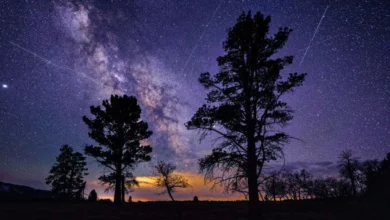
Chasing the False Dawn: How to Spot and Photograph the Elusive Zodiacal Light This September


Stargazing often presents a clear paradox: observers frequently know precisely what they are looking for, yet struggle with the lingering doubt of whether they are actually seeing it. Among the most subtle and debated celestial phenomena is the zodiacal light, historically dubbed the "false dawn." For years, astronomy enthusiasts and astrophotographers have chased this elusive phenomenon, which initially presents as a deceptive shift in horizon brightness. To the untrained eye, distinguishing the zodiacal light from distant light pollution, urban skyglow, or the earliest hints of morning nautical twilight can prove exceptionally difficult.
However, under truly dark skies—and particularly when captured through long-exposure astrophotography—the distinct, massive cone shape of the zodiacal light becomes undeniable. As mid-September approaches, offering a pristine window of dark evening skies following the new moon, astronomers and celestial observers are gearing up for prime viewing conditions. Understanding the mechanics, optimal timing, and precise observation techniques required to spot this phenomenon can transform a frustrating night under the stars into a successful encounter with the inner solar system made visible.
Main Facts and the Scientific Nature of Zodiacal Light
The zodiacal light is not an atmospheric anomaly or an aurora, but rather a colossal physical structure embedded within our solar system. Scientifically defined, it is sunlight scattered by an immense disk of interplanetary dust concentrated along the orbital plane of the planets, known as the ecliptic. This cosmic dust originates primarily from the gradual disintegration of active comets and the microscopic collisions of asteroids over billions of years.

Spanning the inner solar system, this lens-shaped cloud of dust is thickest near the sun and extends outward past the orbit of Mars. Because Earth sits directly within this plane, observers view the dust cloud edge-on. Consequently, the reflected sunlight manifests from our terrestrial perspective as a broad, softly glowing pyramid or pillar rising vertically from the eastern horizon before dawn, or from the western horizon just after dusk, depending on the season.
Fainter than the Milky Way and entirely devoid of hard edges, the zodiacal light is exceptionally easy to overlook. Its luminosity is so subtle that it requires pristine atmospheric conditions and a completely moonless sky to register to the human eye. This makes the weeks surrounding the new moon the definitive golden hour for skywatchers attempting to catch a glimpse of the solar system’s hidden architecture.
Chronology and Optimal Viewing Windows for September
For observers situated in the mid-Northern Hemisphere, the September equinox period provides one of the absolute best annual windows to witness the false dawn. During this time of year, the angle of the ecliptic intersects the eastern horizon at a remarkably steep angle just before morning twilight. This steep geometry elevates the faint celestial pyramid high enough above the horizon haze and lower-altitude air pollution to make it distinguishable from terrestrial light interference.
The prime observational timeline centers tightly around the new moon phase. With the moon entirely absent from the predawn sky, natural light pollution is eliminated, leaving only the challenges of local weather and artificial illumination.

To successfully observe the zodiacal light, astronomers recommend the following chronological timeline:
- Pre-Twilight Arrival: Observers should arrive at a designated dark-site location at least 90 minutes before the onset of astronomical twilight.
- Dark Adaptation: Dedicate the first 30 to 40 minutes exclusively to dark adaptation, avoiding smartphone screens, white flashlights, and vehicle headlights to allow human night vision to reach peak sensitivity.
- Scanning the Horizon: Begin scanning the eastern sky roughly 60 to 90 minutes before local sunrise. The glow will emerge as a distinct triangular wedge, widest at the horizon and narrowing as it climbs 30 to 40 degrees upward along the constellations of the zodiac—such as Leo, Cancer, and Virgo.
- Transition to Twilight: The observation window abruptly closes once astronomical twilight deepens into civilian twilight, as the rapidly brightening atmosphere quickly washes out the delicate interplanetary dust reflection.
Astrophotography Techniques and Capturing the Phenomenon
Because the human eye struggles to resolve low-contrast, extended celestial phenomena without prior training, modern astrophotographers frequently rely on digital imaging to confirm what they are witnessing. Much like a faint aurora borealis, a camera sensor can accumulate photons far more efficiently than retinal cells, capturing the pyramid of zodiacal light long before the human brain is fully convinced of its presence.
To successfully image the zodiacal light, photographers utilize specific parameters:
- Equipment Setup: A sturdy tripod combined with a fast, wide-angle lens (typically in the 14mm to 24mm range) is essential to capture both a compelling terrestrial foreground and a vast sweep of the eastern sky.
- Camera Settings: Standard baseline settings often involve an aperture of f/2.8, an ISO setting between 1600 and 3200, and individual exposures ranging from 10 to 20 seconds, depending on the darkness of the site and lens speed.
- Capture Strategy: Photographers are advised to shoot in RAW format, manually focus on a prominent background star, and capture a sequence of exposures to bring out the subtle contrast between the dusty glow and the dark background sky.
Experts emphasize that while photography is a powerful verification tool, the primary objective for many purists remains the visceral experience of witnessing the solar system’s structural dust cloud with the naked eye.

Broader Astronomical Context: The September Night Sky Preview
The pursuit of the zodiacal light in the predawn hours of September offers a unique bonus for stargazers: a chronological preview of the winter night sky. Observers gazing eastward into the ecliptic plane will find themselves looking directly at constellations typically associated with cold winter nights.
Most notably, the iconic constellation Orion, "The Hunter," climbs into the eastern sky well before sunrise during mid-September. The famous stars of Orion’s Belt, alongside the brilliant blue-white star Sirius, occupy the exact same celestial corridor traversed by the zodiacal light. Furthermore, planetary alignments during this period frequently feature bright gas giants such as Jupiter and Mars positioned directly along the ecliptic, creating a crowded and visually rich backdrop for early-morning astronomy enthusiasts.
Complementing these predawn spectacles, mid-September also showcases high-profile lunar and planetary conjunctions. Following the new moon, a slender waxing crescent moon routinely pairs with brilliant Venus—which reaches maximum western elongation and peak evening brilliance as the "Evening Star." Conjunctions involving the red supergiant star Antares in Scorpius further enrich the observational calendar, offering amateur astronomers using binoculars or small telescopes exceptional targets throughout the evening and morning hours.
Implications and the Value of Dark Skies
The persistent scientific and cultural interest in phenomena like the zodiacal light highlights a growing challenge within modern astronomy: the rapid expansion of artificial light pollution. Spotting the false dawn requires increasingly remote travel as urban sprawl pushes ambient light further into rural sanctuaries.

Astronomical societies and dark-sky preservation advocates frequently utilize events like the September zodiacal light window to emphasize the importance of reducing light pollution. Protecting pristine dark skies not only preserves humanity’s window into interplanetary mechanics and deep-space phenomena, but it also safeguards nocturnal ecosystems. For the dedicated stargazer willing to embrace early mornings, cold temperatures, and the virtue of patience, the zodiacal light remains a profound reminder of our direct physical connection to the cosmic dust out of which the solar system was forged.
Related posts: