Lamborghini Revuelto SV Prototype Spotted With Minimal Camouflage Ahead Of Potential Global Debut At Monterey Car Week

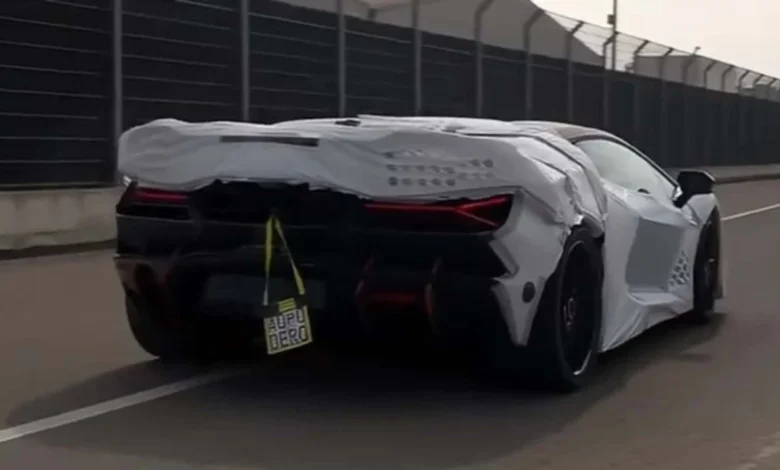
The high-performance automotive world is currently focused on Sant’Agata Bolognese as sightings of a more aggressive Lamborghini Revuelto variant have intensified, suggesting that the official premiere of the Revuelto SV is imminent. Recent footage and photographs captured by automotive spotters in Italy reveal a prototype undergoing public road testing with significantly reduced camouflage, moving away from the heavy, distorting wraps typically seen during early-stage development. This transition to a "shipping-style" protective film is traditionally a reliable indicator that an automaker has finalized the vehicle’s external design and is conducting final validation runs before a global unveiling. The emergence of this sharper, more aerodynamic flagship marks a pivotal moment for Lamborghini as it seeks to elevate its first series-production plug-in hybrid supercar to the legendary "Superveloce" status.
Aerodynamic Evolution and Visual Refinements
The most striking modification observed on the Revuelto SV prototype is the addition of a prominent, fixed rear wing. Unlike the standard Revuelto, which utilizes an active rear spoiler that adjusts its pitch based on speed and drive mode, the SV appears to adopt a permanent aerodynamic fixture designed to maximize downforce at high speeds. Observation of the prototype reveals a specialized cutout in the protective wrap for a third brake light integrated directly into the wing’s structure. While this addition likely complicates rearward visibility—a characteristic trait of mid-engine Italian exotics—it signals a shift in focus toward track-oriented performance and high-speed stability.
Beyond the rear wing, the prototype’s front fascia is expected to undergo a comprehensive redesign. Industry analysts anticipate the inclusion of larger, more aggressive air intakes and a revised front splitter to balance the increased downforce generated at the rear. These changes are not merely aesthetic; they are essential for managing the thermal requirements of the high-output V12 engine and the accompanying hybrid system. The prototype also showcased subtle but telling design cues, such as red accents on the side mirror caps and A-pillars. These styling elements appear to form part of a continuous racing stripe that extends toward the rear of the vehicle, a design language reminiscent of the Aventador Pirelli Edition and other limited-run Lamborghini specials.
Performance Benchmarks and Powertrain Engineering
Under the carbon-fiber skin, the Revuelto SV is rumored to push the boundaries of Lamborghini’s hybrid architecture. The standard Revuelto already produces a staggering 1,001 horsepower from its 6.5-liter naturally aspirated V12 engine combined with three electric motors. However, reports from internal sources suggest the SV variant will see a power increase to approximately 1,065 horsepower. This 64-hp jump would likely be achieved through a combination of software optimization for the electric motors and mechanical refinements to the internal combustion engine, allowing for a higher redline or improved volumetric efficiency.
One of the primary challenges for the engineering team in Sant’Agata is weight management. The standard Revuelto features a "monofuselage" chassis made entirely of multi-technology carbon fiber, yet the inclusion of a 3.8-kWh lithium-ion battery pack and three electric motors adds significant mass compared to its predecessor, the Aventador. If the Revuelto SV follows the precedent set by the Aventador SV, which was 110 pounds (50 kilograms) lighter than the base model, we can expect extensive use of forged composites, the removal of sound-deadening materials, and perhaps the adoption of a more spartan interior. The goal is to improve the power-to-weight ratio to a level that ensures the SV can eclipse the lap times of its predecessors on world-class circuits like the Nürburgring Nordschleife.
Historical Context and the Superveloce Legacy
The "SV" or Superveloce (Italian for "Super Fast") moniker carries immense weight within the Lamborghini hierarchy. The lineage began with the Miura SV in 1971, a car that refined the world’s first mid-engine supercar into a more stable and powerful machine. Since then, the badge has been reserved for the ultimate iterations of Lamborghini’s flagship V12 models, including the Diablo SV, the Murciélago LP 670-4 SV, and the Aventador LP 750-4 SV.
Each iteration of the SV has represented the pinnacle of Lamborghini’s combustion technology. The Revuelto SV, however, represents a new era. It must balance the raw, visceral appeal of a naturally aspirated V12 with the modern requirements of hybridization and emissions compliance. While early spy videos of the prototype at the Nürburgring suggest a more muted exhaust note compared to the screaming V12s of the past—largely due to the implementation of Gasoline Particulate Filters (GPF) required by stringent Euro 7-ready regulations—Lamborghini remains committed to the V12 engine as a "signature" of the brand. The SV will likely feature a bespoke exhaust system designed to reclaim some of that acoustic drama while remaining within legal decibel limits.
Production Exclusivity and Market Positioning
Exclusivity is a cornerstone of the Lamborghini flagship experience. Rumors circulating among high-net-worth collectors suggest that production of the Revuelto SV will be strictly limited to 1,963 units. This specific number is a direct homage to the year 1963, when Ferruccio Lamborghini founded the company in an act of defiance against Enzo Ferrari. By capping production, Lamborghini ensures the vehicle remains a highly sought-after collectible, likely appreciating in value from the moment it leaves the factory.
In terms of interior appointments, the SV is expected to borrow elements from the most recent limited-edition projects. Reports indicate the cabin will feature "Fenomeno" seats—ultra-lightweight carbon fiber buckets designed for maximum lateral support during high-G cornering. Furthermore, customers will likely be offered a high degree of customization through the Ad Personam program, including four different options for the placement and style of the "SV" exterior graphics. A dedicated plaque inside the cabin will denote the car’s position within the limited production run, emphasizing its rarity.
Testing Chronology and Development Timeline
The development of the Revuelto SV has been a multi-stage process involving rigorous testing across diverse environments.
- Late 2023: Initial rumors of a "hotter" Revuelto began to surface as engineers were seen testing unidentified components on standard Revuelto bodies.
- Spring 2024: Prototypes equipped with wheel-mounted sensors and telemetric antennas were spotted at the Nürburgring. These sensors are used to measure wheel torque, brake temperature, and aerodynamic load in real-time.
- Summer 2024: Sightings in Sant’Agata Bolognese increased, with prototypes shedding heavy cladding in favor of thin wraps. This coincided with the appearance of the fixed rear wing and revised exhaust outlets.
- August 2024 (Anticipated): Many industry experts point to Monterey Car Week in California as the most logical venue for the world premiere. Events such as "The Quail, A Motorsports Gathering" provide the ideal audience of collectors and enthusiasts for such a high-stakes debut.
Broader Implications for the Supercar Industry
The launch of the Revuelto SV is more than just the release of a new car; it is a statement of intent regarding the future of the V12 engine. While competitors like McLaren and Ferrari are also embracing hybridization, Lamborghini’s decision to retain a large-displacement, naturally aspirated engine as the heart of its PHEV system sets it apart. The SV variant will serve as the halo model that proves hybrid technology can enhance, rather than dilute, the "Superveloce" experience.
Furthermore, the Revuelto SV paves the way for future derivatives. Following the historical pattern, a Revuelto SV Roadster is almost certain to follow, offering the same performance metrics with an open-top experience. There is also the possibility of a track-only "Essenza" style variant later in the decade, which could potentially ditch the hybrid hardware to save weight, provided it is restricted to closed-course use.
As the automotive landscape shifts toward full electrification, the Revuelto SV stands as a bridge between the mechanical purity of the 20th century and the technological sophistication of the 21st. For the 1,963 lucky owners, it will represent the absolute zenith of what a road-legal Lamborghini can achieve. For the rest of the world, it remains a symbol of the brand’s refusal to let the V12 engine go quietly into the night. With a price tag expected to soar well beyond the $600,000 MSRP of the standard model, the Revuelto SV is poised to become the new benchmark for the modern ultra-supercar.