Ben Shapiro Reviews Christopher Nolan’s "The Odyssey" as a Masterpiece Amidst Conservative Outrage

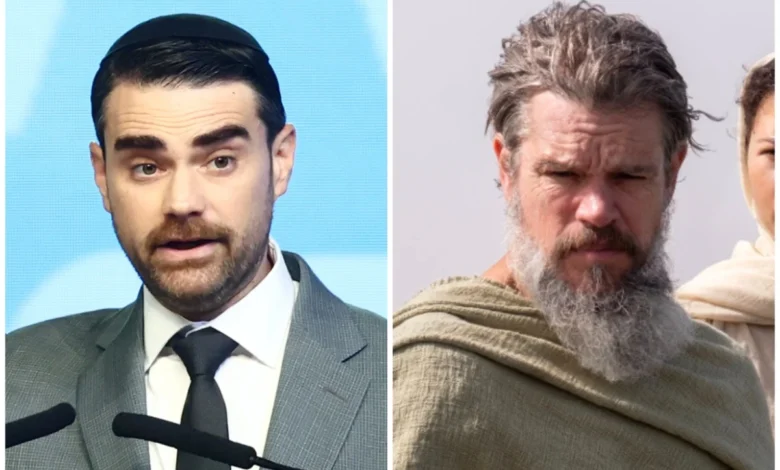
Conservative commentator Ben Shapiro has publicly lauded Christopher Nolan’s cinematic adaptation of the ancient Greek epic, “The Odyssey,” declaring it a “masterpiece” in an 18-minute review posted to his YouTube channel on Saturday. This endorsement comes despite significant backlash from some conservative circles regarding the film’s casting choices and perceived historical inaccuracies. Shapiro’s detailed critique offers a counterpoint to the prevailing conservative discourse, highlighting his appreciation for Nolan’s directorial prowess and the performances within the film.
Shapiro Praises Nolan’s Vision and "The Odyssey" as a Cinematic Triumph
In his comprehensive review, Shapiro unequivocally positioned Christopher Nolan as the preeminent director working in Hollywood today. "Nolan is unparalleled. He’s the best director working today, without a doubt. He just creates iconic movie after iconic movie," Shapiro stated, underscoring his admiration for Nolan’s consistent ability to deliver critically acclaimed and commercially successful films. This high praise suggests that for Shapiro, "The Odyssey" represents another triumph in Nolan’s already illustrious career, a testament to his unique vision and execution.
The political commentator’s appreciation extended deeply into the film’s ensemble cast. He singled out Matt Damon’s portrayal of the titular hero, Odysseus, for particular commendation. "I think he’s great in nearly everything. He sort of disappears into the part in a way that he doesn’t in a lot of other movies. He’s great as Odysseus," Shapiro remarked, emphasizing Damon’s transformative acting ability and his success in embodying the complex character of the epic hero.
Shapiro also extended his praise to several other key cast members, recognizing their significant contributions to the film’s overall success. He described Robert Pattinson’s performance as Antinous, the primary antagonist, as "excellent," characterizing the role as "sleazy and gross." Tom Holland, as Telemachus, Odysseus’s son, was also deemed "excellent" and "well cast," suggesting a strong understanding of the character’s journey and development. Anne Hathaway’s performance as Penelope, Odysseus’s loyal wife, was similarly lauded as a "great job," indicating that Shapiro found her portrayal to be nuanced and effective in capturing Penelope’s resilience and devotion. The collective praise for the supporting cast further solidifies Shapiro’s view of the film as a cohesive and well-executed artistic endeavor.
Addressing the Casting Controversy: A Defense of Artistic Interpretation
A significant portion of Shapiro’s review addressed the contentious casting of Lupita Nyong’o as Helen of Troy, a decision that ignited considerable debate among some segments of the conservative audience. Critics argued that Nyong’o’s casting deviated from traditional depictions of Helen and raised questions about historical accuracy. Shapiro directly countered these arguments, asserting that the focus on a specific ethnic or racial appearance for Helen was misplaced.
"So, I know a lot of people were like, ‘Oh my god, Lupita Nyong’o is supposed to look like Diane Kruger.’ I don’t know. Diane Krueger doesn’t look very Greek. She’s German," Shapiro argued, questioning the premise of historical accuracy in casting a role originating from an ancient, diverse Mediterranean region. He then offered a direct defense of Nyong’o’s casting, stating, "Lupita Nyong’o is a beautiful woman."
More importantly, Shapiro shifted the focus from physical appearance to thematic interpretation, citing Nolan’s script as providing a rationale that transcended superficial beauty. "But here’s the thing, actually, in the script, Nolan goes out of his way to explain that the war wasn’t really launched over Helen being gorgeous," Shapiro revealed. This suggests that Nolan’s adaptation, according to Shapiro, re-contextualizes the motivations behind the Trojan War, moving beyond the simplistic narrative of a beauty contest to explore deeper political, social, or perhaps even supernatural drivers, thus justifying a casting choice that might otherwise be seen as unconventional. This analytical approach underscores Shapiro’s engagement with the film’s narrative substance rather than solely its superficial elements.
A Singular Point of Contention: Elliot Page’s Role as Sinon
Despite his overwhelmingly positive assessment, Shapiro did identify one casting choice that he found perplexing and artistically questionable: Elliot Page’s portrayal of Sinon, the Greek soldier who deceives the Trojans into bringing the Trojan Horse into their city. Shapiro described Page’s role as an "absolute puzzler," indicating a significant disconnect between the actor and the character as he perceived it.
Shapiro elaborated on his reservations, citing physical and vocal attributes. "He is about 5’2 and 105 pounds soaking wet and has the voice of a woman. It doesn’t work," he stated, expressing his belief that Page’s physical presence and vocal characteristics were fundamentally at odds with the character of Sinon, who is typically depicted as a cunning and physically capable deceiver. This specific critique suggests that while Shapiro is open to diverse casting, he believes it must ultimately serve the narrative and character integrity of the film. His criticism here appears to be rooted in his perception of a lack of verisimilitude, rather than a broader objection to Page’s identity.
Nolan’s Stance on Backlash: "Comes with the Territory"
The controversy surrounding "The Odyssey" has not been limited to conservative commentators. Director Christopher Nolan himself has addressed the online backlash, including remarks from prominent figures like Elon Musk. In a recent interview with The Telegraph, Nolan expressed a measured indifference to such criticism, suggesting that it is an inevitable consequence of creating large-scale, culturally significant films.
"Remember, I spent 10 years of my life dealing with Batman," Nolan explained, drawing a parallel to the intense scrutiny he faced during his acclaimed "Dark Knight" trilogy. "When I came on ‘Begins,’ writers and artists had been working on this beloved character for almost 65 years, and a lot of freighted thoughts were out there about what he represents. And what I learnt over my time on that trilogy is you can’t worry about any of that at all. What you have to do is honor the original text by interpreting it in the strongest way you personally can."
Nolan’s philosophy, as articulated by Shapiro through his interpretation of the film, centers on a commitment to artistic integrity and a personal vision, rather than capitulating to external pressures or pre-existing expectations. This approach suggests that the casting decisions, and indeed all creative choices within "The Odyssey," are deliberate and serve Nolan’s overarching interpretation of the ancient epic. His comments imply a recognition that any major adaptation of a classic work, especially one as influential as "The Odyssey," will inevitably spark debate, but that the filmmaker’s primary responsibility is to their own artistic convictions and the material itself.
Contextualizing the Outrage: A Shifting Cultural Landscape
The conservative backlash to "The Odyssey" reflects a broader cultural tension surrounding representation and historical authenticity in media. In recent years, there has been a growing demand for greater diversity and inclusion in filmmaking, leading to casting choices that challenge traditional norms. For some audiences, these changes are seen as positive steps towards a more equitable and representative media landscape. For others, particularly those who prioritize perceived historical accuracy or traditional interpretations, these shifts can be met with resistance.
The case of "The Odyssey" highlights this dichotomy. The epic poem, originating from a period of immense cultural flux in ancient Greece, has been interpreted and reinterpreted countless times throughout history. Each adaptation, whether in literature, theater, or film, brings its own contemporary lens to the timeless themes of heroism, journey, and homecoming. Nolan’s decision to cast a diverse ensemble, and to potentially reframe the narrative’s core motivations, can be viewed as part of this ongoing tradition of reinterpretation, albeit one that intersects with modern identity politics.
Elon Musk’s public criticism, for instance, often centers on issues of perceived "wokeness" in entertainment. His objections to Nyong’o’s casting as Helen of Troy, and by extension to Nolan’s adaptation, align with a segment of the conservative public that views contemporary efforts at inclusivity as a departure from established cultural narratives or a forced imposition of modern ideologies onto historical or fictional material. This perspective often prioritizes a literalist approach to source material and a skepticism towards artistic liberties that deviate from commonly held imagery or interpretations.
The Significance of Shapiro’s Endorsement
Ben Shapiro’s positive review of "The Odyssey" is noteworthy for several reasons. As a prominent conservative voice, his endorsement provides a counter-narrative to the prevailing conservative criticism. It suggests that even within conservative circles, there can be appreciation for artistic merit that transcends ideological objections. Shapiro’s emphasis on Nolan’s directorial skill and the quality of the performances indicates a willingness to engage with the film on its own terms as a work of art, rather than solely as a political statement.
His detailed analysis of the casting, particularly his defense of Nyong’o and his reasoned critique of Page’s role, demonstrates a nuanced approach. It suggests that Shapiro’s engagement with the film is not simply a blanket endorsement but a considered evaluation of its artistic merits and demerits. By dissecting specific aspects of the film and offering justifications for his opinions, Shapiro elevates the discourse beyond simple praise or condemnation.
Broader Implications for Hollywood and Audience Reception
The ongoing debate surrounding "The Odyssey" and its reception by figures like Ben Shapiro has broader implications for the film industry and audience engagement. It underscores the increasingly polarized nature of cultural consumption, where films can become battlegrounds for ideological disputes. For filmmakers, navigating this landscape presents a challenge: how to maintain artistic integrity while also appealing to a diverse and often fragmented audience.
Nolan’s strategy of focusing on his personal interpretation and disregarding external noise, as supported by Shapiro’s review, suggests a potential path forward for artists seeking to create impactful work in a contentious environment. By grounding their decisions in a strong artistic vision and a deep understanding of the source material, filmmakers may find that their work resonates with audiences on a deeper level, even if it sparks controversy.
Furthermore, the engagement of commentators like Ben Shapiro highlights the evolving role of media personalities in shaping public opinion on cultural matters. His platform allows him to reach a significant audience and to offer alternative perspectives that can influence how films are perceived and discussed. The fact that a conservative commentator is calling a film, which has drawn fire from his ideological peers, a "masterpiece" demonstrates the complexity of audience reception and the potential for nuanced appreciation that transcends simple partisan divides.
Ultimately, the discussion around Christopher Nolan’s "The Odyssey" serves as a case study in the intersection of art, culture, and ideology. While conservative outrage may continue to simmer, Ben Shapiro’s unexpected endorsement provides a compelling counterpoint, emphasizing the power of cinematic craft and artistic interpretation to transcend immediate controversies and to be recognized on their own artistic merits. The film’s success, both critically and commercially, will likely be measured not just by its box office returns, but by its enduring impact on conversations about representation, adaptation, and the very nature of cinematic storytelling in the 21st century. The ongoing dialogue, fueled by both criticism and praise, ensures that "The Odyssey" will remain a significant talking point in cinematic and cultural discourse for the foreseeable future.