Philanthropic Collaboration Emerges as a Cornerstone for Global Health Equity and Sustainable System Strengthening

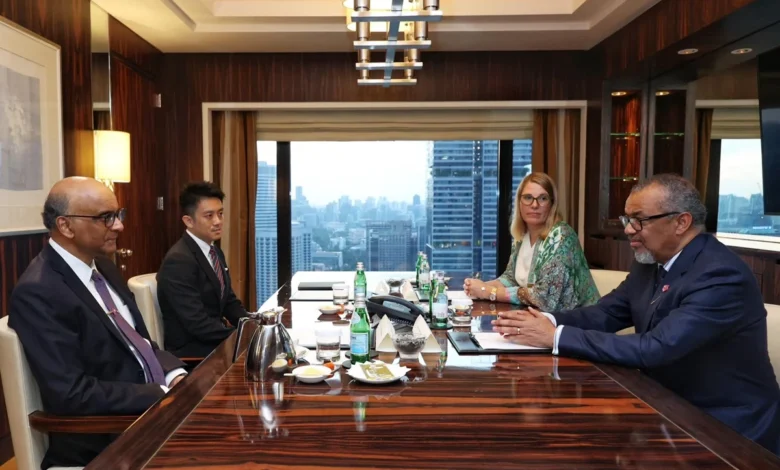
The intersection of private capital and public health policy has reached a critical inflection point as the World Health Organization (WHO) deepens its strategic alignment with philanthropic entities. During the Philanthropy Asia Summit, held in Singapore from May 5 to May 7, 2025, WHO Director-General Dr. Tedros Adhanom Ghebreyesus signaled a shift in the global health architecture, emphasizing that the mission to provide the highest attainable standard of health for all requires a more robust, diversified, and agile funding model. This collaboration is not merely a supplementary financial arrangement but a fundamental strategy to bridge the widening gaps in health equity, pandemic preparedness, and primary health care infrastructure.
The Context of the Philanthropy Asia Summit
The Philanthropy Asia Summit, organized by the Temasek Foundation and the Philanthropy Asia Alliance, serves as a premier platform for fostering multi-sectoral partnerships. In an era defined by geopolitical turbulence, climate-induced health crises, and the lingering socioeconomic aftershocks of the COVID-19 pandemic, the 2025 gathering underscored the necessity of "country self-reliance."
Dr. Tedros used the international stage to acknowledge the pioneering role of Singapore and the Temasek Foundation. Their commitment to the WHO Investment Round—a strategic effort to secure predictable, flexible funding—represents a blueprint for how private-sector philanthropy can catalyze state-level health initiatives. By aligning private capital with the WHO’s Fourteenth General Programme of Work (GPW 14), these partners are effectively moving away from the traditional, often fragmented "project-based" donation model toward a more holistic, system-strengthening approach.
Chronology of Modern WHO Funding Evolution
To understand the significance of this shift, one must examine the evolution of WHO financing over the last decade. Historically, the organization relied heavily on assessed contributions from member states. However, as global health challenges grew in complexity, these contributions stagnated, leading to an over-reliance on voluntary, earmarked funding.
- 2015–2019: The period preceding the pandemic was marked by a push for budgetary reform, yet the organization remained constrained by rigid, donor-dictated funding streams.
- 2020–2022: The COVID-19 pandemic acted as a stress test, revealing that while emergency response funding could be mobilized quickly, the underlying primary health systems in many low- and middle-income countries were fragile and under-resourced.
- 2023: The WHO launched the Investment Round, a strategic attempt to re-engage with a broader coalition of donors, including philanthropic foundations, to ensure core functions are fully funded.
- May 2025: The Philanthropy Asia Summit marks a consolidation of this strategy, with philanthropic partners explicitly linked to the realization of Universal Health Coverage (UHC) goals.
The Economic and Data-Driven Case for Philanthropy
Data consistently shows that traditional funding sources—primarily national budgets and multilateral aid—often struggle to keep pace with the rapid technological and environmental changes impacting health. According to recent WHO budgetary analysis, the gap between the resources required to achieve the Sustainable Development Goal (SDG) target for health (SDG 3) and actual spending remains in the hundreds of billions of dollars annually.
Philanthropy provides a critical advantage: risk tolerance. While government budgets are bound by fiscal cycles and public scrutiny, philanthropic organizations have the flexibility to fund high-risk, high-reward research. This includes pilot programs for digital health integration, vaccine cold-chain infrastructure in remote areas, and the early-stage development of therapeutics for neglected tropical diseases. By de-risking these innovations, philanthropies create a "proof of concept" that eventually allows governments and international financial institutions to scale these solutions globally.
Strategic Implications for Global Health Equity
The partnership between the WHO and philanthropic actors is designed to address the "missing middle" in global health. Often, funding is either directed toward immediate crisis response or high-level policy advocacy, leaving the "middle"—the day-to-day strengthening of primary health care (PHC) systems—underfunded.
Bridging the Equity Gap
Philanthropic support is increasingly targeted toward health equity. By focusing on the social determinants of health, such as clean water, education, and nutrition, these organizations help build a foundation that prevents disease before it requires expensive secondary or tertiary care. This is particularly relevant in the context of the WHO’s Fourteenth General Programme of Work, which emphasizes the prevention of non-communicable diseases (NCDs) and the strengthening of resilience against future pandemics.
Advocacy and Policy Influence
Beyond financial resources, philanthropic partners bring significant expertise in governance, logistics, and data management. Many of these foundations operate with the agility of the private sector, allowing them to advocate for policy changes that governments might find politically sensitive. Whether it is pushing for stricter tobacco regulations or promoting vaccine mandates, the backing of independent philanthropic organizations provides the necessary political cover and intellectual weight to advance evidence-based health policies.
Official Responses and Stakeholder Perspectives
In his remarks, Singaporean President Tharman Shanmugaratnam noted that the future of global health depends on the "interoperability" of public, private, and philanthropic sectors. He emphasized that Singapore’s commitment is rooted in the belief that no nation can remain healthy in isolation. This sentiment was echoed by representatives from the Philanthropy Asia Alliance, who highlighted that the organization’s mandate is to catalyze collective action.
From the perspective of the WHO, the engagement is a two-way street. By opening its doors to strategic philanthropic partnerships, the organization is modernizing its operations to be more inclusive. Critics in the past have voiced concerns regarding the potential for "philanthro-capitalism" to distort global health priorities. To mitigate this, the WHO has implemented rigorous frameworks for engagement to ensure that all philanthropic support aligns with international health regulations and the sovereign priorities of member states.
Broader Implications and Future Outlook
The trajectory of this relationship suggests a fundamental shift in how global health will be governed over the next two decades. The reliance on traditional state-to-state aid is being augmented by a "Global Health Partnership" model. This model recognizes that the private sector—and the foundations that represent its philanthropic arm—are essential stakeholders.
Sustainable Progress Toward Universal Health Coverage
The ultimate test of these partnerships will be their ability to move the needle on Universal Health Coverage. For millions, the "right to health" remains an aspirational concept. To transform it into a reality, the following pillars must be maintained:
- Alignment: Ensuring all philanthropic contributions support national health strategies rather than creating parallel, unsustainable systems.
- Transparency: Maintaining clear, publicly available data on how funds are utilized and the health outcomes achieved.
- Accountability: Ensuring that the priorities of the most vulnerable populations remain at the center of the policy-making process, regardless of donor influence.
As the WHO moves forward with the implementation of its Fourteenth General Programme of Work, the role of philanthropy will likely expand into new areas, including the governance of artificial intelligence in health and the financing of climate-resilient health infrastructure.
Conclusion: A New Era of Collaboration
The Philanthropy Asia Summit in 2025 will be remembered as a pivotal moment where the rhetoric of "public-private partnership" was translated into concrete, institutionalized action. By integrating the agility and capital of the philanthropic sector with the global reach and normative authority of the WHO, the international community is establishing a more resilient, equitable, and sustainable model for global health.
As Dr. Tedros noted, the vision of the highest attainable standard of health is not a luxury for some, but a right for all. Realizing this vision requires more than just goodwill; it requires a sophisticated, global financial ecosystem that can weather the challenges of a turbulent century. The deepening partnership between the WHO and the philanthropic sector stands as the most promising avenue for achieving this monumental goal, ensuring that when the next global health threat arrives, the world is not only better prepared but inherently more equitable.