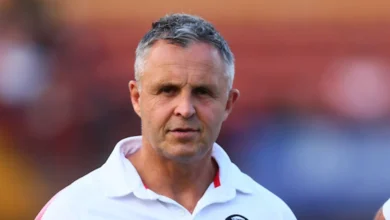
Roberto De Zerbi expresses unwavering faith in Dominic Solanke to revitalize Tottenham’s faltering attack ahead of Carabao Cup test at Anfield

Tottenham Hotspur’s head coach Roberto De Zerbi has issued a resounding vote of confidence in striker Dominic Solanke, dismissing external criticism and asserting that the forward remains central to his long-term tactical vision. As Spurs prepare for a daunting Carabao Cup fixture against Liverpool at Anfield this Tuesday, the spotlight remains fixed on a squad that has struggled to find the back of the net in domestic league play.
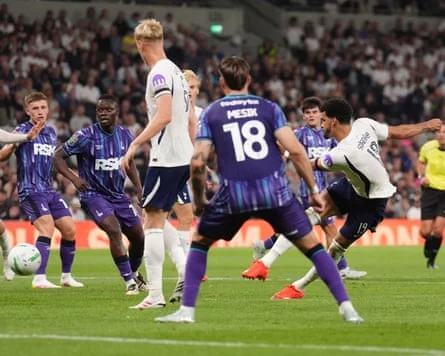
The North London side enters the tie under a cloud of scrutiny following a frustrating 0-0 stalemate against Everton at the Tottenham Hotspur Stadium this past Saturday. That result extended a worrying drought for the club in the Premier League, where they have failed to register a goal in four consecutive matches. While their attacking output in the Carabao Cup has been more promising—highlighted by a 5-1 thrashing of Charlton in the second round—the transition to consistent top-flight production remains the primary objective for De Zerbi’s coaching staff.
The Tactical Challenge and Solanke’s Role
Solanke, signed for a reported £55 million fee, was identified as the catalyst to solve Tottenham’s goalscoring woes. Having netted 19 goals for Bournemouth in the 2023-24 campaign, the 29-year-old was brought in with high expectations. However, a pre-season injury sustained during the club’s tour of New Zealand and Australia significantly disrupted his acclimatization.
De Zerbi acknowledges the physical and psychological toll of these setbacks but remains adamant that Solanke’s pedigree is undeniable. "Dom is a sensitive guy," De Zerbi noted during his pre-match press conference. "He needs to feel full confidence, and from myself, he has big, big confidence. I believe he can score 10-15 goals, for sure. He’s already scored in Bournemouth; why can’t he score in Tottenham? It’s the same sport."
The head coach’s conviction stems from his personal experience managing against the forward. De Zerbi recalled a September 2023 encounter between Brighton and Bournemouth, where Solanke’s performance left an indelible impression. "I remember Brighton against Bournemouth at the Amex Stadium; he was incredible. I said to my assistant, ‘Who is this striker?’"
A Culture of Growth and Analysis
Beyond individual player management, De Zerbi is attempting to forge a new collective identity at Spurs. His approach has been marked by an intensive focus on video analysis and tactical drills aimed at improving efficiency in the final third. These sessions include focused training on cross delivery and high-pressing triggers to regain possession in dangerous areas.
The off-pitch culture is also receiving a facelift. In an effort to foster team cohesion, the Italian manager has been organizing regular team dinners, famously picking up the tab in Mayfair last week. It is a lighthearted gesture that hides a serious, almost philosophical, approach to the club’s current malaise.
"If we want to change from the last two or three seasons, we have to be stronger here," De Zerbi said, gesturing to his head. "We have to believe in the quality of the players and the decisions we made one month ago. You can change players or change coaches, but if you do that constantly, nothing changes. You must stay with the head, stay humble, and work with the right spirit."
Squad News and Tactical Rotations
The upcoming clash at Anfield presents a significant challenge, particularly given Tottenham’s historical struggles at the venue; they have failed to win at Liverpool’s home ground in 17 attempts. Compounding the difficulty is a lengthy injury list.

Sandro Tonali has been ruled out of the Liverpool fixture after picking up a knock, and playmaker James Maddison remains unavailable. Furthermore, Brazilian forward Richarlison, while eligible for the competition, will not participate, having been omitted from the club’s broader Premier League squad constraints. Pedro Porro also remains sidelined due to ongoing fitness issues.
In contrast, there is positive news regarding the return of Destiny Udogie, and Mohammed Kudus is confirmed to be fit to start. De Zerbi has hinted at significant rotations, with players such as Marcos Senesi, Tosin Adarabioyo, Ben Davies, Lucas Bergvall, and Mathys Tel all under consideration to bolster the starting XI.
Analyzing the Attacking Vacuum
The data paints a clear picture of Tottenham’s current predicament. Outside of Solanke’s established record and the recent contributions of Omar Marmoush—who tallied seven league goals for Manchester City in the latter half of the 2024-25 season—the attacking rotation has struggled to establish rhythm.
The reliance on Solanke to regain his Bournemouth-era form is not merely a preference but a necessity for De Zerbi’s system. With the Carabao Cup serving as a secondary competition that often allows for tactical experimentation, Tuesday’s match against a formidable Liverpool side serves as a barometer for how far the squad has progressed in its adaptation to De Zerbi’s rigorous demands.
The Broader Implications
The pressure on De Zerbi to secure a positive result at Anfield is immense. While the Carabao Cup is often viewed as a platform for fringe players, a failure to score or a heavy defeat would only intensify the narrative surrounding Tottenham’s goalscoring struggles.
For the players, the message from the manager is one of belief. By shielding Solanke from public criticism and emphasizing internal accountability, De Zerbi is attempting to build a resilient locker room capable of weathering the volatility of the Premier League.
"I believe in my players," De Zerbi concluded. "I hope they believe in themselves as much as I believe in them."
As the club prepares for the trip to Merseyside, the atmosphere remains one of calculated focus. Whether the team can break their Anfield hoodoo and reignite their attacking fire remains the central question of the week. For Solanke, the stage is set—not just to prove his doubters wrong, but to reaffirm his status as one of the league’s most clinical finishers. With the backing of a manager who has left "no stone unturned" in his search for solutions, the former Liverpool striker will arguably have no better environment to rediscover his rhythm than the one he once called home.
Chronology of Recent Tottenham Form
- Late August 2025: Squad undergoes final tactical adjustments ahead of the campaign; focus shifts to high-pressing systems.
- September 2025: Solanke begins return-to-play protocol following a knock during the club’s tour of Oceania.
- Mid-September 2025: Tottenham hits a dry spell in the Premier League, failing to net in four consecutive matches.
- September 13, 2025: 0-0 draw against Everton highlights the lack of clinical edge in the final third.
- September 16, 2025: The Carabao Cup tie against Liverpool at Anfield marks a critical juncture for the squad’s confidence and tactical evolution.
The match at Anfield will serve as a pivotal moment, testing whether De Zerbi’s "change from within" philosophy can translate into results against elite opposition, or if the lack of attacking cohesion will force a more drastic rethink of the squad’s structure in the coming months.
Related posts: