Ford and Geely Form Strategic Joint Venture to Secure Future of Valencia Manufacturing Plant Through New Multi-Energy and Electric Vehicle Production

The landscape of European automotive manufacturing is set for a significant transformation as Ford Motor Company and China’s Geely Auto Group have finalized a landmark agreement to secure the long-term viability of Ford’s assembly plant in Valencia, Spain. This strategic partnership, confirmed after months of high-stakes negotiations and industry speculation, centers on the creation of a new joint venture tasked with overseeing the facility’s operations. Under the terms of the deal, which is scheduled for completion in 2025, Ford will retain a 66% majority stake in the new entity, while Geely Auto will hold the remaining 34%. The move not only safeguards thousands of jobs but also positions the Valencia site as a critical hub for a new generation of multi-energy and purely electric vehicles.
The Almussafes plant, located just south of Valencia, has been a cornerstone of Ford’s European operations since its inauguration 50 years ago. However, its future had been cast into doubt in recent years as Ford navigated a complex transition toward electrification and restructured its regional portfolio, which saw the discontinuation of long-running models like the Mondeo and S-Max. The new agreement breathes fresh life into the facility, with a stated objective to maximize its potential annual capacity of approximately 500,000 vehicles. To achieve this ambitious output, Ford of Europe’s Vice President of Product Development, Jim Baumbick, confirmed that the company intends to hire additional staff, reversing a trend of workforce reductions that had plagued the site during the post-pandemic era.
A Strategic Roadmap for Ford: The Five-Model Offensive
For Ford, the Valencia deal is a linchpin in its broader "revival plan" for the European market. Currently, the plant’s production lines are dedicated solely to the Ford Kuga SUV. By 2029, however, the facility is slated to produce four additional models, bringing the total to five. This expansion is designed to align with Ford’s new brand identity in Europe, which emphasizes "American-ness," adventure, and a rally-inspired heritage.
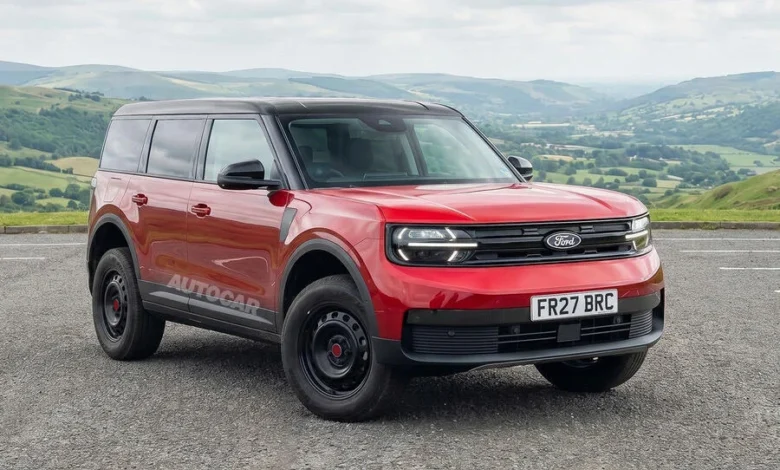
Among the most anticipated additions is a new European-focused version of the Ford Bronco. Expected to arrive in 2028, this rugged SUV will be specifically tailored for European tastes and regulatory requirements. Crucially, it is understood that the European Bronco will utilize Ford’s C2 platform—the same architecture that underpins the Kuga—allowing for manufacturing efficiencies and shared supply chains within the Valencia plant.
Furthermore, Ford and Geely will jointly develop a new "family crossover" characterized as a multi-energy vehicle. This designation implies the architecture will support various powertrains, including internal combustion engines (ICE), hybrids, and plug-in hybrids. Scheduled for a 2028 debut, Jim Baumbick described this upcoming model as a "rally-bred crossover in the C-segment." Addressing concerns regarding brand dilution, Baumbick emphasized that the vehicle would not be a mere exercise in badge engineering. "The Ford product will be a completely unique top hat; this is not a reskin," Baumbick stated, asserting that the vehicle would be "unmistakably Ford" in its engineering and driving dynamics.
This crossover and the new Bronco represent two of five rally-inspired models Ford intends to launch in Europe by the end of the decade. While two smaller electric models are expected to be produced through a separate partnership with Renault, and a fifth multi-energy crossover is also in the pipeline, the absence of the fifth model from the initial Valencia announcement suggests it may be allocated to another facility, such as Ford’s Craiova plant in Romania or its updated EV center in Cologne, Germany.
Geely’s European Expansion and Localisation Strategy
For Geely, the partnership represents a major milestone in its global expansion strategy. While Geely already possesses a significant footprint in Europe through its ownership of Volvo Cars, Polestar, Lotus, and the London Electric Vehicle Company (LEVC), the Valencia agreement marks the first time Geely-branded models will be manufactured on the continent.
Beginning in 2028, Geely will utilize the Valencia plant to produce two distinct electric SUVs. This move is widely seen as a proactive response to evolving trade dynamics between the European Union and China. By establishing a manufacturing base within the EU, Geely can mitigate the impact of potential import tariffs on Chinese-made electric vehicles while simultaneously shortening supply chains and improving responsiveness to local market trends.
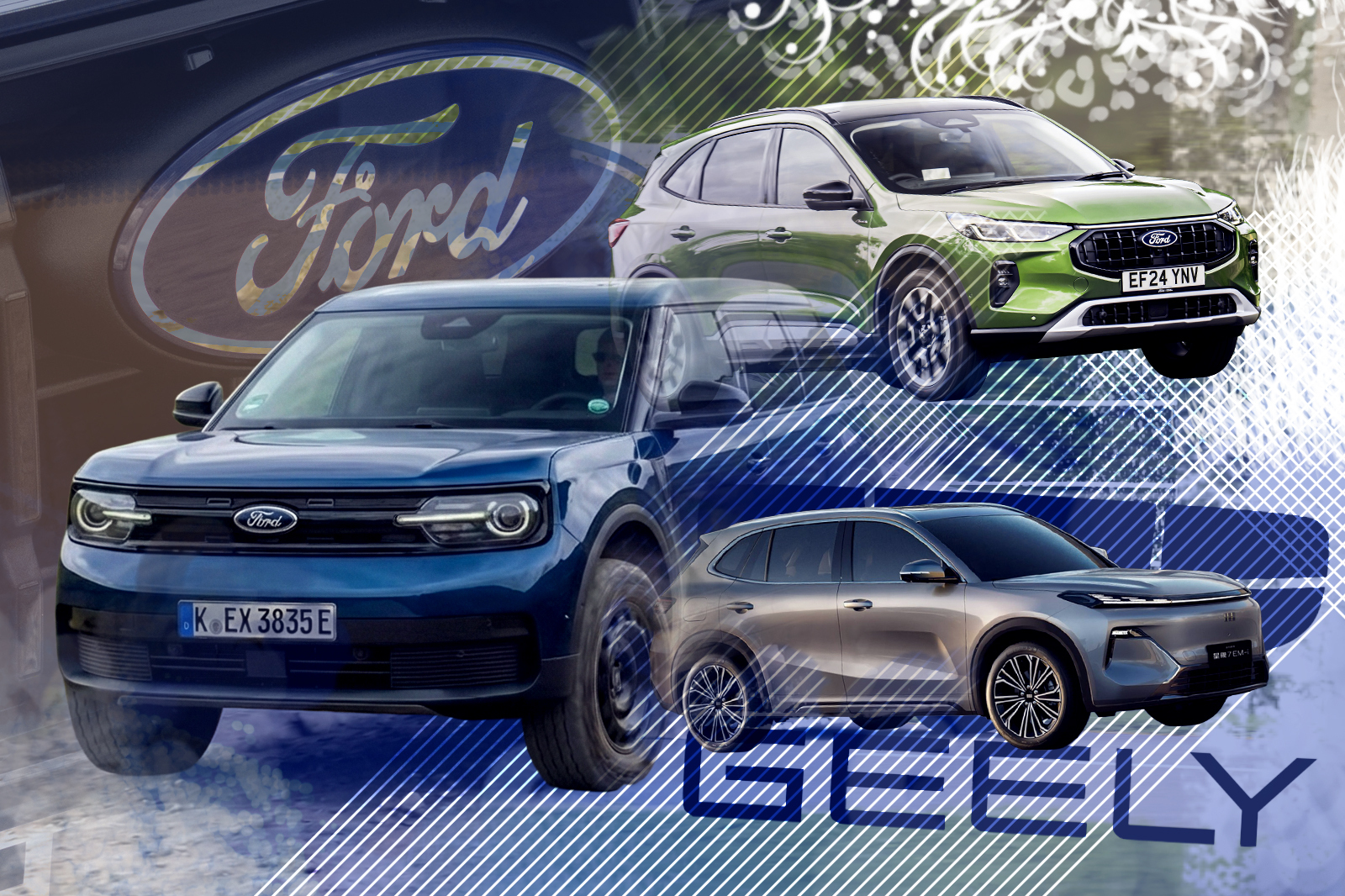
Victor Yang, Geely’s Senior Vice President, underscored the importance of this "in-market, for-market" approach. "We have always believed that to be truly rooted in Europe, we must be of Europe," Yang remarked. He noted that the partnership allows Geely to integrate its technological expertise in electrification with the "world-class manufacturing heritage" of the Valencia plant. While Geely has not yet specified which models from its extensive portfolio will be built in Spain, industry analysts suggest they may be derived from the group’s Sustainable Experience Architecture (SEA), which already supports various models across the Volvo and Zeekr brands.
The Economic and Industrial Context of the Valencia Plant
The significance of this deal extends beyond the corporate interests of Ford and Geely; it is a vital development for the Spanish economy. Spain is the second-largest vehicle producer in Europe, and the automotive sector accounts for approximately 10% of the country’s GDP. The Almussafes plant is one of the region’s largest employers, and its stability is essential for a vast network of local component suppliers.
The decision to transition the plant toward a multi-energy production model reflects a pragmatic shift in Ford’s strategy. While the company previously signaled an aggressive move toward an all-electric lineup in Europe by 2030, cooling consumer demand for EVs and infrastructure challenges have prompted a more flexible approach. By producing "multi-energy" vehicles that can accommodate hybrid powertrains alongside EVs, Ford and the Valencia plant can better hedge against market volatility.
Chronology of the Valencia Plant Transition
The path to this joint venture has been marked by several critical milestones:
- 1976: Ford opens the Almussafes plant in Valencia to produce the first-generation Fiesta.
- 2022: Ford selects the Valencia plant over its Saarlouis plant in Germany to produce next-generation electric vehicles based on a new software-defined architecture.
- 2023: Amidst a slowing EV market, Ford delays its original electrification timelines, leading to uncertainty regarding the Valencia site’s future product allocation.
- Early 2024: High-level talks begin between Ford and Geely regarding a potential manufacturing partnership in Spain.
- Mid-2024: The Spanish government signals its support for the venture, potentially offering subsidies through the PERTE (Strategic Projects for Economic Recovery and Transformation) program for electric and connected vehicles.
- Late 2024: Official confirmation of the 66/34 joint venture and the roadmap for five models by 2029.
- 2025: Expected formal completion of the joint venture entity.
- 2028: Planned start of production for the new Ford Bronco, the Ford-Geely crossover, and Geely’s first European-built electric SUVs.
Broader Implications for the European Auto Industry
The Ford-Geely partnership is emblematic of a broader trend of "co-opetition" within the automotive industry. As the costs of developing advanced EV platforms and software continue to skyrocket, traditional manufacturers are increasingly seeking alliances to share investments and risks. Ford’s existing relationship with the Volkswagen Group—which sees Ford building the Explorer and Capri electric SUVs on VW’s MEB platform in Cologne—remains unaffected by the Geely deal, demonstrating Ford’s multi-faceted approach to regional partnerships.
For the European Union, the Valencia deal presents a nuanced scenario. On one hand, it preserves industrial capacity and high-skilled jobs within the bloc. On the other hand, it facilitates the entry of Chinese automotive giants into the heart of the European market. This "Trojan Horse" or "Bridgehead" strategy by Chinese firms is likely to become more common as they seek to navigate geopolitical tensions through local investment.
Furthermore, the focus on "multi-energy" platforms suggests that the internal combustion engine will remain a part of the European manufacturing landscape longer than some policymakers initially anticipated. By utilizing architectures that can support ICE, hybrid, and electric configurations, Ford and Geely are ensuring that the Valencia plant remains adaptable to whatever regulatory or consumer shifts occur over the next decade.
Conclusion and Future Outlook
The transformation of Ford’s Valencia plant into a dual-branded, multi-energy manufacturing powerhouse represents one of the most significant industrial pivots in recent Spanish history. By securing 500,000 units of annual capacity and introducing five new models, the joint venture provides a definitive answer to the questions that have hovered over the facility’s future.
As the industry moves toward 2028, the success of this venture will depend on the effective integration of Ford’s brand heritage and Geely’s rapid innovation in EV technology. If successful, the Valencia model could serve as a blueprint for other legacy manufacturing sites across Europe, proving that through strategic international collaboration, the continent’s industrial heartlands can thrive in the age of electrification. For now, the workers of Almussafes can look toward the plant’s 50th anniversary with a renewed sense of security and a clear roadmap for the decade ahead.