Mastering the Xteink Ecosystem A Comprehensive Guide to Optimizing Ultra-Portable E-Readers through Custom Firmware and Advanced Formatting Techniques

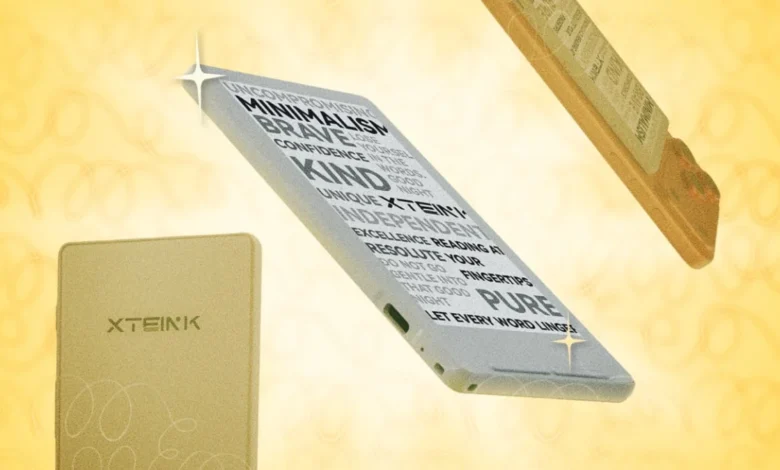
The landscape of digital reading has long been dominated by monolithic ecosystems, primarily those of Amazon’s Kindle and Rakuten’s Kobo. However, a growing segment of "exacting" and "adventurous" digital reading enthusiasts is increasingly looking toward niche hardware to fulfill a desire for portability and distraction-free experiences. At the forefront of this movement is Xteink, a Chinese technology firm specializing in ultra-miniature e-readers such as the X3, X4, and the recently released X4 Pro. While these devices offer unparalleled physical portability, their out-of-the-box software experience often presents significant hurdles for the average user. To bridge the gap between hardware potential and software utility, a robust community of developers and tinkerers has emerged, creating a sophisticated ecosystem of custom firmware, file conversion tools, and synchronization plugins.
The Rise of Ultra-Portable E-Ink Technology
The emergence of Xteink represents a broader shift in the consumer electronics market toward specialized, single-purpose devices. As smartphones become increasingly cluttered with notifications and social media, the demand for "minimalist tech" has surged. Xteink devices are characterized by their remarkably small form factors—often no larger than a credit card or a small smartphone—and their use of Electronic Ink (e-ink) displays. Unlike traditional LCD or OLED screens, e-ink mimics the appearance of ordinary ink on paper, reflecting ambient light rather than emitting it, which significantly reduces eye strain and power consumption.
Despite these hardware advantages, the Xteink stock experience is notoriously "finicky." The native operating systems are often described as clunky, with limited support for advanced typography, such as bolding, italics, or complex CSS layouts found in modern EPUB files. Furthermore, the stock software frequently struggles with paragraph spacing and image rendering, which can detract from the immersion of a long-form novel.
Chronology of Community Development and Custom Firmware
The history of Xteink’s software evolution is a testament to the power of open-source communities. Because Xteink devices utilize the ESP32 processor—a low-power, highly versatile microcontroller popular in the Internet of Things (IoT) industry—they are inherently "hackable." Unlike Kindle devices, which require complex "jailbreaking" procedures to bypass proprietary locks, Xteink hardware is relatively open, allowing users to overwrite stock firmware with minimal resistance.
Within a year of the Xteink X4’s launch, a dedicated community formed on platforms like Reddit to address the device’s software shortcomings. This collaboration led to the creation of CrossPoint Reader, a comprehensive custom firmware that has become the gold standard for Xteink enthusiasts. CrossPoint Reader replaces the rudimentary stock interface with a more intuitive menu system, expanded font support, and granular controls for margins and line spacing. While the software is currently optimized for the X3 and X4 models, developers are actively working on a version for the X4 Pro, reflecting the rapid pace of community-driven innovation.
Technical Optimization: The XTC Format vs. Standard EPUB
One of the most significant challenges for Xteink users is the preservation of book formatting. Standard EPUB files are "reflowable," meaning the text adjusts to fit the screen size and font settings. However, the limited processing power of the ESP32 chip often results in poor rendering of these files. To combat this, the community has popularized the XTC format.
An XTC file is a proprietary format that essentially converts an e-book into a series of high-quality bitmap images. By pre-rendering the text on a computer, the e-reader is relieved of the task of layout calculation. This ensures that every indent, stylized header, and embedded chart appears exactly as intended. However, this optimization comes with a data cost: while a standard EPUB might occupy 2MB of storage, an XTC version of the same book can exceed 50MB. Given the limited internal storage of miniature e-readers, users must balance the desire for perfect formatting against the device’s capacity. Web-based converters now allow users to customize page orientation and alignment before generating these files, providing a bridge for those who prefer the stock software but demand better visual fidelity.

Supporting Data: The Impact of Third-Party Plugins
The utility of Xteink devices is further extended through integration with Calibre, the industry-standard open-source e-book management software. Developers have released specific "EPUB Workflow" plugins designed to automate the optimization process. These tools can automatically shrink images to match the device’s resolution, remove extraneous HTML code that might crash a low-power processor, and repair structural errors in CSS files.
Data from community repositories suggests that optimized files load up to 40% faster on ESP32-based devices compared to raw EPUBs. Furthermore, the integration of wireless file transfer protocols—such as connecting to a Calibre library over Wi-Fi—has eliminated the need for physical tethering, a major convenience for devices that are often used on the go.
Cross-Device Synchronization and KOReader Integration
For many readers, the Xteink is a secondary device used during commutes or travel, while a larger tablet or Kindle is used at home. This necessitates a robust synchronization method to ensure reading progress is maintained across hardware. The solution lies in KOReader, an open-source document viewer designed for e-ink devices.
By utilizing the KOsync plugin, Xteink users can synchronize their "last read" position with other devices, including Android-based e-readers like the Boox Palma or even iPhones via the Readest app. This creates a seamless reading ecosystem that is not dependent on a single manufacturer’s cloud service. The ability to sync progress via a private or community-hosted server is a significant draw for privacy-conscious users who wish to avoid the data-harvesting practices associated with major retail platforms.
Official Responses and Market Implications
While Xteink itself has remained relatively quiet regarding the third-party firmware movement, the company has continued to iterate on its hardware, suggesting a tacit acknowledgement that the community’s "hacks" are what make the devices viable for a global market. The release of the X4 Pro, featuring improved screen clarity and build quality, indicates that Xteink is leaning into the "prosumer" niche.
Industry analysts suggest that the success of Xteink and its custom software ecosystem could signal a broader trend in the e-reader market. As Amazon faces increasing scrutiny over Digital Rights Management (DRM) and the "walled garden" nature of the Kindle store, open-platform devices are becoming more attractive. The availability of high-quality, DRM-free content from sources like Standard Ebooks—which provides meticulously formatted public domain titles—further bolsters the argument for independent hardware. Unlike Project Gutenberg, which offers raw text, Standard Ebooks applies modern typographical standards to classics, making them ideal candidates for the high-resolution displays of modern miniature e-readers.
Broader Impact and Future Outlook
The evolution of the Xteink e-reader from a "finicky" Chinese import to a sophisticated tool for bibliophiles highlights a significant moment in consumer technology. It demonstrates that hardware limitations can be overcome by a passionate community when the underlying platform is sufficiently open. For the end user, these developments mean that "distraction-free reading" no longer requires sacrificing the convenience of modern software features.
Looking ahead, the development of CrossPoint Reader for the X4 Pro and the potential for even more efficient file formats could further solidify the position of ultra-portable e-readers in the market. As long as readers value the ability to carry an entire library in a pocket-sized device without the interruptions of the modern smartphone, the demand for Xteink and its associated "hacks" is likely to grow. The implications are clear: the future of digital reading may not be dictated solely by the giants of Seattle or Toronto, but by a decentralized network of tinkerers who believe that the best way to read a book is on a device that does nothing else.