The Evolution of Madrid as a Global Cultural Hub A Comprehensive Strategic Guide to the Spanish Capital’s Heritage and Modernity


Madrid, housing approximately 3.5 million residents, stands as the largest municipality and the economic and political epicenter of Spain. With an annual influx of over 10 million international and domestic visitors, the city has solidified its position as a primary European destination, rivaling other major capitals in terms of cultural density, architectural preservation, and infrastructure. As the capital of one of the world’s most visited countries, Madrid serves as a critical case study in how a sprawling metropolitan area can balance modern urbanization with the preservation of its historical and artistic legacy. The city’s unique "late-start" social rhythm and its transition into a hub for the digital and green economies have reshaped its tourism profile, moving away from traditional sightseeing toward deep cultural immersion.
The Landscape of Light: A UNESCO World Heritage Strategy
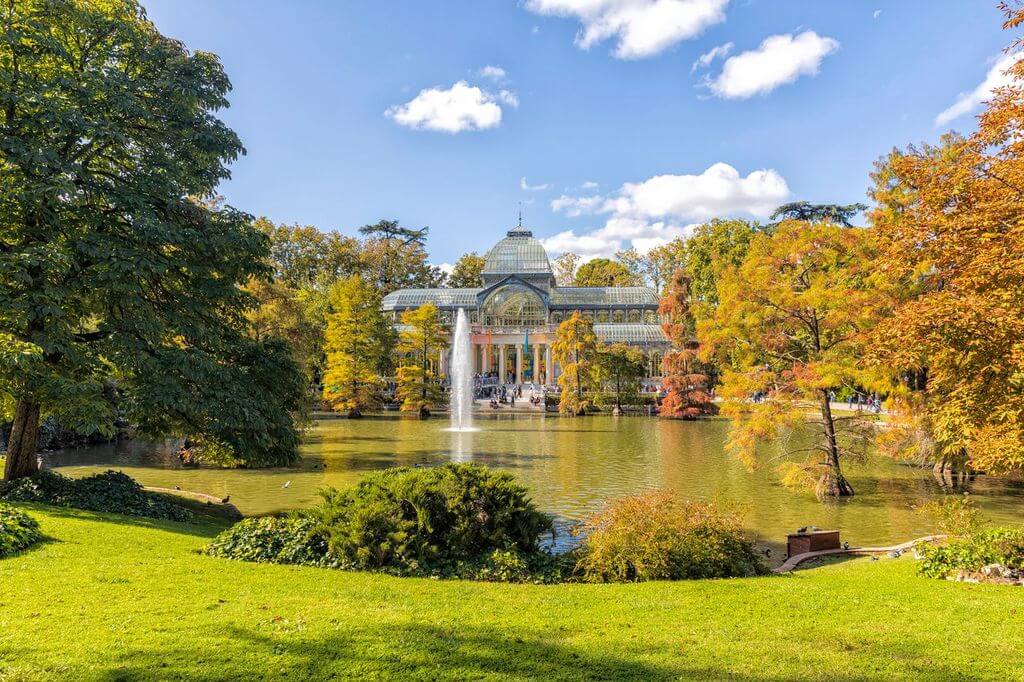
The strategic heart of Madrid’s cultural appeal lies in the "Paisaje de la Luz" (Landscape of Light), an urban area encompassing the Paseo del Prado and El Retiro Park, which was officially designated as a UNESCO World Heritage site in 2021. This area represents a unique convergence of nature, science, and art, featuring more than 40 monuments and 40 historic buildings.
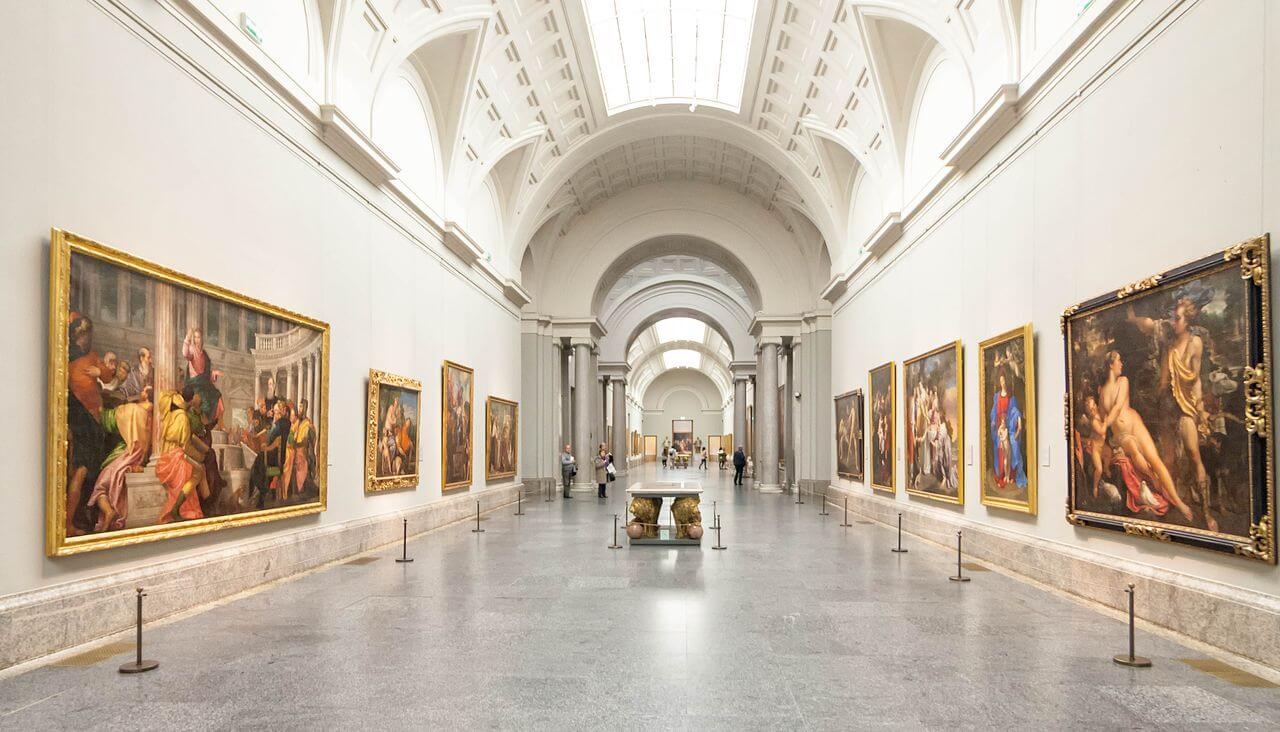
The focal point of this district is the Prado Museum, established in 1819. As one of the premier art institutions globally, the Prado houses over 8,000 paintings and 700 sculptures. Its collection is particularly noted for the Spanish Royal Collection, featuring definitive works by masters such as Diego Velázquez—whose masterpiece Las Meninas remains a cornerstone of Western art—and Francisco Goya, whose "Black Paintings" provide a visceral look into the Napoleonic era and human psychology.
Complementing the Prado is the Thyssen-Bornemisza Museum, which fills the chronological gaps of the state collections with a private assembly ranging from Italian primitives to 20th-century Pop Art. The "Golden Triangle of Art" is completed by the Reina Sofía National Art Center. This museum is essential for understanding the 20th-century Spanish zeitgeist, anchored by Pablo Picasso’s Guernica. This 1937 mural, depicting the bombing of the Basque town during the Spanish Civil War, is globally recognized as the most significant anti-war statement in modern history. The museum’s inclusion of works by Salvador Dalí and Joan Miró further underscores Madrid’s role as a custodian of the Surrealist and Cubist movements.
Urban Planning and the Habsburg Legacy
The architectural narrative of Madrid is divided into distinct historical epochs, the most prominent being "Habsburg Madrid" (Madrid de los Austrias). This district reflects the city’s 16th and 17th-century expansion under the House of Austria. The Puerta del Sol serves as the symbolic center of this history, containing "Kilometer Zero," the point from which all radial roads in Spain are measured. This plaza also hosts the statue of the Bear and the Strawberry Tree, symbols derived from the city’s medieval coat of arms representing the union of the municipality and the local nobility.
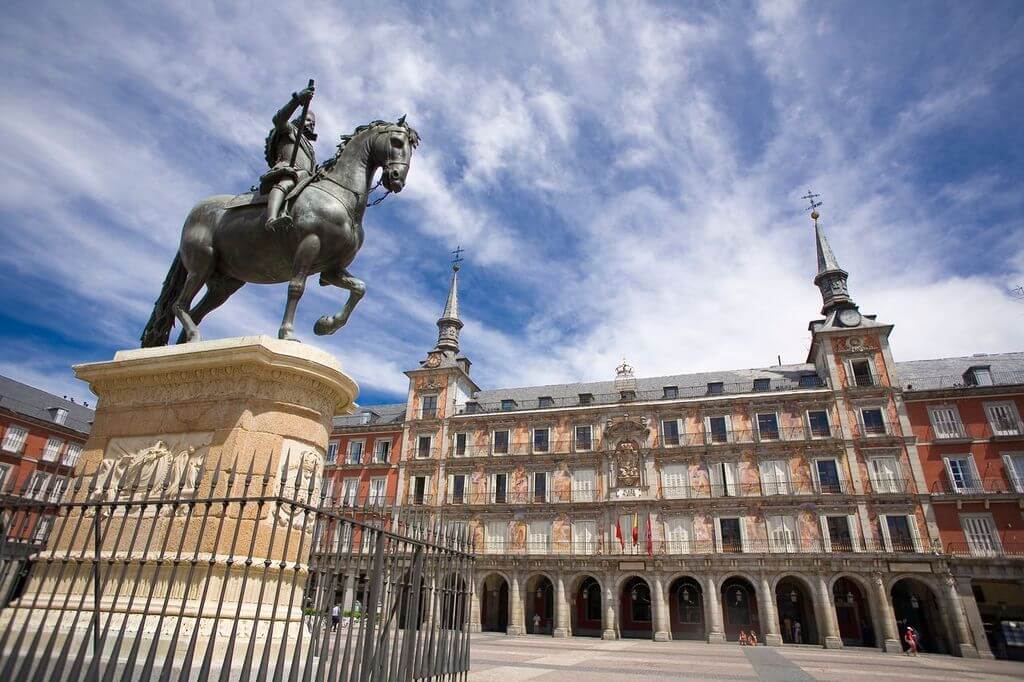
Adjacent to this is the Plaza Mayor, a porticoed square completed in 1619 during the reign of Philip III. Historically, the plaza functioned as a multi-purpose venue for trials by the Inquisition, bullfights, and royal proclamations. Today, it serves as a primary example of Castilian Baroque architecture, characterized by its symmetrical red-brick buildings and slate spires.
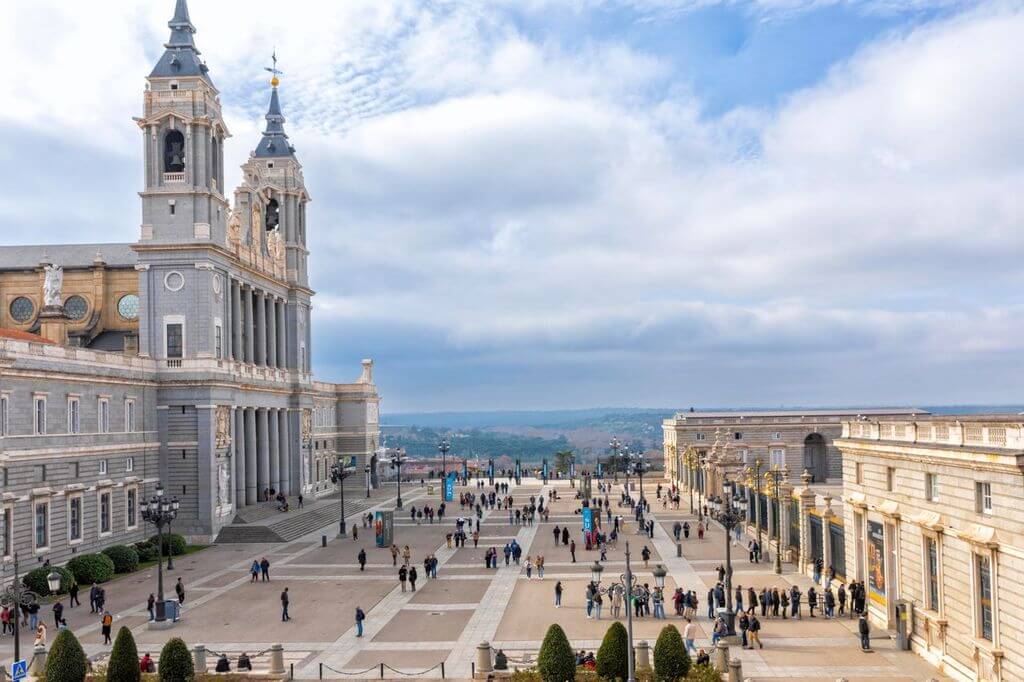
The Royal Palace of Madrid, located on the site of a 9th-century Muslim fortress (the Alcázar), represents the shift to the Bourbon dynasty in the 18th century. Spanning 135,000 square meters with over 3,400 rooms, it is the largest functioning royal palace in Western Europe. Although the current Spanish royal family resides at the more modest Palace of Zarzuela, the Royal Palace remains the official site for state ceremonies. Architecturally, it is a triumph of Italian-influenced Baroque and Neoclassical styles, housing a Royal Armory and a gallery of works by Caravaggio and Goya. The neighboring Almudena Cathedral, though only completed in 1993, provides a stylistic contrast with its Neo-Gothic interior and Neo-Romanesque crypt, illustrating the city’s long-term commitment to ecclesiastical development.
The Gastronomic Economy: From Tradition to Innovation
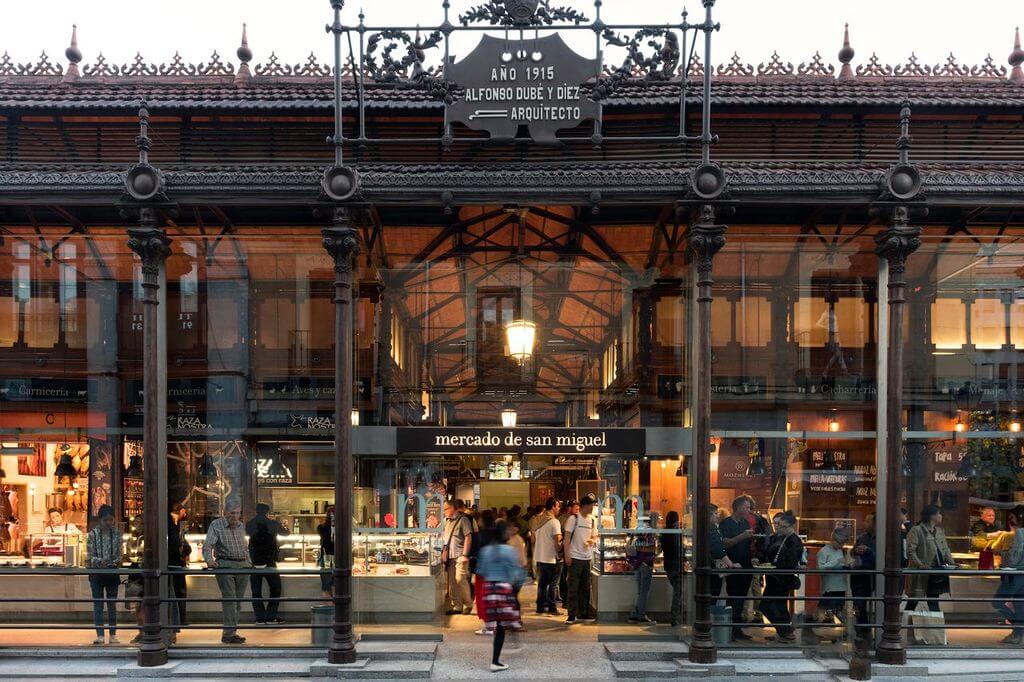
Madrid’s culinary sector is a significant driver of its local economy, blending centuries-old traditions with modern gastronomic trends. The city’s "Mercado" (market) system has undergone a massive revitalization. The Mercado de San Miguel, a 1916 iron-and-glass structure, was repurposed in 2009 as a gourmet tapas destination, attracting millions of visitors and setting a precedent for urban market renewals across Europe. Similar transformations are seen in the Mercado de San Antón in the Chueca district and the Mercado de Vallehermoso, which focus more on regional sustainability and "farm-to-table" logistics.
The city also boasts the world’s oldest continuously operating restaurant, Sobrino de Botín, founded in 1725. This establishment is a testament to the preservation of Castilian culinary techniques, such as the use of wood-fired ovens for roasting suckling pigs. Conversely, districts like Malasaña have become laboratories for plant-based innovation. Data suggests that Madrid has become one of the fastest-growing hubs for vegan and vegetarian dining in Southern Europe, reflecting a shift in consumer behavior and an increasing emphasis on environmental health.
Regional Integration and UNESCO Satellite Sites
A critical component of Madrid’s tourism strategy is its regional connectivity. The Community of Madrid manages several satellite UNESCO sites that provide historical context to the capital’s rise.
- San Lorenzo de El Escorial: Located 45 kilometers from the city, this complex was commissioned by Philip II in the 16th century. It served as a monastery, royal palace, and pantheon for Spanish monarchs. Its austere architecture, known as the "Herrerian" style, influenced Spanish building for a century.
- The Royal Palace and Gardens of Aranjuez: Situated to the south, this site was the spring residence of the monarchy. Its extensive gardens and the "Prince’s Garden" are recognized as a World Heritage Cultural Landscape, showcasing the integration of hydraulic engineering and landscape design.
- Alcalá de Henares: As the birthplace of Miguel de Cervantes and the site of one of the world’s oldest universities, this city represents the intellectual peak of the Spanish Golden Age. Its preservation of medieval and Renaissance street layouts offers a direct link to the literary history of Don Quixote.
Peripheral Development and the 2026 Vision
As Madrid looks toward the future, its urban development is shifting toward the periphery and the restoration of "House Museums." The Sorolla Museum, the former residence of Joaquín Sorolla, known as the "painter of light," is currently undergoing a multi-million-euro architectural renovation. Set to reopen in 2026, the project aims to enhance the museum’s capacity while preserving the intimate Mediterranean gardens that Sorolla designed himself.
In terms of green infrastructure, the Casa de Campo represents the city’s environmental lungs. Covering over 1,700 hectares—five times the size of New York’s Central Park—this former royal hunting ground was opened to the public in 1931. It now serves as a key site for recreational tourism, housing the city zoo and amusement park, while providing a panoramic view of the capital’s skyline.
Broader Impact and Implications
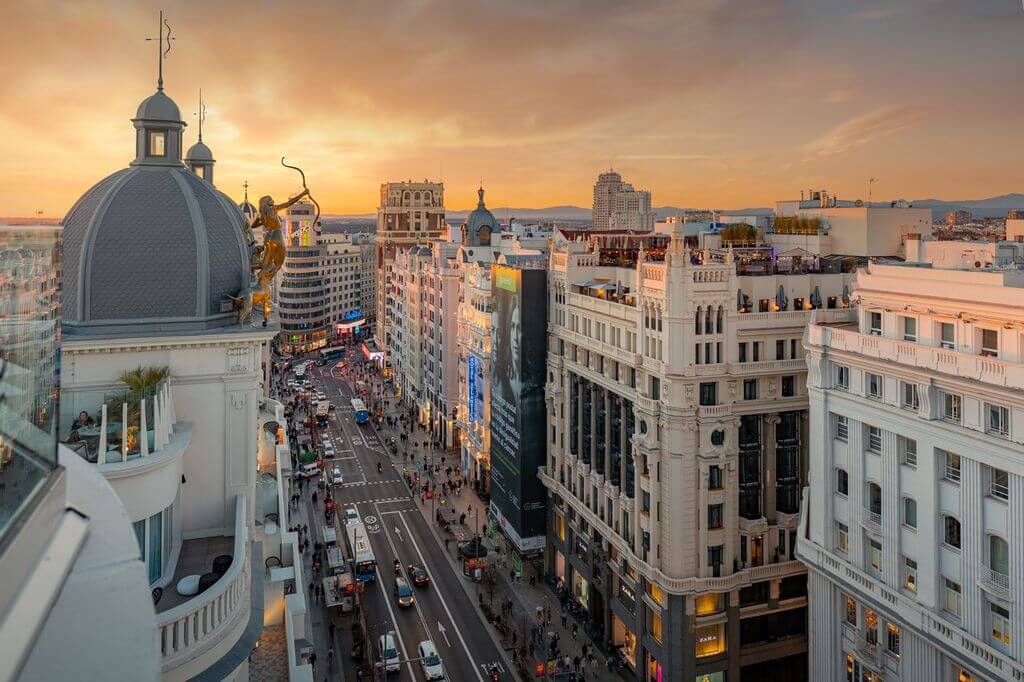
The evolution of Madrid into a premier global destination has significant socio-economic implications. The city’s ability to maintain its traditional "slow life" pace while integrating high-speed infrastructure and world-class museums has made it a model for urban tourism. However, this growth brings challenges, including the management of "overtourism" in the historic center and the rising cost of living in neighborhoods like La Latina and Barrio de las Letras.
Official responses from the Madrid City Council and the Ministry of Culture have focused on diversifying the tourism offer, encouraging visitors to explore "off-the-beaten-path" treasures such as the Monastery of Las Descalzas Reales and the Royal Monastery of La Encarnación. These sites, which remain active convents, house immense royal art collections and relics, offering a more contemplative and less commercialized experience of Spanish history.
In conclusion, Madrid’s status as a top-tier destination is the result of a deliberate convergence of heritage preservation, culinary excellence, and strategic urban planning. By leveraging its UNESCO-recognized "Landscape of Light" and its regional historical assets, Madrid continues to offer a complex, multi-layered narrative that appeals to both the economic interests of the state and the cultural curiosity of the global traveler. As the city approaches 2026 with new museum openings and infrastructure improvements, it remains a central pillar of Europe’s cultural identity.
Related posts: