Navigating long layovers, unexpected flight cancellations, and overnight transit delays is an inherent challenge of modern commercial aviation. For decades, weary travelers have faced the prospect of spending the night inside terminal buildings due to missed connections, severe weather disruptions, or budget constraints that preclude booking an airport hotel. Contrary to popular anxiety, resting or sleeping overnight in an airport terminal is generally not illegal, though the legality and feasibility of doing so are subject to strict operational policies enforced by individual facility management and local municipal authorities.
While airport security regulations focus primarily on aviation safety, public access to terminal buildings is governed by local ordinances and airport administration rules. Travel industry experts note that law enforcement intervention for sleeping in a terminal is exceptionally rare. However, the operational reality for travelers is far more complex, depending heavily on whether a specific airport remains open 24 hours a day or implements overnight closures for maintenance, security, or local noise abatement policies.
Operational Realities and Terminal Closures
The ability to remain inside an airport terminal overnight is dictated entirely by the facility’s operating hours. Major international hubs typically operate continuously, accommodating red-eye flights and international arrivals around the clock. Conversely, regional facilities and secondary airports frequently close their doors for several hours overnight, requiring all non-essential personnel and passengers to vacate the premises.
When an airport initiates a nightly closure, security or local law enforcement personnel routinely sweep the terminal and ask occupants to leave the building. Travelers without a backup plan find themselves displaced to the exterior sidewalks, nearby bus shelters, or adjacent transit hubs. This scenario presents severe safety and health risks, particularly during winter months or inclement weather. Consequently, aviation analysts and consumer advocates strongly advise passengers to formulate contingency plans before arriving at any airport, particularly when booking itineraries with extended connection times.
Security personnel and terminal operators routinely request proof of ongoing travel from individuals lingering in public areas during off-peak hours. Passengers attempting to secure a spot for the night must be prepared to present valid boarding passes, itinerary printouts, or outbound airline tickets verifying that they are legitimate travelers awaiting a scheduled departure. Failure to produce valid documentation can expedite removal from the secure airside zones or public landside areas.
Mitigation Strategies: Hotels, Lounges, and Airline Assistance
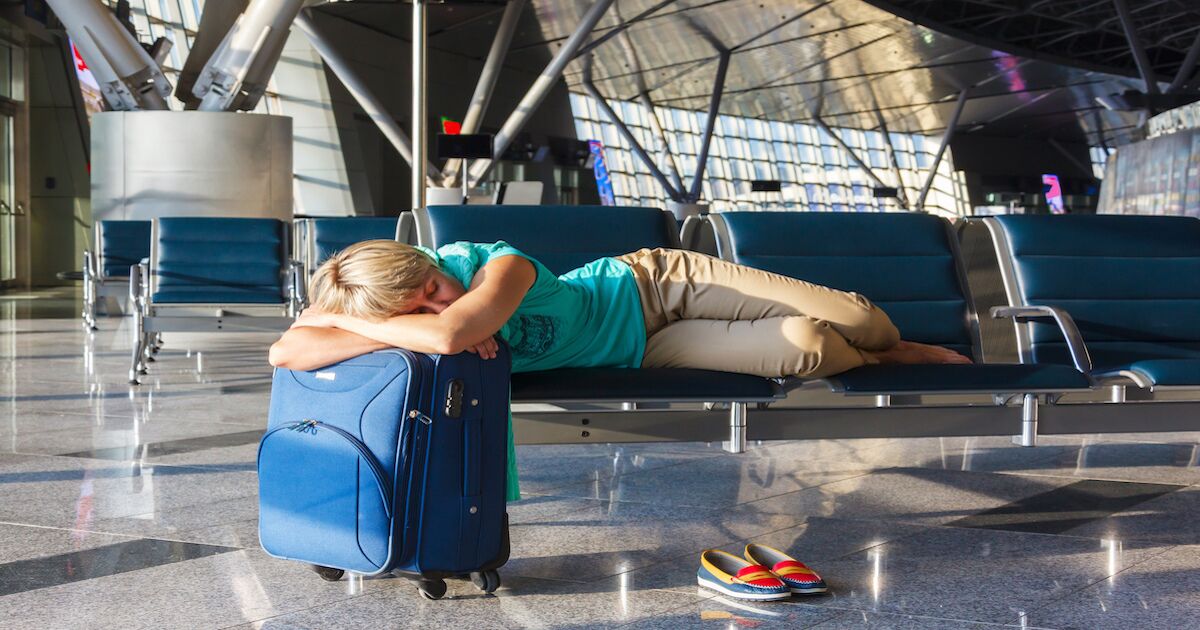
When terminal closures or uncomfortable conditions necessitate an alternative, securing formal accommodations remains the most reliable strategy. Airport hotels—either directly connected to the terminal via pedestrian walkways or accessible via short shuttle rides—offer a viable Plan B for stranded passengers. While incurring additional costs may be undesirable, industry professionals emphasize that paying for a hotel room is preferable to being forced onto a sidewalk or exposed to public transit terminals overnight.
In situations where flight cancellations or severe delays stem from airline operational failures or extreme weather events, carriers and airport authorities often provide targeted relief. Major airlines are frequently mandated by regional consumer protection regulations to provide hotel vouchers, meal coupons, and ground transportation for passengers affected by controllable cancellations. Furthermore, during catastrophic weather events that strand thousands of travelers simultaneously, select airports distribute emergency supplies, including cots, blankets, pillows, and basic toiletries. These provisions are strictly reserved for passengers involuntarily stranded by operational disruptions, rather than travelers seeking early arrival options.
Airport lounges represent another premier refuge for travelers seeking rest during long transits. Access can be secured through elite frequent flyer status, premium credit card rewards programs, or by purchasing day passes directly. Lounges offer significant advantages over standard gate seating, including dimmer ambient lighting, superior acoustics, complimentary food and beverages, and dedicated high-speed Wi-Fi networks. However, travelers must remain mindful of operating hours and potential time limits on lounge stays, as many facilities close overnight or restrict entry to a three-hour window prior to departure.
The Evolution of Airport Architecture and Sleep Infrastructure
Recognizing the financial and physical strain placed on passengers during extended layovers, airport operators globally have increasingly integrated passenger wellness and sleep infrastructure into terminal designs. The contemporary aviation landscape features a marked divergence from the rigid, armrest-laden metal chairs that historically defined airport seating.
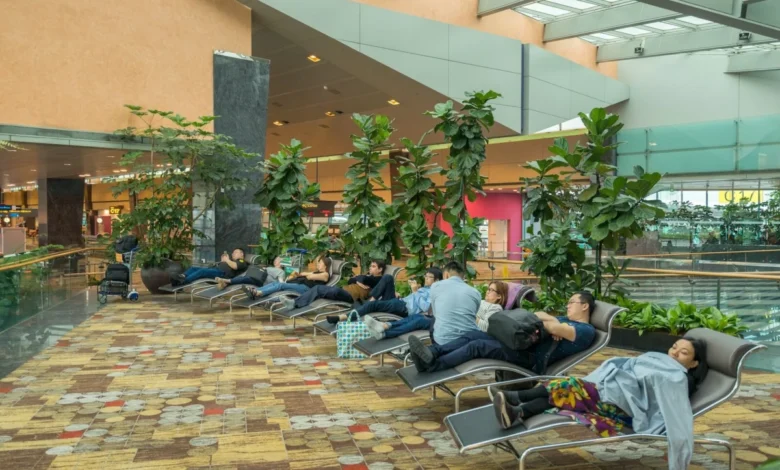
Modern terminal design increasingly incorporates "sleepability" as a core metric of passenger satisfaction and international competitiveness. Progressive airports now feature dedicated rest zones equipped with reclining lounge chairs, modular seating arrangements, and designated quiet areas. Architecturally, the removal of obstructive armrests from select seating banks allows passengers to lie down comfortably without violating terminal regulations.
The commercial sector has similarly capitalized on the demand for privacy and restorative sleep during transit. The emergence of sleep pods and micro-hotel concepts, such as Minute Suites, has transformed the layover experience for travelers willing to invest in premium amenities. These private, lockable enclosures typically feature multi-functional furniture, including couches that unfold into beds, work desks, climate controls, and entertainment systems. While standard hourly rates apply, access is frequently integrated into travel benefit networks such as Priority Pass, providing complimentary or discounted usage at participating international hubs.
Global Benchmarking: The World’s Best Airports for Sleeping
Comprehensive annual surveys conducted by specialized travel resources, including SleepinginAirports.com, evaluate global aviation hubs based on criteria encompassing terminal comfort, customer service, cleanliness, dining options, and overall sleepability. The resulting data highlights a distinct geographical divide, with Asian and European airports consistently dominating rankings for passenger-centric amenities.
Singapore Changi Airport remains the global benchmark for transit comfort. Changi features expansive terminal architecture, designated "Snooze Lounges" equipped with specialized rest chairs, and complimentary access to in-terminal movie theaters that double as quiet resting environments overnight.
Similarly, Seoul Incheon International Airport in South Korea provides dedicated rest zones featuring padded lounge chairs and flat-surface daybeds available free of charge. Tokyo Narita International Airport offers specialized overnight rest areas complete with specialized furniture and cushioned benches designed to accommodate weary travelers.
In North America, Denver International Airport provides designated "rest and recharge" zones on Concourse A, offering reclining lounge chairs without time limits or usage fees. Vancouver International Airport in Canada is widely recognized for its extensive collection of armrest-free seating and specialized nap rooms located within fee-based premium lounges. Across Europe, Amsterdam Schiphol and Munich International airports incorporate quiet zones, scattered reclining furniture, and dedicated transit hotel options directly integrated into the terminal footprint.
Strategic Alternatives to Terminal Encampments
For travelers who find the prospect of spending hours or overnight periods within an airport terminal unappealing, industry experts highlight that confinement to the airport is never mandatory. Major international airports are typically situated within 20 to 40 minutes of primary metropolitan centers via high-speed rail networks, express buses, or rideshare services.
Particularly during extended layovers exceeding six hours, exiting the airport to explore the surrounding city represents a viable and culturally enriching alternative to terminal waiting. Comprehensive transit guides and municipal tourism boards offer detailed itineraries for layover sightseeing, secure luggage storage facilities (left-luggage services), and expedited transit connections. This approach allows travelers to bypass the monotony and physical discomfort of airport seating entirely while converting an unavoidable transit delay into a destination experience.