Slovenia’s Kamnik-Savinja Alps Water Trail Offers a New Blueprint for Sustainable Alpine Tourism

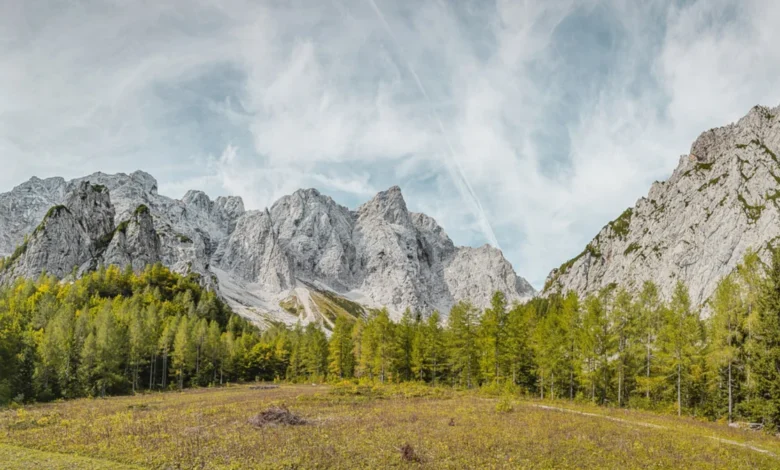
The Logar Valley, situated 3,000 feet above sea level, presents a landscape so pristine it mirrors the cinematic scale of Peter Jackson’s Middle-earth. Here, gnarled apple trees and wild meadows define the foreground, while a dramatic horizon of snow-capped peaks serves as a permanent, imposing backdrop. It is within this theater of nature that the newly established Kamnik-Savinja Alps Water Trail (KSAWT) invites travelers to experience a different side of European trekking. The 191-mile loop, officially launched to synthesize the region’s aquatic heritage with its rugged topography, marks a strategic shift in how Slovenia—a nation roughly the size of Massachusetts—is managing its growing influx of adventure tourists.
The Genesis of a Sustainable Route
The inception of the KSAWT was not merely a logistical exercise in trail connectivity; it was the culmination of a regional conservation initiative that began in 2022. Local stakeholders, in partnership with the Slovenian Tourist Board and the European Union’s Common Agricultural Policy Network, set out to identify and map the region’s most significant water sources. The initial objective was environmental awareness: cataloging 54 pristine springs, including unique carbonated, iron-rich, and mineral-heavy founts.
By 2023, this project evolved into the KSAWT. Planners recognized that the springs provided a unique narrative thread for a long-distance trail. Rather than simply connecting mountain huts or peak summits, the route weaves together historic villages, glacial lakes, and the specific aquatic nodes that have sustained these alpine communities for centuries. The resulting 11-stage trail serves as an educational corridor, featuring interpretive signage that details the geology, mineral composition, and historical usage of the water sources along the path.
A Comparative Analysis: KSAWT vs. Traditional Alpine Treks
The KSAWT offers a distinct alternative to the Slovenian Mountain Trail, a notoriously grueling route established in 1953 that demands significant technical skill and physical endurance. While the Slovenian Mountain Trail features over 23 miles of cumulative elevation gain and requires traverses across 14 peaks exceeding 7,000 feet, the KSAWT prioritizes accessibility and immersion.
With daily stages averaging 10.6 miles, the water trail is designed for a broader demographic of trekkers. It avoids the most punishing ascents—such as the 8,392-foot Grintovec peak—in favor of mid-altitude meadows and valley floors. This approach aligns with broader European tourism trends that favor "slow travel," where the objective is not just distance, but cultural engagement and environmental appreciation.
The data supports this shift. While the Camino de Santiago in Spain sees upwards of 530,000 annual thru-hikers, creating significant infrastructural pressure, Slovenia maintains a more sustainable pace. The Alpine Association of Slovenia reports that only 10,350 hikers have completed the country’s primary mountain trail since its inception 70 years ago. By distributing foot traffic across the new 191-mile water loop, the nation aims to preserve its wilderness while accommodating the 1.7 million tourists who visit its hiking regions annually.
Infrastructure and the "Water Tower" Concept
The trail’s design integrates modern amenities with historic preservation. Hikers encounter a variety of lodging options, ranging from rustic, log cabin-style pubs to Scandinavian-style lodges managed by the Alpine Association of Slovenia. To facilitate a "slackpacking" experience—where hikers carry lighter loads between established bases—the region has integrated electric shuttle vans that service the roads connecting key villages like the medieval fortress town of Kamnik.
Maša Puklavec Polutnik, a spokesperson for the Slovenian Tourist Board, describes the mountains as a "natural water tower." The project’s emphasis on the drinkability and unique flavor profiles of the springs adds a sensory component to the hike. Hikers are encouraged to perform "water tastings," comparing the chemical makeup and mineral profiles of different springs. This initiative serves a dual purpose: it educates the public on the importance of protecting these water sources while providing a unique, value-added experience that distinguishes the KSAWT from other European trails.
Cultural Integration and Local Economies
The trail is heavily rooted in the culinary and agricultural traditions of the Savinja region. Scott Vanderlip, founder of Trail Angel Central (TAC) and an experienced thru-hiker who has logged miles on both the Pacific Crest Trail and European routes, notes that the KSAWT succeeds because it bridges the gap between physical exertion and cultural indulgence.
"Slovenia is a treasure trove for long-distance backpackers," Vanderlip states. "Particularly those who prefer their alpine views with a hardy side of cultural history and traditional foods, yet want to avoid big crowds."
This "culinary ante" is a cornerstone of the trail experience. Because the route traverses various villages, it showcases regional specialties that are rarely found outside of Slovenia. Examples include:
- Zgornjesavinjski Želodec: A cured meat product consisting of pork leg, shoulder, and cubed bacon, seasoned with garlic water and pressed flat.
- Trnič Cheese: A traditional cheese crafted from cottage cheese, cream, and salt, with historical roots in high-elevation shepherd culture.
- Unique Viticulture: Regional wines utilize ancient grape varietals and techniques such as whole-cluster fermentation and the use of native yeasts, resulting in flavor profiles distinct from standard international chardonnays or merlots.
Environmental Implications and Future Outlook
The hardening of the trail—including the installation of stone headwalls, outflow pipes, and improved treads—represents a proactive management strategy. By focusing visitor activity on designated paths and protected spring sites, the Slovenian government is attempting to mitigate the impact of increased foot traffic on fragile alpine ecosystems.
Furthermore, the integration of annual drinking water festivals serves to keep the local community engaged with the conservation of their natural resources. These festivals celebrate the connection between the mountain springs and the downstream industries, such as wine, beer, and spirits production. By linking these industries to the trail, the KSAWT ensures that local economic interests are aligned with environmental preservation.
The success of this project could serve as a template for other European nations struggling to manage the environmental degradation that often accompanies mass-market adventure tourism. By creating high-value, low-impact infrastructure that highlights the unique geological and cultural assets of a specific region, Slovenia is effectively positioning itself as a leader in the next generation of sustainable hiking.
As the international backpacking community continues to identify Slovenia as a "hidden gem," the challenge will remain in balancing accessibility with preservation. For now, however, the KSAWT stands as a robust, thoughtful, and highly distinct contribution to the world of long-distance trekking. It offers a rare combination of world-class scenery, historical depth, and a culinary experience that is inextricably linked to the very geography the hiker is traversing. Whether through the mist of the 300-foot Rinka Waterfall or the quiet, historic streets of Kamnik, the trail provides a compelling argument for a slower, more deliberate exploration of Europe’s alpine landscapes.