WHO and Switzerland cement cooperation until 2028 as the nation reaffirms its commitment to global health security and multilateral health governance.

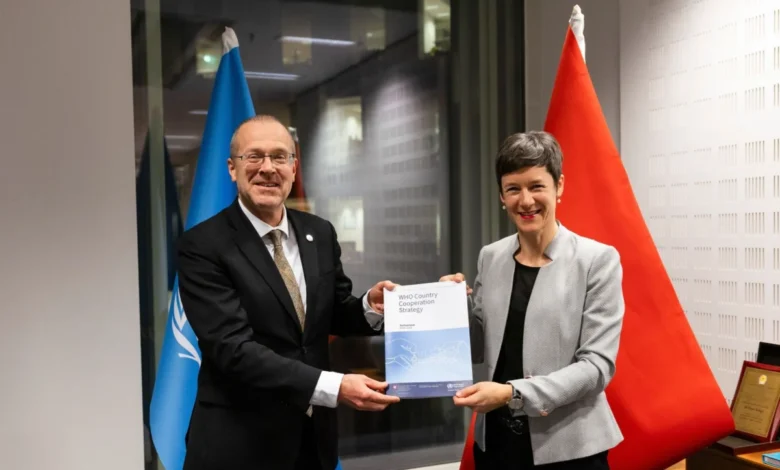
In a formal ceremony held on March 4, 2025, at the World Health Organization (WHO) Regional Office for Europe in Copenhagen, Denmark, representatives from the Swiss Confederation and the WHO solidified a strategic partnership that will define their collaborative health agenda through 2028. This agreement represents more than a simple administrative renewal; it marks the evolution of a decade-long relationship that has positioned Switzerland as a pioneering model for how high-income nations can engage with the WHO to address both domestic and global health challenges.
The signing ceremony, attended by Dr. Hans Henri P. Kluge, WHO Regional Director for Europe, and Barbara Schedler, Ambassador for Global Health at the Swiss Federal Office of Public Health, underscores a shared vision for resilient health systems, pandemic preparedness, and the advancement of digital health infrastructure. By formalizing this strategy, both parties have committed to a structured roadmap that prioritizes equity, innovation, and evidence-based policy implementation.
A Decade of Collaborative Evolution: A Chronology
The genesis of this partnership traces back to 2013, a milestone year in which Switzerland became the first high-income country within the WHO European Region to adopt a dedicated Country Cooperation Strategy (CCS). At the time, such instruments were primarily reserved for low- and middle-income nations requiring technical assistance for health system capacity building. Switzerland’s decision to engage in this framework demonstrated a shift in diplomatic thinking, signaling that the WHO’s expertise was as vital to advanced economies as it was to developing ones.
- 2013: Switzerland breaks new ground by piloting the first WHO Country Cooperation Strategy for a high-income European nation, focusing on integrated care and health policy alignment.
- 2013–2021: The initial phase of the partnership focuses on aligning Swiss national health goals with European-wide health frameworks, particularly in the realms of non-communicable diseases (NCDs) and health system efficiency.
- 2022: Following the global disruption caused by the COVID-19 pandemic, both the Swiss government and the WHO initiate a formal review to update the strategy to reflect the realities of a post-pandemic world, emphasizing supply chain resilience and global surveillance.
- March 4, 2025: The signing of the 2024–2028 Cooperation Strategy in Copenhagen, establishing the parameters for the next four years of technical cooperation.
Strategic Pillars of the 2024–2028 Framework
The newly minted cooperation strategy is built upon several critical pillars that reflect the contemporary global health landscape. Central to this is the acceleration of the "Global BioHub" initiative. This system, which Switzerland has championed, is designed to facilitate the rapid sharing of pathogens and biological materials, ensuring that the global community can develop diagnostic tests, vaccines, and treatments at unprecedented speeds during future outbreaks.
Furthermore, the strategy emphasizes "One Health" approaches—an integrated model that recognizes the inextricable links between human, animal, and environmental health. As climate change continues to alter the epidemiology of infectious diseases, the collaboration aims to build more robust surveillance mechanisms that can detect zoonotic spillover events before they escalate into pandemics.
Another core focus is the digital transformation of health services. Switzerland, with its sophisticated technological infrastructure, is working alongside the WHO to standardize digital health records and telehealth protocols. This, according to policy analysts, is crucial for cross-border patient care and the harmonization of health data standards across the European region.
The Role of Switzerland in Global Health Governance
Switzerland’s influence in the global health arena extends far beyond its borders. As the host nation for the WHO headquarters in Geneva, Switzerland serves as the central hub for global health diplomacy. The renewed cooperation strategy acknowledges this unique status, aiming to leverage Switzerland’s diplomatic assets to foster greater international solidarity.
Official statements from the Swiss Federal Office of Public Health have consistently highlighted that for a country so deeply integrated into the global economy, domestic health security is inseparable from global health security. The strategy document explicitly states that the partnership aims to "strengthen the resilience of health systems to absorb and adapt to shocks," a direct lesson learned from the systemic pressures of 2020 and 2021.

Data and Impact: Why the Strategy Matters
The importance of this partnership is reflected in the metrics. Since 2013, Switzerland has consistently ranked among the top contributors to the WHO’s flexible funding mechanisms. Unlike earmarked contributions, which limit the WHO’s ability to respond to emerging crises, flexible funding allows the organization to allocate resources where they are most urgently needed.
According to the 2024–2028 documentation, the partnership will prioritize:
- Health Systems Strengthening: Reducing the burden of chronic diseases through primary care reform.
- Emergency Preparedness: Implementing the updated International Health Regulations (IHR) to ensure rapid response capabilities.
- Governance and Diplomacy: Promoting evidence-based health policies in multilateral forums, including the World Health Assembly.
Economic data from the Swiss Federal Statistical Office indicates that healthcare spending in Switzerland accounts for approximately 11-12% of the national GDP. By aligning this significant expenditure with WHO best practices, Switzerland ensures that its domestic health investments produce outcomes that are scalable and transferable to other nations within the European Region.
Official Perspectives and Reactions
While the formal signing was a bureaucratic necessity, the atmosphere at the Copenhagen Regional Office was described by observers as one of "deep alignment." Dr. Hans Henri P. Kluge has frequently cited Switzerland as a vital partner, noting that the country’s commitment to the WHO goes beyond financial support; it includes a willingness to share expertise, laboratory capacity, and policy innovations.
From the Swiss perspective, the Ambassador for Global Health, Barbara Schedler, has emphasized that the partnership provides a critical "testing ground" for global policies. If a policy can be successfully implemented within the Swiss federalist system—which involves coordination across multiple cantons with significant autonomy—it is often viewed as a viable model for more complex, decentralized health systems globally.
Analysis: Implications for the Future
The decision to extend this partnership through 2028 occurs at a time of significant geopolitical tension, where the WHO faces increasing pressure to demonstrate its relevance and operational efficiency. By securing a long-term commitment from a prominent, wealthy, and politically stable member state, the WHO reinforces its standing as the primary coordinating body for global health.
For Switzerland, the strategy serves to solidify its brand as a "Health Diplomacy" leader. By embedding itself so deeply into the WHO’s strategic planning, the nation ensures that its voice is at the center of discussions regarding pandemic treaties, antimicrobial resistance (AMR), and the ethics of health technology.
However, challenges remain. The next four years will require both parties to navigate the integration of artificial intelligence into public health, the rising costs of medical technology, and the persistent inequalities in access to essential medicines. The 2024–2028 strategy explicitly acknowledges these hurdles, proposing a framework that relies on iterative evaluation rather than rigid adherence to past practices.
Conclusion
The renewal of the WHO-Switzerland cooperation strategy is a landmark development in the landscape of international health governance. By blending the technical expertise of the World Health Organization with the diplomatic and economic resources of the Swiss Confederation, the partnership aims to create a blueprint for modern health policy. As the world faces an increasingly complex array of health threats—ranging from the next potential pandemic to the slow-burning crisis of chronic disease—the stability provided by this 2024–2028 agreement will be essential in ensuring that the global health architecture remains both proactive and prepared. The progress made in Copenhagen serves as a reminder that in an interconnected world, the health of one nation is inextricably linked to the collective health of all.