Family of missing trail runner Kalie McCrystal breaks silence following suspension of Matterhorn search

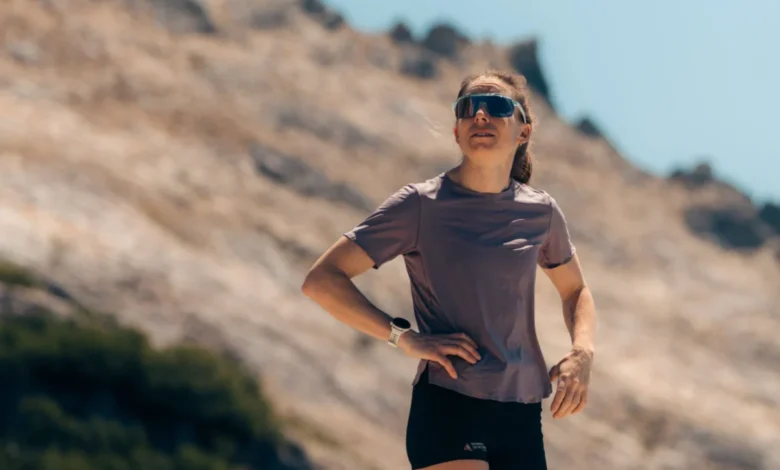
The family of Kalie McCrystal, the 38-year-old Canadian skyrunner who vanished while traversing the Matterhorn on September 1, has officially broken their silence. In a poignant statement released to the public on September 16, 2026, her mother, Wendy Cooper, and her sister, Jody McCrystal, acknowledged that they have come to the difficult conclusion that the athlete likely perished after a fall during her descent. This update comes eight days after Italian authorities officially suspended the extensive search and rescue operation that failed to recover the runner or her remains.
A Chronology of the Disappearance
The disappearance of Kalie McCrystal has sent shockwaves through the international trail running and mountaineering communities. McCrystal, a seasoned athlete with significant experience in high-altitude, technical terrain, was in the Pennine Alps to attempt a new speed record. She had set her sights on the Fastest Known Time (FKT) for the Matterhorn, a record held by Karina Anderson at 5 hours, 14 minutes, and 53 seconds, which had been established only weeks earlier on August 9.
On the morning of September 1, McCrystal embarked on a reconnaissance run via the Lion Ridge, the primary route to the summit from the Italian side. According to fellow runner and friend Hillary Gerardi, who was in contact with McCrystal regarding her plans, the athlete reached the 14,692-foot summit successfully. Her final confirmed sighting occurred during her descent. When she failed to check in as scheduled, a multi-national search operation was mobilized, involving the Italian Guardia di Finanza mountain rescue team, specialized aerial drones, and ground-level support coordinated by the Royal Canadian Mounted Police (RCMP). Despite nearly two weeks of intensive effort, the harsh, unforgiving topography of the mountain thwarted recovery attempts.
The Anatomy of a High-Altitude Tragedy
The Matterhorn, straddling the border between Switzerland and Italy, remains one of the most iconic yet perilous peaks in the world. Its sheer faces and complex ridge systems require a high level of technical competency. According to the Zermatt Tourism Board, approximately 3,000 climbers attempt to summit the mountain annually. However, the mountain’s reputation as a "killer peak" is statistically supported: an average of six fatalities occur on its slopes every year. Historical data indicates that approximately 600 people have lost their lives on the mountain over the past 160 years.
Experts note that even for elite athletes, the descent of the Matterhorn is statistically more dangerous than the ascent. The combination of physical fatigue after reaching the summit, the psychological toll of a speed-record attempt, and the unpredictable rockfall and weather conditions at 14,000 feet creates a narrow margin for error. McCrystal’s family, in their statement, underscored this reality, noting that despite her "exceptional skill and experience," the nature of the terrain likely proved insurmountable during the descent.
Official Responses and Humanitarian Efforts
The scale of the search operation reflected the high esteem in which McCrystal was held within the athletic community. The Guardia di Finanza conducted exhaustive sweeps of the Lion Ridge and the surrounding glaciers. The coordination between the Italian authorities and Canadian officials was noted as seamless by the family, who expressed their gratitude for the "unwavering professionalism" of the rescue teams.
Hillary Gerardi, who was instrumental in raising the initial alarm, served as a primary liaison between the family and the local rescue crews. Her involvement highlights the close-knit nature of the skyrunning community, where athletes often rely on one another for safety, logistics, and moral support. The family’s statement explicitly recognized the efforts of those who "mobilized from around the world" to assist in the search, emphasizing that the solidarity shown during the crisis provided them with a modicum of comfort.
The Risks of High-Speed Mountaineering
The incident has sparked renewed discourse regarding the inherent risks of "skyrunning" and high-altitude speed records. While the pursuit of FKTs is a growing discipline in endurance sports, it necessitates a departure from traditional, slower-paced mountaineering. Speed records require athletes to move fast, often with minimal gear, which reduces the ability to anchor safely or wait out sudden weather shifts.
Professional mountaineers argue that the line between athletic performance and survival becomes increasingly blurred at extreme altitudes. The "reconnaissance" phase of a record attempt is intended to mitigate risk, yet it also exposes the athlete to the mountain’s dangers multiple times. Analysts suggest that while speed can be a safety asset—allowing an athlete to avoid afternoon storms or rockfall—it leaves no room for the mechanical or human failures that are more easily corrected at a standard climbing pace.
A Legacy in the Mountains
For those who knew Kalie McCrystal, her loss is defined not just by the circumstances of her disappearance, but by her profound connection to the sport. Her family described her as an individual who moved through life with "equal parts determination and fun," and who had invested deeply in the communities of Squamish, British Columbia, and the broader international skyrunning circuit.
The family’s decision to accept the outcome of the search, while painful, is rooted in a desire to honor her passion. "While we desperately wish we could have found her, we find peace in knowing that she was doing what made her feel most alive until her very last moments, and that she remains among the mountains where she felt most at home," the statement read.
As the search officially concludes, the focus shifts toward memorializing a life cut short in pursuit of a summit. The impact of her disappearance serves as a somber reminder to the mountaineering community of the fragility of life in high-altitude environments. Her legacy remains tied to the very peak she sought to conquer—a monument that continues to command both reverence and caution from all who dare to scale it.
Future Implications for Alpine Safety
In the wake of this event, authorities in the Aosta Valley and the Zermatt region are expected to review safety protocols for high-speed ascent attempts. While restrictions on mountaineering are historically difficult to implement, there is increasing pressure for organizers of such records to implement stricter mandatory safety check-ins and satellite tracking requirements.
The case of Kalie McCrystal will likely be studied by alpine rescue organizations for years to come, not only as a tragic loss but as a case study in the complexities of searching for missing persons in one of the most vertical and inaccessible environments on earth. The inability to recover her remains highlights the limitations of modern search-and-rescue technology when confronted with the vast, chaotic geology of the Pennine Alps.
For now, the McCrystal family, along with her friends and the global sporting community, are left to grapple with the closure of the search. The void left by her absence is felt deeply across the sport, marking a period of reflection for the entire skyrunning industry. The "huge hole" the family refers to is not merely personal; it represents the loss of a pioneer who pushed the boundaries of human performance in some of the most unforgiving landscapes on the planet.
As the mountain enters the winter season, the terrain where McCrystal was last seen will soon become inaccessible to all but the most elite winter climbers, effectively closing the site to further search efforts for the foreseeable future. Her memory, however, remains fixed in the annals of the sport, a testament to the dedication of those who view the highest peaks not as obstacles, but as the ultimate arena for human potential.