California’s Car Culture Is Codified With Passing Of Leno’s Law And New Lowrider License Plate Design

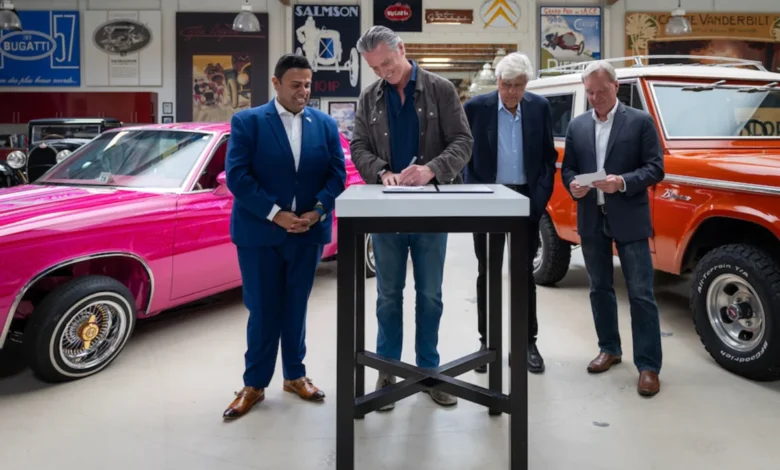
California Governor Gavin Newsom signed a trio of significant automotive legislative measures into law, marking a major milestone for the state’s historically rich and culturally diverse automotive community. Encompassing Senate Bill 1392—widely known as Jay Leno’s Law—alongside Assembly Bill 2541 and Senate Bill 1069, the newly enacted legislation strikes a deliberate balance between preserving the state’s aggressive environmental protection mandates and honoring the profound historical impact of car culture. These bills address long-standing tensions between strict emissions oversight and the preservation of classic and custom vehicle traditions, offering regulatory relief for select collector vehicles, establishing a specialized revenue-generating license plate program for lowrider culture, and streamlining the market entry process for aftermarket automotive components.
The legislative package arrives at a pivotal juncture for the Golden State, which has spent decades pioneering vehicle emissions regulations in the United States. While these stringent environmental policies have yielded undeniable air quality improvements for millions of residents, they have simultaneously imposed steep compliance hurdles on classic vehicle enthusiasts, custom car builders, and small aftermarket businesses. By carving out carefully measured exemptions and administrative pathways, the new laws signal a formal recognition from state leadership that automotive heritage is an integral component of California’s social and cultural fabric, worthy of state-level protection and codification.
The Evolution and Enactment of Jay Leno’s Law
Senate Bill 1392 introduces a modified, highly targeted exemption to California’s notoriously rigorous biennial smog check requirements, offering relief to owners of qualifying collector vehicles manufactured between 1976 and 1985. The journey toward this legislative victory has been protracted and politically fraught. An earlier iteration of the concept, introduced as Senate Bill 712, suffered a decisive defeat in the state legislature’s appropriations committee in August 2025. Facing concerns regarding potential air quality degradation and enforcement complexities, lawmakers and advocates returned to the drawing board to refine the parameters of the exemption.
The newly signed SB 1392 represents a significantly stricter, more constrained version of the original proposal. Whereas the initial draft sought to exempt any motor vehicle over 35 years old registered and insured as a collector car from smog inspections without mileage restrictions, the enacted legislation establishes strict limitations. The smog check exemption now applies exclusively to gasoline-powered vehicles from the 1976 to 1985 model years that meet specific criteria: they must be formally insured as collector vehicles and driven fewer than 1,000 miles per calendar year.
To contextualize this reform, California has long maintained broad smog exemptions for older vehicles. Gasoline-powered cars and trucks manufactured in 1975 or earlier have historically enjoyed total exemption from biennial smog checks, recognizing their status as true vintage antiques. Similarly, California-registered diesel-powered vehicles from the 1983 model year and earlier—subsequently adjusted over time—have benefited from regulatory carve-outs. Vehicles built between 1976 and 1985, however, had previously remained trapped in a perpetual compliance cycle, requiring regular emissions testing despite being driven sparingly and maintained as historical artifacts.
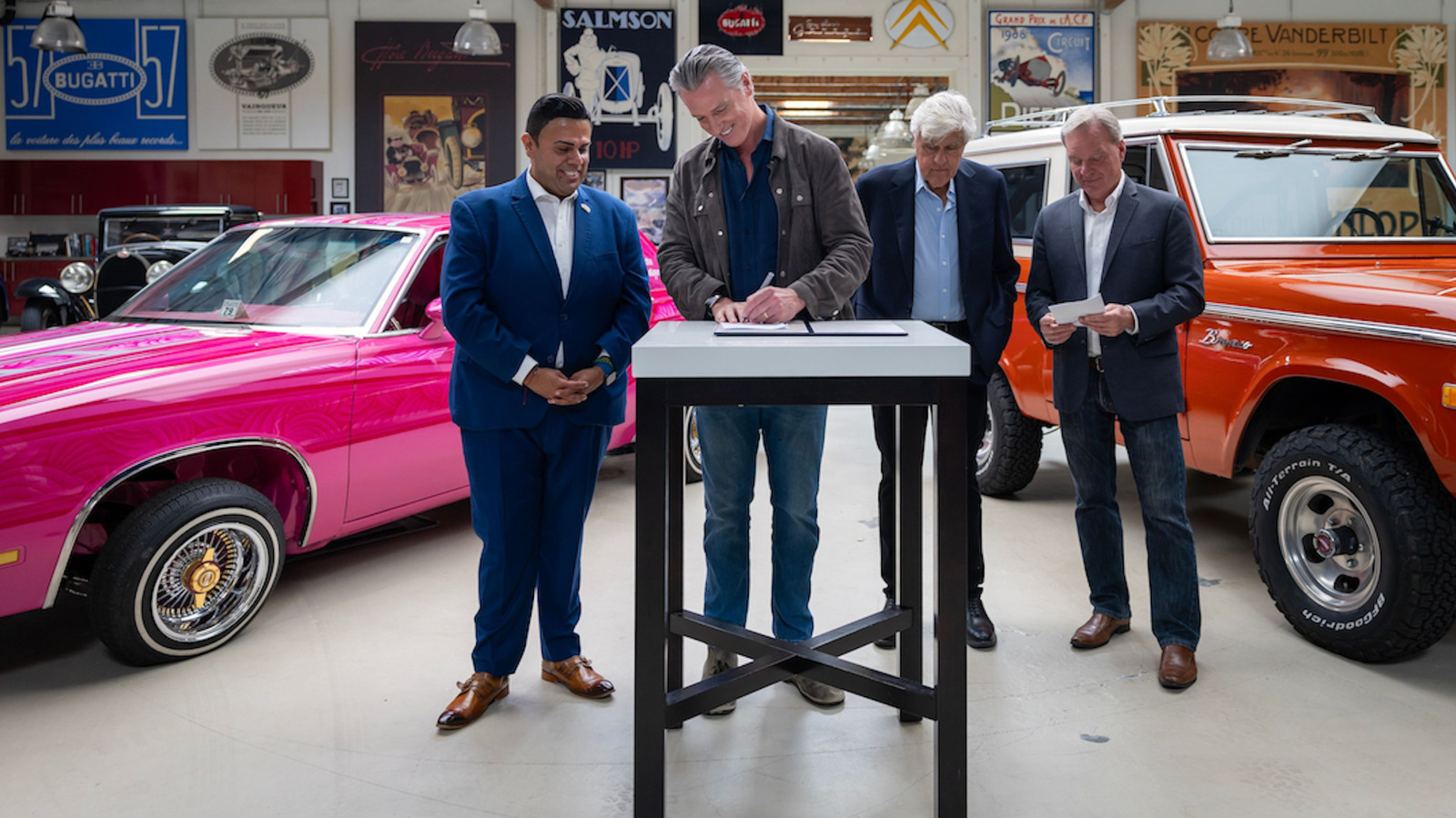
Governor Newsom’s office emphasized that the targeted nature of SB 1392 preserves the state’s broader environmental trajectory. In an official statement accompanying the signing at Jay Leno’s garage, the administration noted that limiting the exemption to a narrow class of low-mileage collector vehicles allows California to maintain its aggressive acceleration toward a clean transportation future while safeguarding its standing as an epicenter of American classic car heritage.
Celebrating Chicano Heritage and the Institutionalization of Lowrider Culture
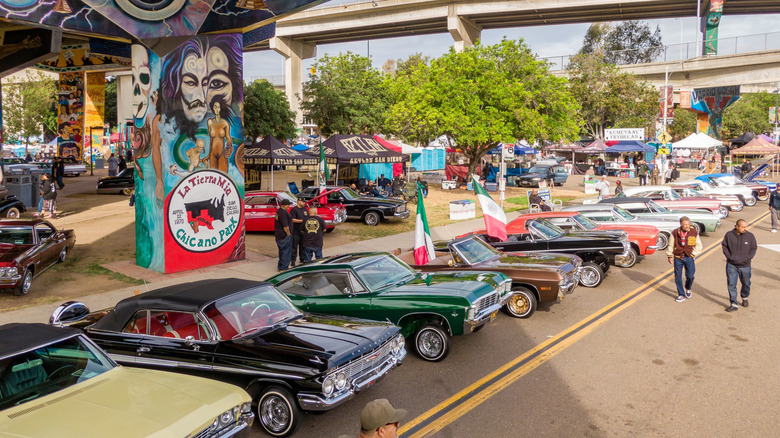
Complementing the environmental adjustments of Leno’s Law, Assembly Bill 2541 directly confronts the historical criminalization of Latino and Chicano automotive traditions by establishing a specialized lowrider license plate program. This legislation builds upon the monumental passage of AB 436 in late 2023, which successfully repealed local municipal bans on "cruising" that had been enacted across various California cities during the early 1980s. These historical ordinances were widely criticized by community leaders, sociologists, and automotive historians as discriminatory measures specifically designed to suppress Chicano cultural expression and gathering spaces.
Lowrider culture, pioneered primarily by Mexican-American communities in Southern California and the broader Southwest following World War II, transformed the automobile into a rolling canvas of fine art, hydraulic engineering, and familial legacy. Vehicles are frequently passed down through generations, serving as focal points for community identity, neighborhood cohesion, and artistic innovation. State officials acknowledged that past regulatory crackdowns and anti-cruising laws unjustly criminalized an entire cultural movement rooted in creativity and civic pride.
Authored by Assemblymember Mark González, who represents California’s 54th Assembly District encompassing parts of Los Angeles, Commerce, Montebello, and Vernon, AB 2541 institutionalizes state-level support for this heritage. "AB 2541 says that Chicano history is California history, that our cultura belongs on California’s roads, and that we should invest in the artists, organizations, and youth programs carrying this legacy forward for the next generation," González stated.
The bill directs the California Department of Motor Vehicles (DMV), in consultation with the California Arts Council, to design a specialized license plate that visually reflects lowrider culture and heritage. The Lowrider License Plate Program will officially initiate production once the DMV receives a minimum threshold of 7,500 paid applications by January 1, 2032. Financial proceeds generated from the sale and renewal of these specialized plates will be channeled directly into a newly established Lowrider Arts and Culture Fund. This dedicated fund will provide crucial financial support for statewide cultural preservation efforts, community arts programs, and youth initiatives dedicated to maintaining lowrider traditions.
Streamlining Aftermarket Commerce Through SEMA-Backed Legislation
The third pillar of the legislative package, Senate Bill 1069, addresses the commercial and regulatory challenges faced by the automotive aftermarket industry, operating with the backing of the Specialty Equipment Market Association (SEMA). Prior to the enactment of SB 1069, emissions-related aftermarket products—ranging from specialized exhaust components to performance tuners—faced a protracted and rigorous evaluation process by the California Air Resources Board (CARB). Under previous rules, manufacturers were legally barred from selling, advertising, or installing any emissions-related product in the state without first securing a CARB Executive Order.
While CARB’s stringent oversight is designed to prevent illegal emissions tampering and ensure that modifications do not compromise air quality, the administrative backlog often created significant delays. Small businesses and manufacturers frequently experienced extended financial uncertainty while waiting for final administrative sign-offs, putting them at a competitive disadvantage and stalling the introduction of innovative technology to the marketplace.
SB 1069 rectifies this bottleneck by establishing a new conditional approval pathway. The legislation allows qualifying emissions-related aftermarket products to be sold under the SEMA Certified Emissions Program while CARB completes its final, comprehensive review. It is important to note that the bill does not dilute California’s environmental standards; CARB retains its absolute authority to ultimately approve or deny the executive order, and the state’s core emissions regulations remain completely unaltered.
SEMA CEO Mike Spagnola praised the bipartisan legislative action, highlighting its practical economic benefits. "SB 1069 will give manufacturers that have invested in emissions testing and compliance a meaningful pathway to get qualifying products to market faster in California, and enable new products to reach consumers, provide small businesses with certainty to invest, and keep American companies competitive," Spagnola noted in a statement. By bridging the gap between rigorous environmental compliance and commercial viability, the law provides a predictable framework for businesses operating within the state’s massive automotive ecosystem.
Broader Implications for California’s Automotive Identity
The simultaneous enactment of SB 1392, AB 2541, and SB 1069 reflects a nuanced evolution in how California governs its complex relationship with the automobile. For decades, the state has occupied a dual identity: it is simultaneously the birthplace of modern car culture—defined by expansive freeways, coastal scenic routes, and sprawling metropolitan car dependency—and the nation’s preeminent regulatory authority on vehicular emissions control. This dichotomy has frequently placed environmental regulators and automotive enthusiasts at loggerheads.
By implementing these measures, the California state government has demonstrated an institutional willingness to codify cultural preservation alongside environmental stewardship. The targeted nature of Jay Leno’s Law ensures that air quality gains achieved over the past four decades will not be compromised, as the mileage and insurance caps restrict the exemption to a tiny fraction of the vehicle fleet. Simultaneously, the institutionalization of lowrider license plates and the targeted relief for aftermarket suppliers validate communities that felt historically marginalized by blanket municipal and state restrictions.
Ultimately, these legislative acts ensure that California’s diverse automotive traditions—from pristine mid-century collector cars and hydraulic-equipped lowriders to innovative aftermarket engineering—can legally and safely endure. As the transportation landscape rapidly shifts toward electrification and autonomous technology, the codification of these foundational cultural practices guarantees that the human passion, artistic expression, and historical reverence attached to the internal combustion engine will remain preserved for future generations of Californians.
Related posts: