Angelelli Automobili Unveils Project 754 a Limited Edition Coachbuilt Supercar Based on the Porsche 911 Platform

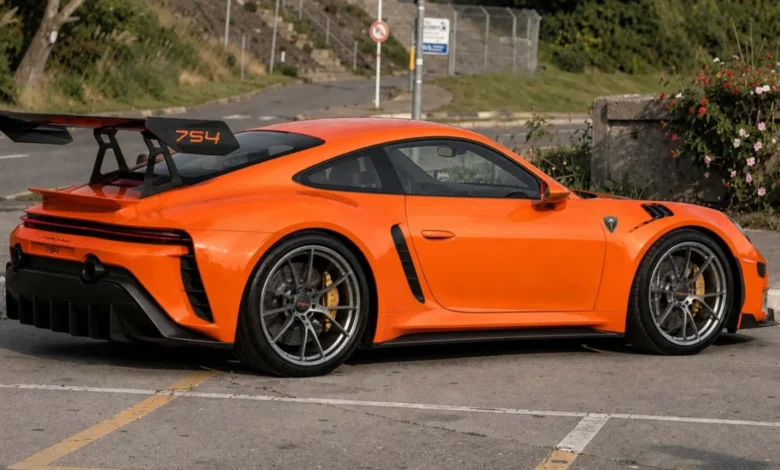
Angelelli Automobili, an Italian boutique manufacturer specializing in the integration of aerospace-grade technologies into high-performance road vehicles, has officially announced its latest endeavor, Project 754. This new supercar represents a significant departure from standard production cycles, positioning itself within the exclusive realm of modern coachbuilding. By utilizing the Porsche 911—specifically the 991 and 992 generations—as a technical foundation, Angelelli Automobili aims to deliver a vehicle that combines German mechanical reliability with Italian avant-garde design and engineering. The project is defined by its strict exclusivity, with a total production run limited to only 50 units worldwide.
Project 754 is not merely an aesthetic modification of an existing sports car but a comprehensive re-engineering effort. While the chassis and certain structural elements are derived from the Porsche 911, the vehicle undergoes an extensive transformation involving completely bespoke bodywork, redesigned mechanical configurations, and the application of proprietary manufacturing techniques. Angelelli Automobili has explicitly clarified that it maintains no formal industrial or commercial relationship with Porsche AG, operating instead as an independent coachbuilder that selects the 911 platform for its proven performance benchmarks and structural integrity.
The Dual-Layout Strategy: 754 R and 754 M
A defining characteristic of Project 754 is the offering of two distinct mechanical configurations, categorized as the 754 R and the 754 M. This approach allows the manufacturer to cater to two different schools of driving philosophy while utilizing the same fundamental design language.
The Project 754 R maintains the traditional rear-engine layout that has defined the Porsche 911 for over six decades. This configuration is engineered to maximize rear-axle traction and provide the specific weight-transfer characteristics favored by enthusiasts of the classic 911 silhouette. The 754 R is intended for drivers who value explosive acceleration and the unique handling dynamics associated with a rear-heavy weight bias.
Conversely, the Project 754 M represents a more radical departure from its donor platform. In this iteration, the engine is relocated to a mid-ship position. Moving the powerplant forward of the rear axle fundamentally alters the vehicle’s polar moment of inertia, resulting in a more neutral handling balance and increased stability during high-speed cornering. The mid-engine layout is traditionally associated with the world’s most elite supercars, and by offering this conversion, Angelelli Automobili provides a level of chassis customization rarely seen in the coachbuilding industry.
Both variants are projected to produce power outputs ranging between 700 and 800 horsepower, depending on the specific tuning and customer requirements. This level of performance places Project 754 in direct competition with the most capable track-focused production cars currently available on the market.
Advanced Manufacturing and Generative Design
The development of Project 754 relies heavily on what the company describes as "generative design" and "topology optimization." These processes involve the use of advanced algorithms to determine the most efficient distribution of material within a component to meet specific strength and weight targets. By utilizing these computational tools, Angelelli Automobili can produce parts that are significantly lighter than their traditional counterparts without sacrificing structural rigidity.
To bring these optimized designs to life, the company employs metal 3D printing (additive manufacturing) using titanium and high-strength alloys. This technology allows for the creation of complex geometries that would be impossible to manufacture using traditional milling or casting methods. The use of 3D-printed titanium components is a strategy typically reserved for aerospace engineering or Formula 1 racing, highlighting the high-tech nature of the project.
Complementing the advanced metalwork is a body constructed entirely from carbon fiber. The use of composites is essential for maintaining a low curb weight, which is a primary objective for Project 754. The aerodynamic package has been developed using computational fluid dynamics (CFD) to ensure that the car remains stable at the extreme speeds its 800-horsepower engine is capable of reaching. The design emphasizes cooling efficiency for the high-output powertrain while generating sufficient downforce for track use.
The Resurgence of Modern Coachbuilding
The announcement of Project 754 comes at a time when the automotive industry is witnessing a significant resurgence in coachbuilding. Historically, coachbuilding was the standard for luxury automobiles in the early 20th century, where manufacturers like Rolls-Royce or Hispano-Suiza would provide a rolling chassis to be finished by specialized firms such as Gurney Nutting or Saoutchik.
In the modern era, this practice has evolved. Companies like Singer Vehicle Design, Gunther Werks, and RUF Automobile have demonstrated a substantial global appetite for vehicles that take a known platform—most frequently the Porsche 911—and elevate it through modern materials and bespoke craftsmanship. Angelelli Automobili’s Project 754 fits into this "restomod" or "re-body" niche but distinguishes itself through its focus on futuristic, aerospace-derived technology rather than retro-inspired aesthetics.
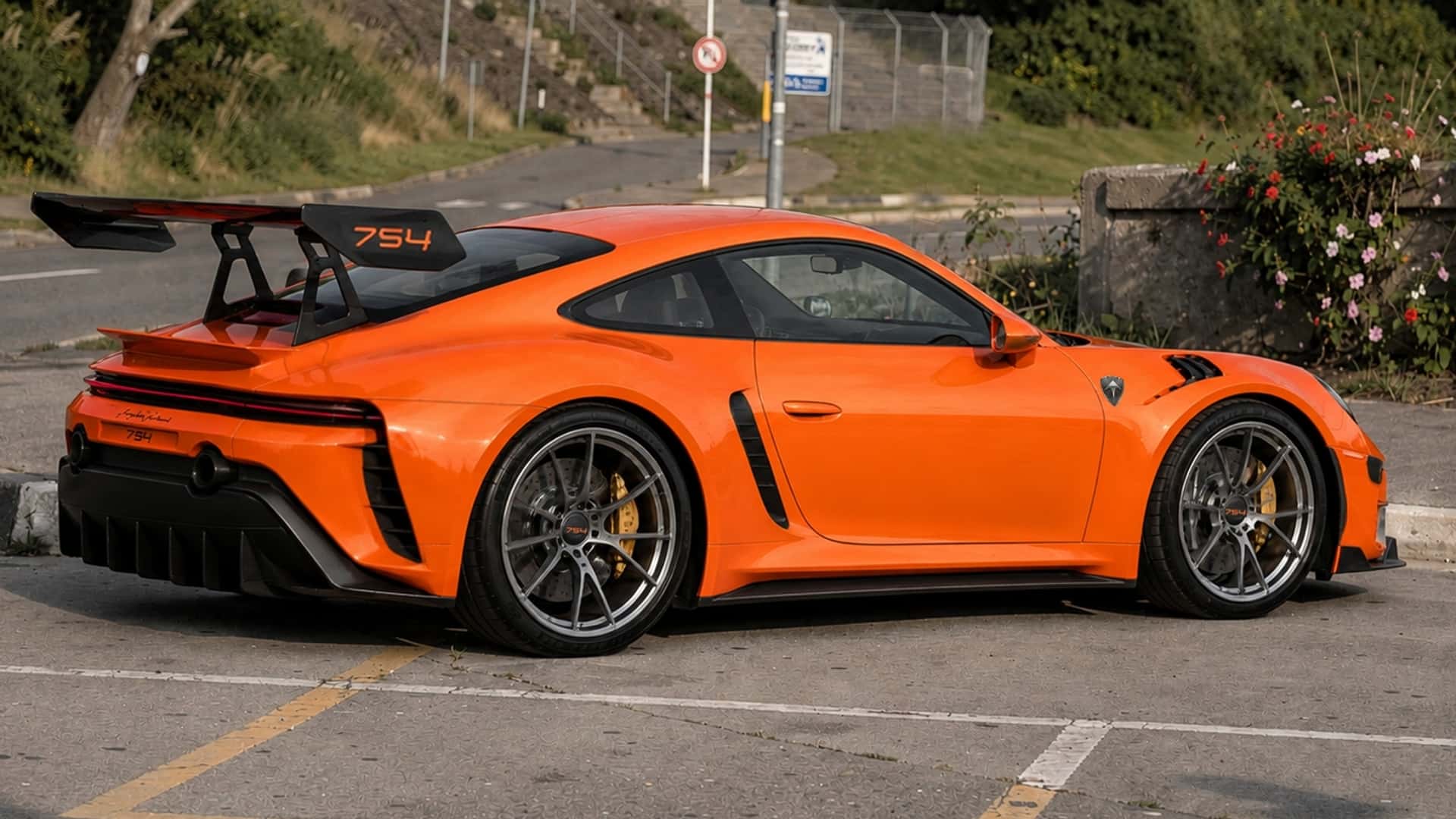
The decision to limit production to 50 units (25 for the 754 R and 25 for the 754 M) ensures that the vehicle remains a collector’s item. In the ultra-high-net-worth automotive market, scarcity is a primary driver of value. By offering a vehicle that is essentially a one-of-one build for each of its 50 clients, Angelelli is positioning itself alongside prestigious brands that prioritize exclusivity over volume.
Customization and Client Involvement
According to Angelelli Automobili, the acquisition of a Project 754 is a collaborative process between the manufacturer and the owner. Because each car is built to order, customers are granted extensive control over the final specifications. This customization extends far beyond paint colors and interior leather choices.
Owners can influence the mechanical setup of the car, including suspension tuning calibrated for specific driving environments, whether that be long-distance touring or dedicated circuit racing. The aerodynamic elements can also be adjusted based on the owner’s preference for "long-tail" high-speed stability or high-downforce cornering performance. This level of bespoke engineering ensures that no two examples of the Project 754 will be identical, further enhancing the project’s appeal to serious collectors.
Technical Analysis of Implications
The technical ambition of Project 754 carries several implications for the future of small-scale automotive manufacturing. The transition from a rear-engine to a mid-engine layout on a 911-based chassis is a complex engineering feat. It requires significant modifications to the cooling systems, the gearbox orientation, and the structural reinforcement of the central passenger cell. Successfully executing this conversion demonstrates a high level of engineering competency that could allow Angelelli Automobili to develop its own proprietary chassis in the future.
Furthermore, the integration of 3D-printed structural components suggests a shift in how boutique manufacturers manage supply chains. Rather than relying on large-scale tooling and traditional manufacturing infrastructure, companies can now "print" high-performance parts on demand. This reduces waste and allows for rapid prototyping and iterative improvements during the production cycle of the 50-unit run.
However, the project also faces the challenges inherent in the "re-body" market. Maintaining the safety standards and electronic integration of the original Porsche 911 (991/992) while significantly altering the bodywork and engine placement requires sophisticated software calibration. The vehicle must ensure that modern driver aids, such as Porsche Stability Management (PSM) and ABS, continue to function correctly within a new aerodynamic and weight-distribution framework.
Broader Industry Impact and Market Positioning
The emergence of Project 754 reflects a broader trend where the "supercar" category is fragmenting into more specialized segments. While mainstream manufacturers like Ferrari, Lamborghini, and McLaren continue to push the boundaries of mass-produced performance, boutique firms are finding success by offering "hyper-niche" products.
For Porsche enthusiasts, Project 754 offers an alternative to the factory’s own GT-series cars. While a 911 GT3 RS or GT2 RS offers pinnacle performance from the factory, they remain production-line vehicles. Project 754 targets the individual who seeks the mechanical soul of a 911 but desires a silhouette and a technical specification that cannot be found in a Porsche showroom.
The 800-horsepower figure is particularly notable. In the current market, this output places the Project 754 in the company of the Ferrari SF90 Stradale or the McLaren 750S, but with the added distinction of a hand-built, Italian-designed carbon fiber body. The use of the 991 and 992 platforms also ensures that despite the radical exterior, the vehicle benefits from a global service network for its core mechanical components, a factor that provides peace of mind for international buyers.
Chronology of Development
While the specific timeline for the first deliveries has not been publicly disclosed, the announcement marks the transition from the design and simulation phase into the active production of the 50 bespoke units. The development of Project 754 follows Angelelli Automobili’s previous ventures into high-performance engineering, where the firm has consistently emphasized the use of generative design and innovative materials.
The company’s trajectory suggests a long-term strategy of becoming a premier name in the "Tech-Coachbuilding" sector. By starting with a platform as respected as the 911, Angelelli is building a reputation for performance and reliability before potentially moving toward fully proprietary vehicle architectures.
As the automotive world moves increasingly toward electrification and standardized digital platforms, the existence of projects like the 754 R and 754 M serves as a testament to the enduring appeal of internal combustion engineering and the art of bespoke automotive design. For the 50 individuals who will eventually own a Project 754, the car represents a fusion of traditional driving dynamics and the cutting edge of 21st-century manufacturing technology.