Trump Escalates War on Press by Threatening White House Bans Against CNN, Politico, and MSNOW

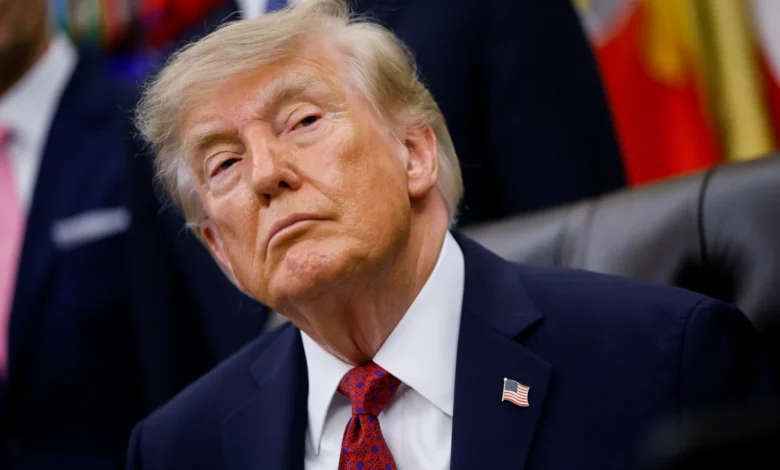
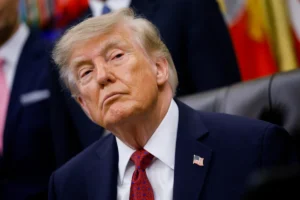
In a sharp escalation of tensions between the executive branch and major news organizations, President Donald Trump announced on Friday that his administration is moving to revoke the White House press credentials of several prominent media outlets. Utilizing his preferred social media platform, Truth Social, the president declared that CNN, MSNOW, and Politico would be immediately barred from the White House press pool, citing what he characterized as persistently inaccurate and biased reporting. The move marks the latest in a series of administrative actions and public threats directed at the American press corps, raising profound questions regarding the limits of executive authority, the interpretation of the First Amendment, and the enduring friction between political leaders and independent journalism.
The official announcement arrived mid-morning via Truth Social, where the president explicitly framed the ban as a necessary measure against outlets he accuses of manufacturing falsehoods. Media analysts and constitutional scholars quickly noted the sweeping and unprecedented nature of the directive, which targets organizations with extensive institutional history and large domestic and international audiences.
The President’s Statement and Immediate Doubling Down
Writing to his followers on Friday, President Trump left little ambiguity regarding the scope and intent of the directive. “I am proud to announce that, effective immediately, I am banning Fake News CNN, MSNOW … and Politico … from the White House as a result of their constant ‘reporting’ FAKE NEWS,” Trump wrote. He expanded on the rationale behind the ban in a subsequent post, asserting that media organizations should be prohibited from publishing what he termed fiction and lies when covering the executive branch and the nation at large. Crucially, the president concluded his message with a warning to the broader media landscape: “Other Fake News Media Outlets to follow.”
The policy was reinforced shortly after during an impromptu Oval Office press gaggle. When questioned by reporters about the constitutionality of the ban and the administration’s obligation to uphold the First Amendment, the president doubled down on his assertions. He argued that the American public is exhausted by biased media coverage and suggested that the targeted organizations might regain access if their reporting improves. “There may be others who join them, and maybe they can get better and we’d like to have them back in, but our country has to have honest news,” Trump stated.
A Pattern of Executive Restrictions on Media Access
The Friday directive is not an isolated incident within the current administration; rather, it represents a continuation of aggressive tactics aimed at restricting or conditioning access for journalists who refuse to align with the administration’s narrative. Earlier in his current term, the administration attempted to bar the Associated Press from White House grounds following a dispute over the news agency’s refusal to adopt the administration’s preferred nomenclature for the Gulf of Mexico, which officials had sought to rebrand as the “Gulf of America.”
That previous attempt at exclusion was met with swift legal pushback. The Associated Press filed a federal lawsuit against the administration, arguing that the selective revocation of press credentials based on editorial content violates foundational constitutional protections. The administration ultimately retreated following initial legal proceedings. Given this precedent, media observers and legal experts anticipate that CNN, Politico, and MSNOW will pursue similar judicial relief to protect their access to the executive complex.
Legal Arguments and Constitutional Protections
The intersection of executive privilege, government property management, and First Amendment protections has long been a battleground in American jurisprudence. White House press credentials, while managed by the executive branch, have historically been subject to legal standards prohibiting viewpoint discrimination by the government.
CNN responded to the administration’s announcement with a robust public statement emphasizing its constitutional rights and expressing full confidence in its reporting staff. “CNN stands fully behind our White House team and their fair and accurate reporting,” the network declared. “We have a right under the U.S. Constitution to do that reporting without hindrance or interference from the government. Should the ban which President Trump threatened go ahead, it would be an assault on that fundamental and constitutionally protected right.”
Legal scholars point out that while the White House possesses a degree of discretion in managing physical workspace and security within the press briefing room and working areas, excluding specific outlets explicitly based on their editorial perspective crosses a constitutional threshold. The Supreme Court and lower federal courts have repeatedly affirmed that the government cannot penalize media organizations for the content of their news coverage, particularly when the press serves its traditional watchdog role over public officials.
Broadening Pressure on Entertainment and News Broadcasters
The push to curtail the influence and reach of critical media outlets extends well beyond traditional print and cable news organizations. In recent months, the administration has sought to leverage federal regulatory bodies, including the Federal Communications Commission (FCC), to influence programming decisions across various entertainment and broadcast networks.
Among the most notable controversies was the administration’s pressure campaign directed at ABC News, urging executives to remove late-night host Jimmy Kimmel from the airwaves following critical monologues. While the network initially capitulated to administrative pressure, mounting public backlash and industry-wide condemnation forced a subsequent reversal, with Kimmel returning to his regular broadcast schedule. In a related development, ABC and CBS faced indirect pressure and threats of regulatory penalties from federal officials after booking interviews with high-profile political candidates, such as Texas political figure James Talarico, highlighting a systematic approach to discouraging critical discourse across multiple platforms.
Chronology of Key Press Freedom Clashes
To understand the trajectory of the current administration’s relationship with the press, it is instructive to examine the sequence of major flashpoints that have defined the past several years:
- Early Term Policy Shift: The administration implements stricter vetting processes for White House correspondents, citing national security and decorum concerns.
- The Associated Press Conflict: Following a dispute over geographical terminology concerning the Gulf of Mexico, the White House attempts to ban AP reporters from the complex. The AP successfully sues, forcing the administration to rescind the restriction.
- Regulatory Scrutiny of Broadcast Networks: The administration exerts pressure on the FCC regarding late-night comedy and political interviews, targeting networks such as ABC and CBS over content deemed unfavorable to the executive branch.
- Jimmy Kimmel Controversy: ABC briefly suspends late-night programming featuring Jimmy Kimmel amid administration pressure, only to reverse the decision weeks later following intense public and legal scrutiny.
- The Friday Directive: President Trump utilizes Truth Social to announce the immediate revocation of press credentials for CNN, Politico, and MSNOW, accompanied by threats of broader exclusions.
Industry Reactions and the Broader Implications for Democracy
Press freedom advocacy groups, journalism unions, and civil liberties organizations reacted to Friday’s announcement with profound alarm. Representatives from organizations dedicated to the protection of journalists pointed out that the systematic demonization of the press as "fake news" creates a hostile environment for working reporters, many of whom face harassment and physical threats while performing their duties in the field.
Furthermore, economic and structural pressures within the media industry compound the challenges posed by government hostility. As traditional revenue models shift and public trust in institutions faces polarization, the ability of journalists to access government officials without administrative obstruction remains vital to maintaining an informed citizenry.
By threatening a cascade of similar bans against other outlets, the administration signals a sustained effort to reshape the relationship between the presidency and the press. Rather than participating in the traditional adversarial yet professional dynamic that has characterized American governance for generations, the current approach seeks to establish compliance as a prerequisite for access.
As the targeted news organizations weigh their legal options and prepare to challenge the directive in federal court, the fundamental question remains whether the judiciary will uphold established precedent regarding viewpoint neutrality in government spaces. The outcome of these anticipated legal battles will likely establish a critical benchmark for the protection of press freedoms and the boundaries of executive power in the United States for years to come.