Paula González-Nasser Directorial Debut The Scout Explores the Hidden Reality of New York City Location Scouting

In the sprawling ecosystem of television and film production, few roles are as vital yet profoundly unheralded as that of the location scout. They are the initial vanguard of visual storytelling, tasked with transforming the abstract visions of directors and set designers into tangible, permitted physical spaces. Yet, their labor is frequently invisible to audiences and even to the broader crews with whom they share credits. It is this specific intersection of intimacy and anonymity that forms the thematic bedrock of The Scout, the feature-length directorial debut by writer and director Paula González-Nasser. Released by Greenwich Entertainment, the film arrives on the heels of González-Nasser’s extensive professional background working as a location scout on critically acclaimed New York-centric television series such as High Maintenance and Russian Doll.
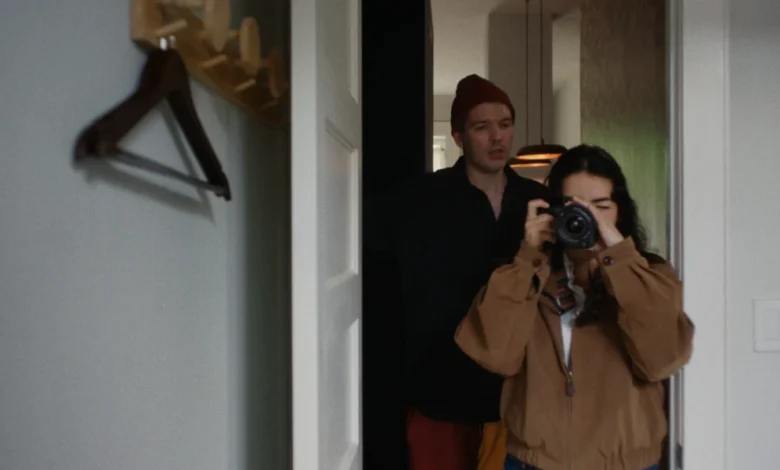
Drawing directly from these years of navigating the idiosyncratic residential architecture of the five boroughs, González-Nasser crafts an episodic, observational narrative centered on Sofia, portrayed by actress Mimi Davila. Sofia’s daily routine consists of traversing the dense urban grid of New York City, stepping uncomfortably into the private lives of strangers, and capturing photographic documentation of their apartments. These images are subsequently delivered to department heads, who ruthlessly filter through options until only a single location remains. Through Sofia’s eyes, The Scout examines the distinct psychological toll of operating at the margins of the creative process, where an individual’s primary utility is reduced to a lens, a clipboard, and a checkbook.
The Anatomy of an Invisible Profession
To understand the core conflict of The Scout, one must examine the precarious mechanics of location scouting within modern independent and episodic television production in major metropolitan hubs like New York City. Industry data indicates that production expenditures in New York routinely exceed billions of dollars annually, driven by state tax incentives and a deep pool of localized talent. However, the logistical burden of accommodating large-scale crews—often numbering upwards of 50 to 100 personnel per shoot day—falls disproportionately on early-stage personnel like scouts and managers.
In the film, Sofia’s interactions with apartment owners highlight a transactional transaction devoid of deeper artistic communion. To the residents, the presence of a film crew is typically viewed through two lenses: a lucrative, albeit temporary, source of supplemental income, or a minor administrative nuisance. Conversely, the production teams rarely consider the long-term emotional resonance of these domestic spaces, treating them as interchangeable commodities. This mutual detachment fosters an unusual psychological space. As González-Nasser illustrates through carefully paced vignettes, residents frequently treat Sofia as a psychological cipher—someone utterly detached from their personal social circles, rendering them entirely safe for unexpected confessions.

Within the span of a single workweek, Sofia encounters a striking cross-section of urban isolation. From elderly residents proudly displaying faded family photographs while masking profound loneliness, to opportunistic individuals offering inappropriate remarks or inadvertently confessing to illicit online activities, Sofia absorbs the unfiltered psychological debris of the city. This dynamic elevates The Scout from a standard workplace comedy-drama into a broader sociological study of urban alienation. While traditional crew members remain insulated within the collaborative bubble of the set, Sofia moves through the city entirely alone, acting as an involuntary confessor to a public starved for unedited human contact.
Chronology and Production Pedigree
The development of The Scout reflects the growing trend of independent filmmakers drawing directly from personal trade experience to inject authenticity into micro-budget narratives. The project’s aesthetic lineage places it firmly within the tradition of contemporary New York independent cinema, characterized by naturalistic dialogue, understated pacing, and a focus on the micro-interactions of creative laborers.
This stylistic choice is heavily reinforced behind the scenes. Ryan Martin Brown, whose acclaimed independent feature Free Time explored similar themes of existential dread among young urban professionals navigating unfulfilling career loops, serves as both a producer and editor on The Scout. Brown’s editorial hand is visible in the film’s deliberate rhythm, which juxtaposes the slow, observational cadence of Sofia’s residential visits with the frantic, high-stress internal panic of her professional demands.
While the film maintains a leisurely external presentation, its protagonist is trapped in a perpetual state of operational crisis. Sofia must constantly balance the competing demands of multiple supervisors, navigate sudden contractual fall-throughs, and manage the logistical nightmare of shifting municipal permits. Yet, because these crises occur in isolation, the audience is placed in the position of objective outsiders. Without access to an overt internal monologue, viewers experience Sofia’s stress through its physical manifestations—her brisk walking pace through Brooklyn sidewalks, her hurried phone calls in cramped hallways, and her silent exhaustion at the end of a fourteen-hour day.
Socio-Economic Realities and Creative Ambitions
Beyond its exploration of transactional intimacy, The Scout tackles the complex socio-economic anxieties inherent to pursuing creative ambitions in high-cost-of-living metropolitan environments like New York City. Sofia’s position is defined by proximity rather than participation; she is close enough to the entertainment industry to understand its mechanisms, yet distant enough to remain economically and professionally disenfranchised.

This creates a specific brand of psychological dissonance. When Sofia expresses fatigue to friends outside the industry, she is frequently met with well-meaning incomprehension or outright envy. To corporate peers trapped in rigid office routines, the prospect of running around the city coordinating television shoots appears glamorous and liberating. They fail to recognize the precarious nature of gig-economy labor in the arts, where healthcare, job security, and stable scheduling are luxuries rather than guarantees.
González-Nasser resists the temptation to apply a traditional, neatly resolved growth arc to Sofia’s journey. Instead, the narrative expands organically, allowing the audience to shed their initial dismissiveness toward her character just as the apartment residents do. Through subtle behavioral shifts and quiet moments of introspection, the film reveals that Sofia possesses far larger personal ambitions and artistic aspirations than her current professional station permits. The tension between occupying spaces that belong to others while failing to secure one’s own foothold in the creative landscape provides a poignant commentary on modern urban labor.
Theatrical Release and Critical Reception
Following its festival circuit run, The Scout has secured distribution via Greenwich Entertainment, marking a significant milestone for González-Nasser as a first-time feature director. The film officially opened at the historic Film Forum in New York City, situating its premiere in the geographic heart of the independent film community that inspired its creation.
Industry analysts note that regional expansions for character-driven independent features rely heavily on word-of-mouth engagement and targeted platform releases. Following its New York debut, the film is scheduled to expand to the Alamo Drafthouse in Los Angeles on October 2, with broader national distribution slated to roll out across select arthouse cinemas throughout the autumn season.
Early critical response has praised the film for its acute observational detail, Mimi Davila’s grounded lead performance, and its uncompromising refusal to romanticize the realities of below-the-line film production labor. By casting light on the individuals who serve as the logistical scaffolding for visual storytelling, The Scout successfully elevates a seemingly mundane profession into a compelling lens through which to examine modern urban isolation, class disparity, and the quiet resilience required to survive in America’s cultural capitals.