Trump Election Day Announcement Regarding Israeli Aid Marks Shift in Military Funding Strategy

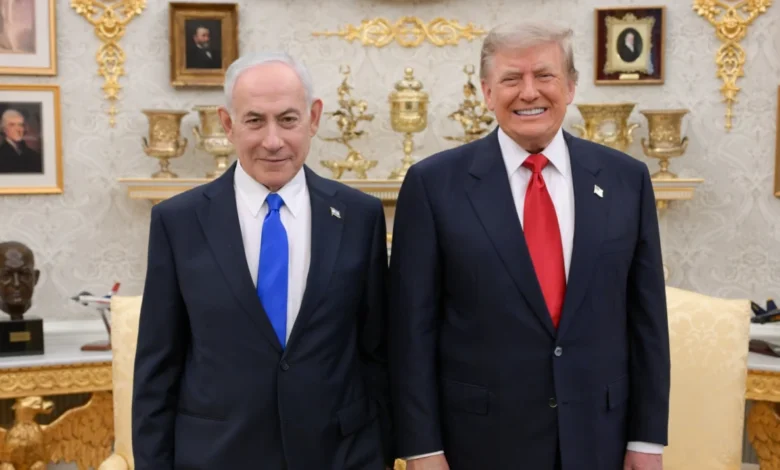
On the morning of Election Day, former President Donald Trump utilized an appearance on Fox & Friends to deliver a high-stakes, surprise policy announcement: the United States would, by the end of the year, terminate $4 billion in direct annual aid to Israel. While the declaration was framed as a decisive break from decades of established diplomatic norms, defense analysts and foreign policy experts are cautioning that the move does not signify a cessation of financial support for Israel’s military operations. Instead, the announcement suggests a pivot toward a more opaque, "joint development" model of funding that could bypass traditional congressional oversight mechanisms while maintaining, or even increasing, the flow of American resources into the Israeli defense sector.
The declaration arrives at a critical juncture in American politics, where the traditional bipartisan consensus on unconditional military support for Israel has fractured. As public sentiment shifts and electoral pressures mount, Trump’s rhetoric appears to be a calculated response to domestic political vulnerabilities. However, the policy itself represents a formalization of a trend that has been percolating in the halls of Congress for months: the transition from direct, trackable aid to decentralized, industrial-military partnerships.
A Chronology of Changing Ties
The relationship between the United States and Israel has been characterized by consistent, large-scale financial assistance since the mid-20th century, typically codified in ten-year Memorandums of Understanding (MOUs). The current framework, which has been in place for several years, has faced unprecedented scrutiny following the events of October 7, 2023, and the subsequent escalation of conflict in the Middle East.
Throughout 2025 and into 2026, the political landscape in Washington underwent a significant transformation. As the Costs of War Project at Brown University has documented, the United States provided at least $21.7 billion in military aid to Israel in the two years following the October 7 attacks. This surge in spending, coupled with intense public debate regarding the humanitarian impact of the war, turned foreign aid into a liability for many candidates on the campaign trail.
In January 2026, Prime Minister Benjamin Netanyahu acknowledged the shifting political tides by suggesting a "tapering off" of direct military assistance over the next decade. His proposed alternative—a transition to joint weapons research and development—was designed to maintain the strategic depth of the US-Israel military alliance while insulating both parties from the political backlash associated with direct aid. By the summer of 2026, formal negotiations regarding a new memorandum of understanding were underway, setting the stage for the legislative maneuvers currently seen in the Senate.
The Mechanism of Repackaging: From Aid to Partnership
The $4 billion figure cited by Trump refers to specific, trackable budgetary allocations. Critics and policy analysts argue that ending this specific line item is a bureaucratic sleight of hand rather than a policy of retrenchment. Matt Duss, a policy expert at the Center for International Policy, characterizes the shift as a move to "rename and reprogram" existing aid.
Under the proposed legislative framework, such as the bill currently pending in the Senate, funding would be funneled through programs designed to "develop and deploy advanced technologies" for shared security objectives. This shift toward "cooperative programs" allows the executive branch to classify the expenditure as investment in research and development, which is often integrated into the broader defense budget rather than listed as foreign military financing.
The implication for taxpayers and lawmakers is significant. By migrating these funds into defense industrial partnerships, the process removes the requirement for granular congressional reporting on how the funds are utilized in specific military theaters. This creates a scenario where, as experts suggest, the actual financial commitment of the United States remains constant or grows, while the visibility of that spending to the public and the legislature diminishes.
Economic and Strategic Implications
The economic reality of the US-Israel defense relationship is deeply rooted in the American military-industrial complex. Much of the aid provided to Israel is legally required to be spent on American-made weapon systems, effectively acting as a subsidy for domestic defense contractors. Consequently, a full cessation of aid would face significant opposition from industry lobbyists and lawmakers whose districts rely on the manufacturing of advanced defense technology.
Trump’s emphasis on Israel being a "successful country" that "doesn’t need it" serves a rhetorical purpose, appealing to a populist base that is increasingly skeptical of foreign intervention. Yet, the tactical reality remains that the United States and Israel are currently engaged in a shared regional strategy, including active military operations involving strikes on Iranian infrastructure, such as the recent Pentagon actions on Qeshm Island.
The strategy of "barter," as described by the former President, indicates that the administration intends to maintain the hardware pipeline while reframing it as a mutually beneficial technological exchange. This approach mirrors the development of systems like the Iron Dome, which was bolstered by joint funding but allowed for significant Israeli integration of the technology.
Official Responses and Political Calculations
The timing of the announcement—hours before the polls opened—has led many political analysts to conclude that the move is primarily tactical. By seizing the narrative, Trump aims to neutralize the arguments of progressive candidates who have made the cessation of military aid a central plank of their platforms.
In the view of William Hartung of the Quincy Institute for Responsible Statecraft, the move reflects a "transactional" approach to foreign policy. By preemptively claiming he will "cut" aid, Trump effectively strips his opponents of the ability to use the issue as a wedge. However, the lack of a formal, detailed policy document suggests that the administration has not yet finalized the mechanics of this transition, leaving room for a "phased" approach that aligns more closely with the timeline originally suggested by Prime Minister Netanyahu.
The Israeli government, for its part, has remained cautious. While Netanyahu has expressed interest in a move toward a research-based model, the suddenness of the announcement presents a challenge to his own domestic political stability. If the transition is executed too rapidly, it could disrupt the supply chains for critical defense hardware that Israel currently deems essential for its security posture.
Analysis: The Future of Oversight
The transition away from traditional military aid toward "joint defense partnerships" represents a broader trend in American foreign policy: the move toward executive-led, classified, or semi-classified cooperation that circumvents the slow-moving and highly public nature of congressional oversight.
If this model becomes the standard for U.S.-Israel relations, the burden of transparency will fall heavily on investigative journalists and independent policy monitors. Without the clear data points provided by annual foreign military financing reports, tracking the scope of U.S. financial support will require a deeper audit of research and development contracts, procurement budgets, and departmental "joint ventures."
Ultimately, the announcement on Election Day serves as a case study in modern political communication. By declaring an end to "aid" while simultaneously promising to "help Israel if they need it," the administration is attempting to satisfy two disparate constituencies: the isolationist base demanding an end to foreign spending and the traditional hawks who insist on maintaining the strategic alliance. Whether this strategy will hold up under the scrutiny of the next legislative session remains to be seen, but the policy shift itself appears to be a permanent move toward a less transparent, more integrated defense relationship.
Related posts: