Mercedes-Benz Unveils Pixelated Rear Window Messaging and Holographic Windshield Tech to Revolutionize In-Car Communication

The evolution of vehicular communication is on the cusp of a digital transformation, moving far beyond the rudimentary paper bumper stickers that have adorned automobiles for nearly eight decades. Since Forest P. Gill ingeniously converted a surplus load of self-adhesive paper into the world’s first bumper sticker in 1946, motorists have sought ways to convey thoughts, warnings, and humor to the drivers trailing behind them. Now, German luxury automaker Mercedes-Benz is proposing a modern, high-tech evolution of this tradition. By leveraging advanced micro-LED technology, the company aims to convert a vehicle’s rear window into a dynamic, pixelated message board capable of displaying real-time vehicular communication.
This innovative approach blends passive-aggressive subtlety with functional road safety, raising both fascinating possibilities and regulatory questions about the future of human interaction on public highways. As automotive engineering increasingly intersects with digital display technology, Mercedes-Benz is not only redefining how cars speak to one another but also how front-seat occupants experience the world through expansive, holographic windshields.
The Engineering and Functionality of Pixelated Rear Windows
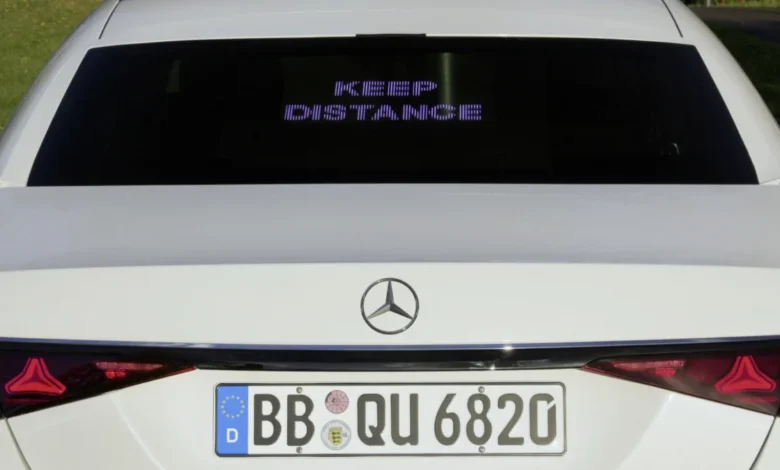
The core of Mercedes-Benz’s rear-window communication system relies on a dense matrix of miniature LEDs embedded directly into the glass. When deactivated, these microscopic light-emitting diodes remain entirely invisible, ensuring that the driver’s rear field of view is uncompromised and traditional safety standards are maintained. However, when triggered, the LEDs illuminate to form crisp, pixelated graphics and universally recognized symbols.
Rather than encouraging unfiltered, chaotic text messages that could easily veer into road rage territory, Mercedes-Benz has conceptualized a strictly curated suite of factory-approved iconography. This design choice aims to keep
interactions constructive and polite. For instance, if a motorist is being blinded by an oncoming vehicle or a trailing car failing to dip its high beams, the system can project a standardized headlight symbol overlaid with a distinct red cancellation line. Similarly, motorists plagued by tailgaters can deploy a gentle "keep distance" advisory prompt.
Additional safety-focused applications include automated warnings that alert following drivers to an upcoming pedestrian crossing, an unexpected traffic accident ahead, or a notification that the host vehicle is preparing to reverse into a parallel parking bay. By standardizing these messages, Mercedes-Benz hopes to minimize driver distraction while maximizing clarity on congested roadways.
However, industry analysts and cybersecurity experts have already begun to speculate about the inevitability of third-party modifications. While the manufacturer limits the system to officially sanctioned safety prompts out of the box, the aftermarket community and software developers will inevitably scrutinize the code. The prospect of enterprising coders bypassing factory restrictions to project personalized, and potentially satirical, digital commentary at trailing motorists presents both a technical challenge and a significant regulatory hurdle for traffic authorities worldwide.
A Chronological Look at In-Car Communication and Display Tech
To understand the magnitude of Mercedes-Benz’s latest proposition, it is helpful to examine the historical trajectory of automotive communication and heads-up display (HUD) development:
- 1946: Forest P. Gill invents the modern bumper sticker in Kansas City, using self-adhesive paper to market products before drivers quickly adopt the medium for personal expression and political statements.
- Late 1980s to 1990s: General Motors and other manufacturers begin introducing primitive head-up displays (HUDs) to fighter-jet enthusiasts and luxury car buyers, projecting basic speedometer readouts onto the lower windshield.
- 2000s: HUD technology matures, shifting from monochrome green displays to full-color projections that offer navigation prompts and speed limits within a localized section directly in front of the driver.
- 2021: Ford files patents exploring in-car pop-up advertisements on central infotainment screens, signaling an industry-wide pivot toward monetized digital real estate inside the cabin.
- 2024–2025: Competitors like Hyundai Mobis demonstrate advanced holographic HUD prototypes, pushing the boundaries of transparent display technology across wider glass surfaces.
- Present: Mercedes-Benz expands the HUD concept into a full-width holographic communication surface and introduces exterior-facing micro-LED window messaging.
Holographic Windshields and the Battle for Cabin Attention
Beyond the rear window, Mercedes-Benz engineers have focused heavily on transforming the vehicle’s windshield and side windows into interactive, multi-functional displays. While traditional head-up displays have occupied a modest, localized area directly in front of the driver for over two decades, the new Mercedes-Benz concept envisions a massive portion of the windshield acting as a continuous communication surface.
The mechanics behind this innovation involve a specialized projector integrated into the upper dashboard structure. This unit beams visual content upward, where a transparent optical film—laminated directly into the laminated glass—reflects the projected wavelengths using holographic optical elements (HOE). This methodology ensures that the projected imagery remains exceptionally bright and legible, even under direct, harsh sunlight conditions.
The most compelling engineering feature of this holographic windshield is its directional visibility management. Utilizing advanced optical layering, content projected onto the passenger side of the glass is rendered completely invisible to the driver, and vice versa. This directional opacity allows front-seat passengers to stream movies, watch videos, or engage in immersive digital entertainment while the vehicle is in motion, all without introducing hazardous visual distractions for the person operating the controls.
Despite the technical sophistication of passenger-side displays, market research suggests automakers face an uphill battle regarding consumer adoption. Over the past few years, several luxury brands have heavily promoted expensive, dedicated passenger-side digital dashboard screens embedded into the front console. However, comprehensive automotive technology studies, such as those published by J.D. Power, indicate that these secondary screens are frequently underutilized by actual vehicle owners, raising questions about whether holographic entertainment will see higher engagement rates or simply become another expensive, rarely touched feature.
Broader Implications, Commercialization, and Monetization
As automotive interiors shift toward becoming software-defined living spaces, manufacturers are actively exploring secondary revenue streams tied to in-car digital displays. Mercedes-Benz has noted that the holographic windshield system is not solely intended for entertainment; it can also facilitate high-definition video conferencing and dynamically display points of interest along an active navigation route.
This capability aligns with a broader, contentious trend across the automotive sector. As connected-vehicle infrastructure expands, third-party commercial enterprises—including restaurant chains, national hotel brands, and tourist attractions—are increasingly exploring paid partnerships with automakers. The goal is to integrate branded pop-up suggestions and sponsored waypoints directly into vehicle navigation and display systems. While Ford and other manufacturers have previously patented in-car advertising frameworks, consumer reception remains deeply divided over whether commercial intrusion into personal driving spaces is acceptable.
Furthermore, regulatory bodies in major global markets, including the National Highway Traffic Safety Administration (NHTSA) in the United States and the European Commission, maintain stringent guidelines regarding driver distraction. While Mercedes-Benz has engineered its rear-window pixel arrays and holographic windshields to prioritize safety and restrict driver-facing entertainment, regulatory scrutiny will undoubtedly accompany any commercial rollout.
Mercedes-Benz has not yet announced a definitive production timeline or specific model availability for either the micro-LED rear messaging board or the full-width holographic windshield system. Nevertheless, the public demonstration of these technologies indicates clear production intent. As automotive designers continue to blur the lines between exterior communication and interior digital architecture, motorists may soon find themselves navigating highways where cars literally talk back—transforming the daily commute into an interactive, digital dialogue.