Sundance Film Review: Kogonada Returns to Form With the Intimate, Metacinematic Odyssey Zi

The cinematic landscape often treats high-profile missteps by acclaimed auteurs as professional dead-ends, but director Kogonada has chosen a radically different path of recovery. Following the tumultuous production and subsequent lukewarm reception of his studio feature debut, A Big Bold Beautiful Journey—an experience widely regarded as a soul-crushing trial for an artist celebrated for delicate, deeply personal works like After Yang and Columbus—the filmmaker retreated to international waters to rediscover his creative compass. The result of this deliberate withdrawal is Zi, an experimental, micro-budget feature that premiered at the 2026 Sundance Film Festival to considerable critical intrigue. Grasshopper Film is set to bring the film to select theaters starting Friday, November 6, inviting audiences to witness a rare cinematic exercise in artistic self-reclamation.
Plot Overview and Chronology of a Restless Night
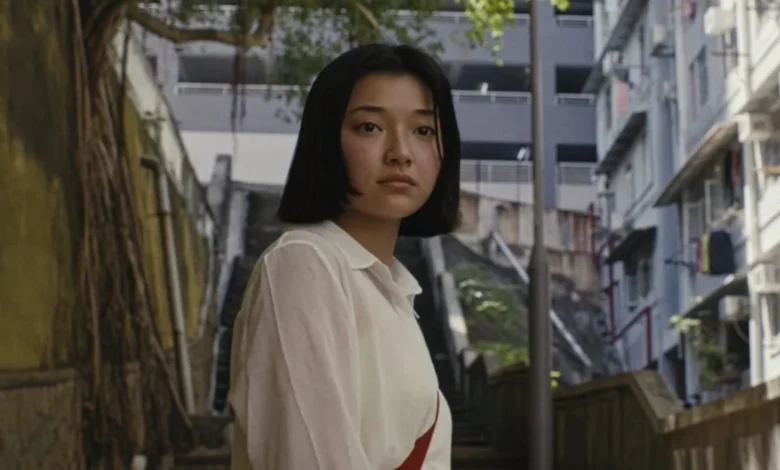
At the narrative center of Zi is young Zi, portrayed with effervescent vulnerability by Michelle Mao. Zi is a young Hong Kong violinist who feels her grip on reality slipping away as she is persistently haunted by surreal visions of her future self. Admitted to a local neurology center for neurological evaluation, doctors suspect she might be exhibiting early symptoms of a brain tumor. However, the diagnosis remains pending, forcing Zi into a grueling, isolated 24-hour waiting period for her test results.
The chronology of the film unfolds almost entirely within this single, agonizing day and night cycle. Wandering the labyrinthine, vertical terrain of Lantau Island and the urban expanse of Victoria Harbor, Zi breaks down on a concrete staircase, where she is unexpectedly consoled by L, a sweet American expatriate sporting an aggressively unnatural blonde wig. Played with luminous empathy by Haley Lu Richardson, L is a disillusioned former dancer who shares an inexplicable, immediate bond with Zi.

Over the course of a single nocturnal odyssey, these two displaced figures navigate the disorienting geography of Hong Kong, helping each other resynchronize with the present moment. Their nocturnal journey serves as a temporal bridge, allowing them to confront past regrets, current anxieties, and the fading creative purposes that once anchored them to their respective lives. Along the way, they cross paths with Min (Jin Ha), L’s enigmatic ex-fiancé, who hints at a condition he terms "temporal relativism," suggesting that everything Zi perceives is technically already in the past—a phenomenon exacerbated by her uncanny, distressing visions of what is yet to come.
Background Context and Production Genesis
The genesis of Zi is inseparable from Kogonada’s trajectory in the American studio system. Having established himself as a master of quiet, contemplative cinema through his visual essays and his feature films Columbus (2017) and After Yang (2021), the director transitioned to higher-budget filmmaking with A Big Bold Beautiful Journey. That studio experience proved creatively stifling, alienating an artist whose aesthetic relied on intimacy, spatial grace, and independent control.
Faced with creative burnout, Kogonada opted for an unorthodox remedy: a guerrilla-style production shot entirely without a conventional script or a formal studio budget in Hong Kong. In interviews following its Sundance premiere, the director described the project to industry outlets as both "a retreat and a pursuit."
The resulting film is a loose, improvisational wisp of an experiment. Visually, Kogonada and cinematographer Benjamin Loeb consciously rejected the neon-drenched exoticism typically sought after by foreign filmmakers in Hong Kong. Instead, Zi relies on unfussy, handheld cinematography that captures the immediate, tactile anxiety of the city. The visual landscape is complemented by an evocative soundscape featuring both original compositions and remixes by the late Ryuichi Sakamoto, establishing an acoustic dissonance around Victoria Harbor that mirrors the protagonists’ internal alienation.

Thematic Elements and Cinematic Lineage
Zi functions fundamentally as a meta-textual exploration of an artist seeking reconciliation with his chosen medium. The film is heavily indebted to cinematic history, operating as a collage of half-formed memories from landmark arthouse films, evoking the haunting temporal loops of Chris Marker’s La Jetée and the real-time urban drift of Agnès Varda’s Cléo from 5 to 7. Oblique visual nods—such as a step-printed homage to Wong Kar-wai and subtle structural echoes of José Luis Guerin’s In the City of Sylvia—further anchor the film within a rich lineage of cinephile traditions.
Yet, despite these intellectual touchstones, the narrative core remains anchored by human performance. Haley Lu Richardson continues to demonstrate a remarkable ability to ground Kogonada’s most abstract, philosophical musings in tender emotional reality. Alongside Michelle Mao and Jin Ha, Richardson provides the dramatic ballast that prevents the film from dissolving entirely into pure abstraction.
L encapsulates the underlying meta-narrative of the production when she remarks, "You feel like your sole purpose in life is something, and it doesn’t choose you back. What do you do with that? I had to get away from it all. That’s why I came here. Wandering." This sentiment reads as an unvarnished confession from Kogonada himself, translating professional disillusionment into a narrative about creative survival.
Broader Impact and Industry Implications
The commercial and critical prospects of Zi occupy a unique space in contemporary independent cinema. As a micro-budget palate cleanser, the film was never conceived to cater to casual audiences or box-office multiplex metrics. Its recursive structure, loose plotting, and reliance on atmosphere over traditional exposition mean it will likely polarize general viewers while fascinating cinephiles and devoted followers of Kogonada’s career.

For the industry at large, Zi highlights a viable blueprint for established filmmakers seeking to bypass studio fatigue. By scaling down drastically—eschewing permits, massive crews, and traditional development cycles—a director can reclaim their artistic voice and experiment without commercial constraints. Grasshopper Film’s theatrical release on November 6 provides arthouse audiences with the opportunity to engage with this rare exercise in cinematic rehabilitation.
Ultimately, Zi achieves its modest yet profound objectives. It is less a conventional narrative feature than an audio-visual diary of an auteur learning how to fall back in love with the moving image. While its character arcs remain largely symbolic functions of the director’s personal journey, the emotional resonance of watching a vital filmmaker rediscover the sound of his own voice offers a reward that far outweighs the film’s narrative fragmentation.