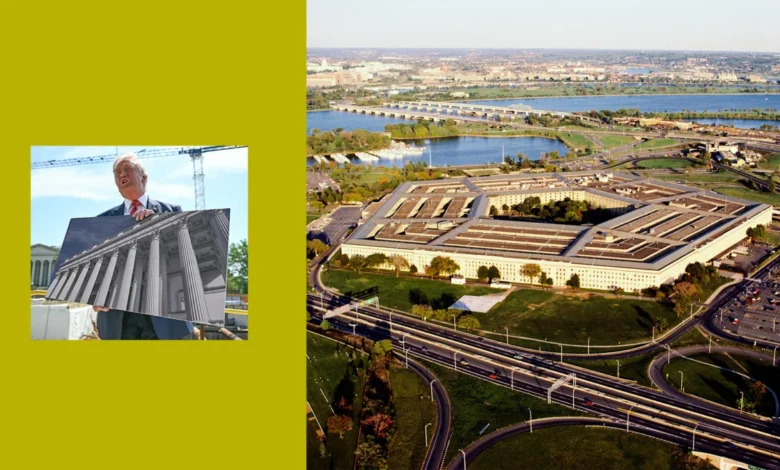
A troubling trend has emerged within the American defense industrial base, where some of the nation’s largest federal contractors are funneling millions of dollars into Donald Trump’s personal projects and celebratory events. This financial activity, occurring in parallel with the awarding of multi-billion dollar Pentagon contracts, has drawn the ire of congressional Democrats and ethics watchdogs who warn of a potential "pay-to-play" system. Led by industry titans such as Lockheed Martin, Boeing, RTX, Northrop Grumman, General Dynamics, Palantir, and Amazon, the collective corporate investment in these initiatives now exceeds $40 million.
The Anatomy of a Transactional Relationship
The core of the controversy lies in the timing of these donations. While federal contractors have historically contributed to inaugural committees and major national events, the current landscape is distinguished by the nature of the projects being funded. Rather than traditional public works, these firms are financing initiatives directly tied to the president’s personal legacy and aesthetic preferences.
The financial involvement began in earnest with the 2025 presidential inaugural committee, which raised approximately $240 million. Following this, the focus shifted to a series of events and construction projects, including the White House ballroom renovation, the military parade held on Trump’s 79th birthday, and the "Freedom 250" events commemorating the nation’s 250th anniversary.
A chronological review of recent contract awards suggests a correlation that is difficult to ignore. In June 2026, for example, Lockheed Martin secured $44 billion in multiyear federal weapons contracts. This windfall followed a $5 million pledge from the company to fund a new White House helipad—a project designed to protect the South Lawn from the downwash of the new Marine One fleet. Similarly, Palantir and Amazon received $1 billion and $256 million in government work, respectively, shortly after contributing to the president’s ballroom fund.
Chronology of Corporate Influence
The timeline of these interactions reflects a shift from standard lobbying to the direct underwriting of executive whims:
- Early 2025: Lockheed Martin, Boeing, and Palantir contribute $1 million each to the 2025 Presidential Inaugural Committee.
- June 2025: Defense giants sponsor a military parade and the "America250" celebrations, while simultaneously cutting ties with long-standing sponsorships of Pride events, signaling a pivot toward the administration’s cultural priorities.
- Late 2025: Meredith O’Rourke, a fundraiser for the MAGA Inc. super PAC, begins soliciting corporate funds for "Freedom 250," reportedly using language that implies presidential favor depends on financial participation.
- 2026: The Department of Defense, facing depleted missile stockpiles due to ongoing operations in the Middle East, initiates a wave of multiyear contracts. Major defense contractors, including RTX and Lockheed Martin, receive record-breaking awards.
- November 2026: Democratic lawmakers announce plans to utilize subpoena power to investigate the nexus between these donations and federal contract awards.
Data and Defense Spending Trends
The financial scale of the defense sector’s involvement is underscored by the current federal budget. The Pentagon’s yearly budget has climbed past the $1 trillion mark, with a significant portion of this spending allocated to companies that have become the primary sponsors of the Trump administration’s vanity projects.
RTX, for instance, reported a substantial increase in government business, securing nearly $59 billion in Pentagon contracts in the third quarter of 2026 alone. This represents more than double the $23 billion the company received during the same period in 2025. Such figures provide the necessary capital for these corporations to maintain high-level access to the executive branch.
Critics, such as Bill Hartung of the Quincy Institute, argue that this creates an environment where companies feel compelled to pay to remain competitive. "It is a transactional model," Hartung notes. "If you haven’t ponied up, you have effectively taken yourself out of the game or significantly diminished your chances of winning future awards."
The "Vanity Project" Paradigm
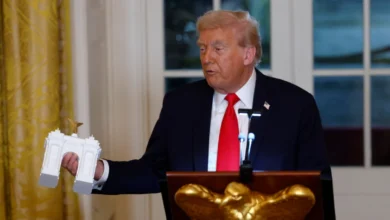
Unlike previous administrations, where corporate donations were directed toward broad political or charitable goals, the current administration has focused on projects that appear to be deeply personal. The "Triumphal Arch" project at Arlington National Cemetery serves as a prime example. While the administration has attempted to justify the structure by claiming it will serve a military function—such as housing snipers or ammunition—independent observers and national security experts have dismissed these claims as pretexts intended to secure legal and zoning deference.
Furthermore, the "F-47" fighter jet—a designation chosen explicitly to honor the 47th president—symbolizes the blending of national defense assets with the president’s personal branding. This trend is further evidenced by the ongoing fundraising efforts for a presidential library in Miami, a statue garden, and the replacement of the East Potomac golf course.
Official Responses and Ethical Pushback
The defense industry has remained largely silent regarding these allegations, though some have issued brief, standardized denials. A spokesperson for Palantir stated, "Palantir has not and will not discuss jobs, payments, or gifts of any kind in exchange for contracts." Other firms contacted for comment did not provide a response.
In contrast, the legislative branch is preparing for a period of intense scrutiny. Sen. Elizabeth Warren, Rep. Robert Garcia, and Sen. Richard Blumenthal have launched a formal inquiry, seeking information on the fundraising activities conducted by Meredith O’Rourke. Their correspondence underscores a concern that the "pay-to-play" culture threatens the neutrality of federal procurement.
The administration has moved to preempt these inquiries. A recent executive order issued by the White House purports to bar federal contractors from sharing information with Congress without explicit administrative approval. While the legal standing of such an order is highly contentious, it demonstrates the administration’s resolve to shield its private-public partnerships from oversight.
Implications for the Future of Federal Contracting
The implications of this dynamic extend beyond individual contracts; they threaten the foundation of the federal contracting system, which is intended to be based on merit, technical capability, and cost-efficiency. If the perception of corruption becomes entrenched, it risks eroding public trust in the defense industry and the military-industrial complex as a whole.
As Congress prepares to examine these records, the defense industry faces a difficult calculation. With the political tide shifting following the midterm elections, these companies must weigh the benefits of continuing to support a "lame-duck" president’s pet projects against the long-term risk of congressional subpoenas, investigations, and potential debarment from future federal work.
The case of the "Freedom 250" initiative and the ballroom fund highlights a broader shift in American political economy. When corporations are incentivized to fund the personal desires of the executive branch to secure their bottom line, the distinction between private interest and public policy vanishes. As Savannah Wooten of Win Without War observed, "This is one of the most egregious areas of grift in our government."
Whether this scrutiny will lead to a reversal of these trends or whether the practice has become too deeply embedded to excise remains the central question for the incoming legislative session. For now, the defense industry continues to walk a fine line, investing heavily in a political apparatus that promises access but may eventually deliver a significant legal and reputational bill.