The Expanding Landscape of AI-Powered Content Generation: An Examination of Key Tools and Their Impact on Digital Strategy.

The accelerating demand for digital content across diverse platforms has spurred significant innovation in content creation methodologies, with artificial intelligence emerging as a transformative force. This rapid evolution is reshaping how businesses and individuals approach everything from marketing copy and social media updates to long-form articles and SEO-optimized web pages. The increasing need for fresh, engaging, and relevant content at an unprecedented scale has highlighted the limitations of traditional, purely human-driven content creation processes, which often struggle with the volume, speed, and consistency required to maintain a competitive edge and robust online presence. This challenge has paved the way for sophisticated AI content generators, which leverage advancements in Natural Language Processing (NLP) and Natural Language Generation (NLG) to automate and assist in various stages of content production.
The Evolution of Content Creation and AI’s Role

Historically, content creation was a labor-intensive endeavor, demanding significant time and resources from human writers, editors, and strategists. The digital revolution, particularly the proliferation of websites, blogs, social media platforms, and e-commerce, dramatically amplified the need for content. This surge led to bottlenecks in production, increased costs, and often a compromise on content volume or quality.
Early iterations of AI writing tools were often rudimentary, generating text that was stiff, grammatically awkward, or lacked coherence and contextual understanding. These tools were typically based on simpler algorithmic approaches. However, propelled by breakthroughs in deep learning and the development of large language models (LLMs) – particularly architectures like the Transformer network and subsequent models such as GPT-3 and its successors, which, while rarely explicitly named by individual tools, often underpin their capabilities – today’s AI generators can produce human-like, coherent, and contextually relevant text with impressive speed and versatility. These advanced models are trained on vast datasets of text, enabling them to understand context, generate creative prose, and adapt to various styles and tones.
Market Trends and Adoption
The market for AI-powered content creation tools is experiencing robust growth, reflecting a widespread adoption trend across small businesses, marketing agencies, and large enterprises. According to various industry reports, the global AI in marketing market, which includes content generation, is projected to reach significant valuations, indicating a broad shift in content strategy. For instance, projections often place the market size in the tens of billions of dollars within the next few years, with a compound annual growth rate (CAGR) exceeding 25-30%.
Businesses are increasingly recognizing that AI can dramatically reduce the time and cost associated with content production, allowing human teams to focus on higher-level strategic planning, creative oversight, and nuanced brand messaging. A 2023 survey by HubSpot, for example, indicated that over 60% of marketing professionals were already experimenting with or actively using AI tools in their content workflows, a sharp increase from previous years. This rapid adoption is driven by the promise of increased efficiency, enhanced SEO performance through optimized content, and the ability to personalize communications at scale, all while potentially lowering operational expenses.
Key Players in the AI Content Generation Ecosystem

The landscape of AI content generation tools is diverse, with platforms offering specialized functionalities catering to different content needs and user requirements. While many share core AI writing capabilities, their unique features, integration options, and pricing structures differentiate them in a competitive market.
Jasper AI (Formerly Jarvis): The Comprehensive Content Assistant
Jasper AI, previously known as Jarvis, stands out as a leading AI content writing and generation tool. Its primary strength lies in its ability to adapt to various writing styles and mediums, offering an efficient and accessible solution for diverse content needs. Jasper leverages advanced AI to identify optimal wording and sentence structures, aiming to produce high-quality output quickly. The tool is particularly favored for generating longer-form content such as blog posts, articles, and even books, alongside shorter formats like social media posts and ad copy. Its "Boss Mode" plan, for example, is designed to provide enhanced control and speed, allowing users to guide the AI more directly and generate content faster, making it a powerful asset for content teams seeking to scale their output significantly. Jasper’s pricing typically scales with usage, reflecting the depth of its capabilities.
Copy AI: Versatility in Marketing Copy
Copy.ai distinguishes itself as a robust content writing tool primarily focused on generating marketing copy. It offers an extensive library of over 90 templates, ranging from bullet points to full blog outlines, general advertisements, and compelling hook texts. This broad utility makes it suitable for various business purposes, including crafting product descriptions, website copy, sales reports, and diverse social media campaigns. Copy.ai’s emphasis on short-form, high-impact copy positions it as an invaluable asset for marketers and businesses seeking to streamline their promotional messaging and quickly iterate on different creative approaches. The platform offers a free trial, allowing users to explore its extensive template library, with tiered subscription plans typically based on word count and feature access.
Frase AI: Bridging Content Creation and SEO Optimization
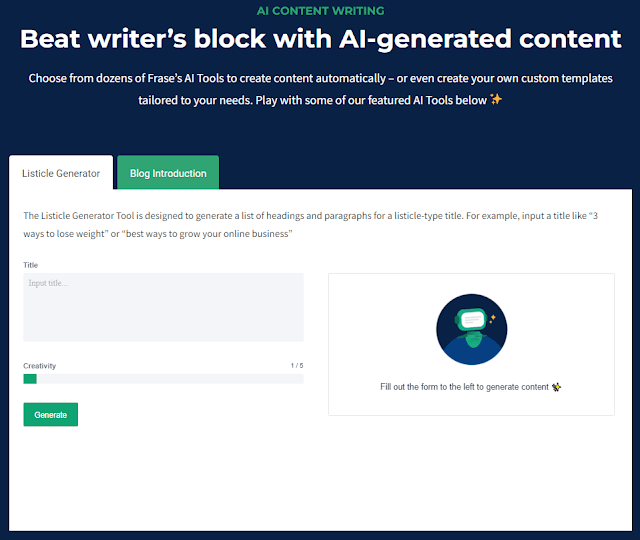
Frase AI merges content research, creation, and optimization into a single platform, with a strong emphasis on SEO. Similar to other tools that prioritize search engine visibility, Frase helps users develop content that aligns with search engine algorithms by optimizing for relevant keywords and topics. It conducts in-depth analysis of top-ranking content for a given query, providing insights and recommendations to create content that is not only high-quality but also highly discoverable. This makes Frase particularly appealing to content strategists and SEO professionals aiming to improve organic search performance and drive traffic. Frase typically offers tiered plans, often differentiating by "document credits" and user seats, with optional SEO add-ons available for enhanced capabilities like deeper SERP analysis.
Article Forge: Automated Long-Form Content Generation
Article Forge operates with a distinct approach compared to many other AI content generators. While some tools require detailed briefs and information to guide content creation, Article Forge is designed to generate complete articles from a single keyword. This level of automation is geared towards users who require high volumes of long-form content with minimal manual input, such as those managing multiple niche websites or extensive content libraries. The tool aims to produce articles that are unique and pass plagiarism checks, a critical feature for maintaining content integrity and SEO rankings. Its pricing structure typically reflects the volume of words or articles a user can generate monthly, with a focus on affordability for scaled content production, often including a money-back guarantee.
Rytr: An Accessible AI Writing Assistant
Rytr.me is positioned as an accessible AI content generator, appealing to small businesses, bloggers, and students due to its ease of use and often more budget-friendly options. It is designed to generate SEO-friendly blog posts, articles, and various academic or professional papers efficiently across multiple languages. Rytr’s straightforward interface and focus on core content generation tasks make it a popular choice for those new to AI writing tools or with more modest content demands. The platform typically offers a free plan with limited character generation and access to a built-in plagiarism checker, alongside paid plans that expand usage limits, introduce premium features, and provide dedicated support.

Writesonic: Versatile AI Writing with Quality Checks
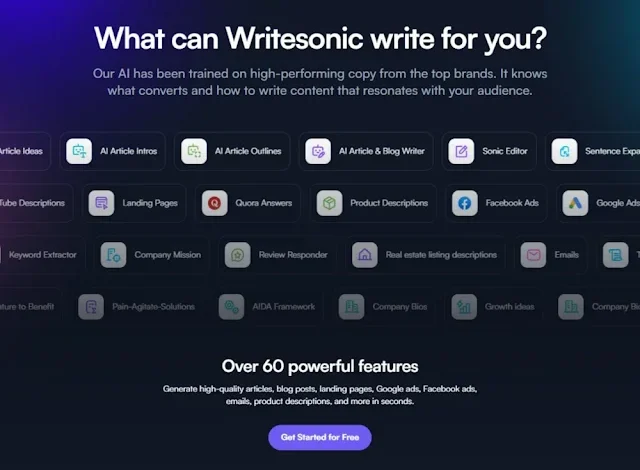
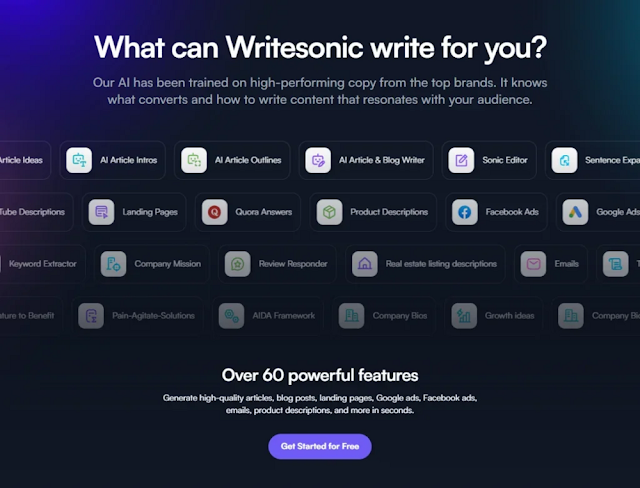
Writesonic presents itself as an easy-to-use AI content generator suitable for a broad range of marketing, website, and blog content. It caters to small businesses and solopreneurs who need to produce quality content within budgetary constraints. A key differentiator for Writesonic is its integration of quality checks, often including grammar and plagiarism detection, aiming to ensure the output is polished and original. The platform supports multiple languages and offers various content types, from ad copy to articles. Its pricing structure typically includes a free trial or limited free credits, followed by tiered plans that distinguish between short-form and long-form content generation capabilities, scaling with word count and quality levels.
CopySmith: Enterprise-Grade Content at Scale
CopySmith is an AI content generator designed for both personal and professional applications, including documents, blogs, and presentations. It emphasizes robust features and the ability to integrate into larger workflows, making it suitable for teams and larger enterprises. CopySmith offers a range of templates and tools to streamline content creation, from initial ideation to final drafts, and is particularly noted for its collaboration features and ability to generate content in bulk. Its focus on scalability and team collaboration often translates into tiered pricing plans that accommodate different organizational sizes and content volume requirements, including custom enterprise solutions. The availability of a free trial without credit card requirements is a common strategy to onboard users.
Hypotenuse.ai: Specialization in E-commerce and Product Descriptions
Hypotenuse.ai carves a niche for itself as an AI tool particularly adept at generating content for e-commerce, especially product descriptions. While also capable of creating articles and infographics, its strength lies in producing compelling and informative product-focused copy that highlights key features and benefits, crucial for online retail. The platform aims for a simple, intuitive interface, making it accessible for users who may be new to AI content generation. Hypotenuse.ai typically offers a free trial period, allowing prospective users to evaluate its capabilities before committing to paid plans, which often scale with the volume of content generated and access to advanced features like bulk generation and API integration.

Kafkai: Niche-Specific Content for SEO and Marketing
Kafkai is an AI content generator and writing software that distinguishes itself by producing niche-specific content across a wide array of topics. This specialization makes it particularly valuable for SEOs and marketers who manage multiple niche websites or content strategies requiring highly targeted articles, reducing the need for extensive topic research. Its user-friendly interface is designed to facilitate the creation of relevant and personalized content across various industries. Kafkai’s pricing model often reflects the number of articles that can be generated monthly, catering to varying scales of content production, from individual writers to large newsrooms and industrial-level content generation. A free trial allows users to assess its niche capabilities and article quality.
Peppertype.ai: Blogging and Diverse Content Creation
Peppertype.ai positions itself as an online AI content generator that is user-friendly and highly effective for small business owners seeking a powerful tool for diverse content needs. It excels in crafting and generating various types of content, making it suitable for blogging, marketing copy, social media captions, and other digital assets. The platform aims to provide a comprehensive solution for content writing, from ideation to generation, with a focus on ease of use and quality output. While not offering a free plan, Peppertype.ai typically provides a free trial to allow users to experience its features before committing to one of its tiered paid plans, which are designed to support individual users up to larger teams with varying word limits and access to advanced templates.
Broader Impact and Implications
The advent and refinement of AI content generators carry profound implications for the digital content ecosystem, influencing efficiency, quality, ethics, and the evolving role of human content professionals.
Enhanced Efficiency and Scalability: The most immediate impact of AI tools is the dramatic increase in efficiency and scalability. Businesses can now generate vast amounts of content – be it blog posts, social media updates, email newsletters, or product descriptions – in a fraction of the time and cost traditionally required. This allows for more frequent content updates, broader campaign coverage, and the ability to explore new content niches without prohibitive resource allocation. For marketers, this means accelerated A/B testing of ad copy and landing page content, leading to faster optimization cycles and improved campaign performance.
Optimized for Search Engines: Many AI content generators integrate features designed to enhance search engine optimization (SEO). They can assist in keyword research, identify relevant topics, and structure content in a way that is favorable to search algorithms. By analyzing top-ranking content and suggesting improvements, tools like Frase AI can guide creators toward producing content that is not only engaging but also highly discoverable, contributing to improved organic traffic and visibility. Industry analysts suggest that AI content generation tools are not merely automation but catalysts for strategic content initiatives, allowing marketers to scale efforts previously deemed impossible while improving SEO outcomes.

The Evolving Role of Human Content Creators: Rather than outright replacing human writers, AI tools are fundamentally redefining their roles. Content professionals are increasingly shifting from primary content generation to strategic oversight, editing, fact-checking, and infusing AI-generated drafts with unique brand voice, creativity, and emotional intelligence. The focus moves to refining AI output, ensuring factual accuracy, maintaining brand consistency, and adding the human touch that resonates deeply with audiences. This collaborative model allows humans to leverage AI for repetitive or high-volume tasks, freeing them to concentrate on complex storytelling, nuanced arguments, and innovative content strategies. Experts caution that while AI offers immense speed, the nuanced understanding of brand voice and complex narrative still requires significant human input.
Quality Control and Ethical Considerations: While AI can generate impressive text, human oversight remains crucial for quality control. AI-generated content may sometimes lack the depth, originality, or specific contextual understanding that a human writer brings. Ensuring factual accuracy, preventing the propagation of biases inherent in training data, and guaranteeing true originality (even with built-in plagiarism checkers) are ongoing challenges. The ethical implications of AI-generated content, including issues of transparency, authorship, and potential for misuse (e.g., generating misinformation or engaging in spam), are subjects of ongoing discussion and require careful consideration by users and developers alike. Responsible AI development and deployment frameworks are becoming increasingly important.
Future Outlook: The trajectory of AI content generation points towards even more sophisticated capabilities. Future iterations are expected to offer deeper personalization, enhanced multimodal content creation (seamlessly combining text with images, video, and audio), and more seamless integration with broader digital marketing and content management systems. As AI models continue to learn and adapt, they will likely become even more adept at understanding complex queries, maintaining conversational flow, and generating highly specialized content tailored to specific industry verticals or audience segments, pushing the boundaries of what automated content creation can achieve.

Conclusion
The proliferation of AI content generation tools marks a pivotal moment in the digital content landscape. Platforms like Jasper AI, Copy AI, Frase AI, and others are empowering businesses and individuals to overcome traditional content production hurdles, offering unprecedented speed, efficiency, and scalability. While these tools represent a significant leap forward, their optimal deployment necessitates a strategic blend of AI automation and discerning human input. The future of content creation is increasingly collaborative, with artificial intelligence serving as an indispensable assistant, augmenting human creativity and enabling content strategies previously unattainable. As the technology continues to mature, its impact will only deepen, further transforming how content is conceived, created, and consumed in the digital age. The selection of the most appropriate tool will continue to depend on specific business objectives, budget constraints, and the desired level of integration into existing workflows.