James Webb Space Telescope Unveils Secrets of Early Cosmic Dust Production in Nearby Dwarf Galaxy

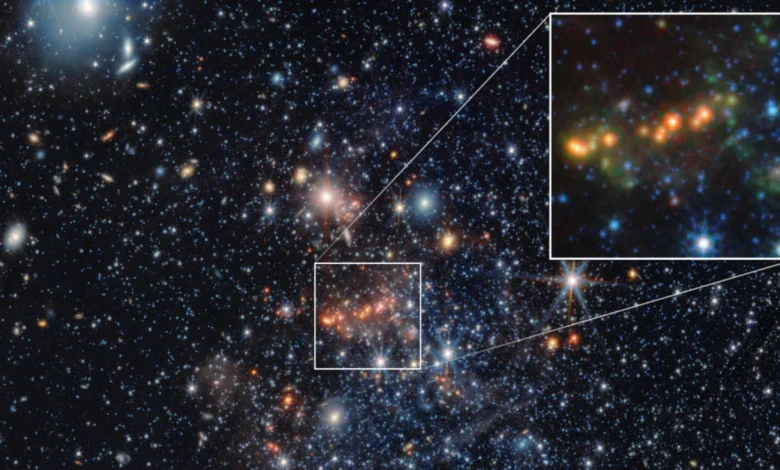
Astronomers, leveraging the unparalleled capabilities of the James Webb Space Telescope (JWST), have achieved a significant breakthrough in understanding the genesis of dust in the early universe by meticulously examining a nearby dwarf galaxy. This research, focused on Sextans A, a galaxy remarkably similar in its chemical composition to the primordial galaxies that seeded the infant cosmos with essential elements for star formation and galactic growth, offers crucial insights into processes that have long eluded direct observation. While JWST can detect many ancient galaxies, probing their internal workings in fine detail remains a formidable challenge. Therefore, by studying a more accessible and contemporary galaxy exhibiting characteristics akin to those of the universe’s first stellar nurseries, scientists are gaining invaluable knowledge.
The early universe, a vast expanse dominated by the simplest elements, hydrogen and helium, was a chemically sparse environment. The first generation of stars, known as Population III stars, were consequently forged from this elemental soup, largely devoid of heavier elements, or "metals" as astronomers term anything beyond hydrogen and helium. These nascent stars, however, played a pivotal role in transforming the cosmic landscape. Through nuclear fusion within their cores, they synthesized heavier elements, and upon their dramatic demise in supernova explosions, these newly forged metals were dispersed into the interstellar medium – the vast reservoirs of gas and dust that permeate the cosmos. This enrichment process was fundamental, providing the raw materials for subsequent generations of stars and galaxies to form and evolve.
Understanding this crucial period of cosmic chemical evolution has been hampered by the sheer distance and faintness of the earliest galaxies. However, the research team, led by Claudio Gavetti of the National Institute for Astrophysics (INAF), has ingeniously circumvented this limitation by focusing their attention on Sextans A. Located a mere 4.6 million light-years away, Sextans A presents a unique opportunity due to its remarkably low metallicity. "Directly studying the galaxies that populated the early universe is still very difficult," Gavetti stated in a press release. "Which is why observing a nearby galaxy like Sextans A, which presents similar chemical conditions, offers us a precious opportunity to understand how the first generations of stars evolved and what role they played in transforming the interstellar medium."
Sextans A: A Window into Ancient Galactic Chemistry
Sextans A’s significance lies in its stark resemblance to the metal-poor conditions of early galaxies. It is estimated to contain only between 1% and 7% of the heavy elements found in our own Sun, which is classified as a Population I star, indicating it is even richer in metals than the second-generation stars. This makes Sextans A an exceptional proxy for studying the dust production mechanisms of the universe’s first galaxies. Its position on the outer fringes of our local group of galaxies, a collection of galaxies gravitationally bound together, belies its ancient chemical character.
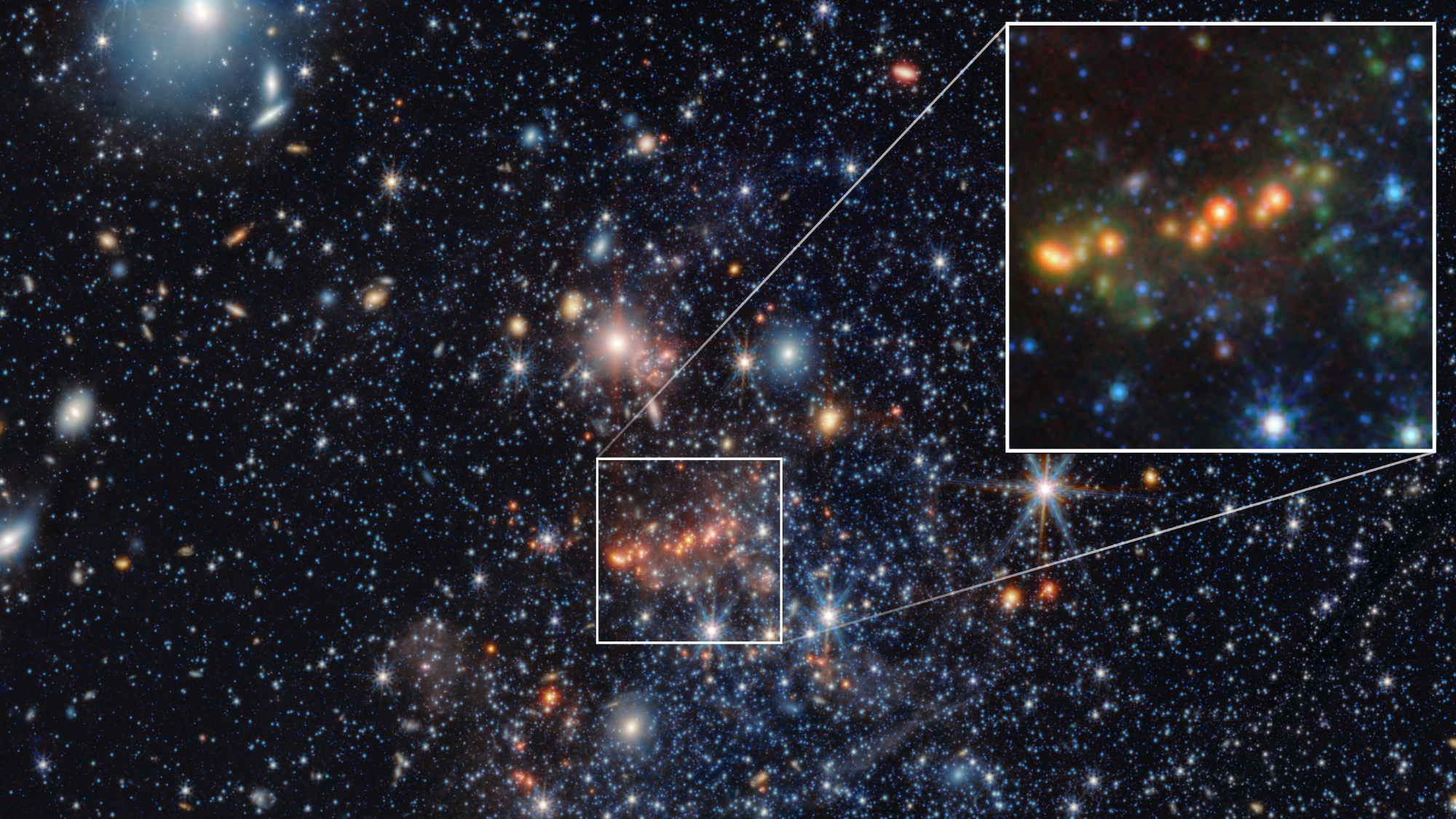
The research team employed JWST’s Near-InfraRed Camera (NIRCam) and Mid-Infrared Instrument (MIRI) to capture high-resolution observations of Sextans A. These instruments allowed for an unprecedented detailed mapping of the dwarf galaxy’s stellar population during a specific evolutionary phase known as the "asymptotic red giant branch" (AGB). This phase occurs in stars more massive than the Sun, after they have exhausted helium in their cores, leading to the formation of an inert carbon core. Fusion continues in alternating helium- and hydrogen-burning shells surrounding this core, causing the star to expand dramatically, often increasing its brightness by a thousandfold.
Unveiling the "Dust Factories"
The meticulous analysis of the JWST data revealed a fascinating pattern. Approximately 90% of the AGB stars observed in Sextans A were not enveloped by dust. However, a notable subset, around twenty stars, were found to be embedded within thick dust shells. These stars, acting as cosmic "dust factories," were determined to have formed between 2 billion and 3 billion years ago. Their initial mass is estimated to have been about 1.5 times that of our Sun. This finding is crucial as it identifies specific types of stars and their formation epochs responsible for the production of dust that would enrich the interstellar medium for subsequent stellar generations.
The implications of this discovery are far-reaching. By understanding which stars in the early universe were most effective at generating the metal dust that seeded later star formation, scientists can construct a more complete and accurate picture of how the universe evolved into its present state. The very building blocks of planets, including Earth, are thought to have originated from this dust. Therefore, this research provides fundamental insights into the cosmic origins of not only stars and galaxies but also planetary systems and, by extension, the conditions necessary for life.
The Dawn of a New Era in Cosmic Exploration
The scientists involved emphasized that this level of detailed investigation would have been impossible prior to the deployment of the JWST. "The JWST allows us to observe in unprecedented detail environments that until a few years ago were beyond our reach," commented Flavia Dell’Agli, a member of the research team from INAF. "The value of these data lies not only in the images but in the ability to compare them with theoretical models and verify how correctly they describe the evolution of stars." This synergy between observational data and theoretical modeling is key to advancing our understanding of astrophysical phenomena.
The research, published on Monday, July 20, in The Astrophysical Journal, represents a significant leap forward in astrophysics. It not only confirms theoretical models of dust production in metal-poor environments but also provides empirical data that will refine these models further. The ability to observe the asymptotic red giant branch phase in such detail allows astronomers to study the mass-loss processes and dust-forming capabilities of these stars, which are critical for galactic chemical evolution.
Broader Implications for Cosmic History
The early universe was a dynamic and transformative period. The first stars, while few and far between, were the alchemists of the cosmos, forging the heavier elements that would eventually form planets, moons, and life itself. The cycle of stellar birth, evolution, and death was a relentless engine of creation, gradually enriching the universe with the diverse chemical elements we observe today. Dwarf galaxies like Sextans A, by retaining a chemical signature reminiscent of these early epochs, serve as invaluable cosmic archives.
The detailed chemical composition of galaxies, including the abundance of heavy elements, dictates the types of stars that can form within them and the processes by which these stars evolve. Metal-poor stars, for instance, tend to be more massive and have shorter lifespans than their metal-rich counterparts. They also tend to produce different types of supernovae, with varying yields of heavy elements. By studying Sextans A, astronomers are gaining a clearer picture of the specific stellar populations that were most efficient at producing the initial dust, which then served as the foundation for subsequent star formation.
This research also has implications for our understanding of galaxy formation and evolution. The presence and distribution of dust within galaxies significantly influence their appearance and their ability to form new stars. Dust absorbs ultraviolet and visible light and re-emits it in the infrared, making dusty galaxies appear different in various wavelengths. Furthermore, dust plays a crucial role in the cooling of gas within galaxies, facilitating the gravitational collapse that leads to star birth.
The JWST’s advanced infrared capabilities are particularly well-suited for studying these phenomena. Infrared light can penetrate the dust clouds that often obscure visible light, allowing astronomers to see the hidden structures and processes within galaxies. The telescope’s sensitivity and resolution enable the detection of faint signals from distant or low-mass objects, which are essential for understanding the early universe and the formation of its first structures.
As astronomers continue to utilize the JWST to explore the cosmos, further insights into the formation and evolution of galaxies, stars, and planets are expected. The study of Sextans A is a testament to the power of cutting-edge technology in unraveling the universe’s most profound mysteries, offering a tangible connection between the distant past and our present cosmic reality. The ability to observe a nearby galaxy and infer the conditions of the ancient universe highlights the interconnectedness of cosmic evolution across vast stretches of space and time.
Related posts: