The global hospitality sector has undergone a profound structural shift over the past decade, driven by an increasing traveler demand for ecological sustainability coupled with absolute privacy. As environmental consciousness converges with high-end tourism, off-grid architecture has emerged as a premier category in global travel. Properties that function independently of traditional municipal power grids while offering world-class amenities are redefining the parameters of luxury lodging. This phenomenon reflects a broader consumer movement toward low-impact travel, where structural self-sufficiency does not require a compromise in comfort. Industry analysts attribute this trend to heightened post-pandemic interest in remote destinations, biophilic design, and zero-carbon footprints.
From the dense tropical canopies of Central America to the volcanic landscapes of Spain and the fjord-carved valleys of Norway, property developers and visionary architects are pioneering new methods of sustainable habitation. These off-grid stays utilize photovoltaic solar arrays, natural spring water sources, and locally harvested materials to minimize their ecological impact. Far from being rudimentary campsites, these architectural marvels blend seamlessly into fragile ecosystems, offering guests an immersive experience in nature without contributing to environmental degradation.
Architectural Innovation and Sustainable Engineering in Remote Stays
The engineering behind modern off-grid luxury requires meticulous planning and a sophisticated understanding of localized climates. In Brazil, architectural landmarks such as Casa da Pedra—widely known as Caipira Modernista—have demonstrated that high design and total ecological autonomy are entirely compatible. Recognized as the nation’s first fully off-grid sustainable residence, the four-bedroom property relies exclusively on solar power and mountain-sourced water. This structural approach challenges the conventional reliance on urban infrastructure, proving that luxury estates can be established in remote rural environments while maintaining a net-zero carbon footprint.
Similarly, in the Marrakech countryside, sustainable architecture intersects with cultural heritage at the "Loop," a sprawling clay residence powered entirely by solar energy. Built using local materials that provide natural thermal insulation, the property showcases how traditional building techniques can be adapted for contemporary luxury. By utilizing local clay and vernacular architecture, these properties reduce the embodied carbon typically associated with material transport, setting a benchmark for sustainable development in arid climates.
In regions where delicate natural habitats prohibit traditional construction entirely, modular and low-impact designs have taken precedence. Norway’s Birdbox cabins offer a striking example of minimal-impact placement. Suspended or positioned delicately within the landscape three hours north of Bergen, these structures touch the earth lightly, allowing guests to experience the dramatic topography of the Blegja mountain range and the Førdefjord without leaving permanent scars on the ecosystem.
Global Spotlight: Key Properties Defining the Off-Grid Movement
An examination of the world’s leading off-grid accommodations reveals a diverse spectrum of design philosophies, geographic settings, and pricing structures tailored to various segments of the sustainable travel market.
Central and South America: Rainforests and Volcanic Valleys
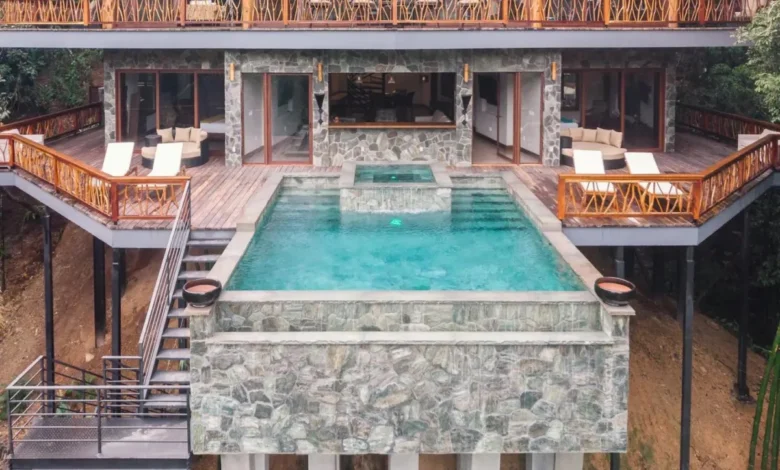
Central America remains a focal point for eco-luxury, combining biodiversity with high-end hospitality. Valley Stream in Belize represents the upper echelon of this market. Set within a 200-acre private jungle sanctuary, the 5,000-square-foot, three-bedroom solar-powered estate commands $4,571 per night. It features native thatch ceilings and Belizean hardwood floors, offering guests complete seclusion alongside five-star amenities such as a cliffside rock pool, private hiking trails, and an in-house professional chef.
Further south in Costa Rica, Casa Bell in Montezuma offers a balanced eco-luxury experience at $284 per night. The three-bedroom solar-powered home provides ocean and valley views while remaining fully immersed in a wildlife-rich rainforest. Similarly, Brazil’s Casa da Pedra accommodates up to eight guests at $802 per night, merging brutalist-inspired modernism with complete off-grid functionality.
Europe: From Arctic Fjords to Historic Restorations
European off-grid properties emphasize integration with historical contexts and extreme landscapes. In Norway, the Birdbox glamping experience immerses visitors in a shifting alpine landscape for $360 per night, offering a minimalist retreat that prioritizes visual connection to the outdoors.
In the United Kingdom, sustainable adaptation extends to maritime history. The Boat Shack—housed within a historic 1945 vessel originally named the Anthony Stevenson—operates entirely on renewable solar energy. Moored in a private forest a short drive from Ely and Cambridge, this one-bedroom floating retreat accommodates couples for $219 per night, illustrating how industrial heritage can be repurposed for sustainable tourism.
In Spain’s Canary Islands, NeoNauta 23 caters to the rising demographic of remote workers and digital nomads. Constructed in 2021 near Villaverde, the property blends volcanic vistas with robust modern infrastructure, including strong Wi-Fi and dedicated workspaces, priced at $305 per night.
North America and North Africa: Cultural Immersion and Extreme Isolation
In the United States, the Hogan by the River in Arizona offers a starkly traditional off-grid experience. Located within the remote reaches of the Navajo Nation near the Grand Canyon and Monument Valley, this earth home operates without electricity, running water, or plumbing. Priced at $166 per night, it provides a culturally significant, minimalist shelter for travelers seeking profound isolation and unmatched stargazing, subject to local tribal regulations regarding substance prohibitions.
Conversely, the Loop in Morocco delivers expansive scale and hedonistic comfort. Accommodating up to 12 guests across six bedrooms for $579 per night, the property combines panoramic views of the Atlas Mountains with high-end hospitality, including a personal chef and proximity to the cultural center of Marrakech.
Economic Implications and the Future of Eco-Tourism
The rapid expansion of the off-grid luxury market highlights a significant economic evolution within the broader tourism industry. Traditional hospitality developments often face stringent regulatory hurdles, environmental impact assessments, and high utility connection costs when expanding into remote areas. Off-grid engineering bypasses many of these municipal dependencies, offering developers a viable pathway to monetize pristine, untouched landscapes without the prohibitive expense of extending public utilities.
Furthermore, industry analysts note that these properties command higher average daily rates (ADR) compared to conventional urban accommodations of equivalent size. This pricing premium is justified by the exclusivity of the location, the cost of advanced sustainable technologies—such as commercial-grade solar inverters, greywater recycling systems, and satellite communication arrays—and the inclusion of bespoke services like private chefs and guided ecological tours.
As climate change concerns increasingly influence consumer behavior, regulatory bodies worldwide are tightening environmental standards for new tourism developments. Properties that are built from inception to operate independently of fossil fuels and municipal water supplies are uniquely positioned to comply with future ecological mandates. Consequently, sustainable off-grid architecture is transitioning from a niche market segment into a dominant blueprint for the future of global travel, proving that ultimate seclusion and environmental stewardship can coexist profitably.
Related posts: