Unlocking Italy: How Travel Rewards and Credit Card Points Are Reshaping Tourism in Florence and Beyond


The historic city of Florence, renowned for its architectural masterpieces, artistic heritage, and panoramic views from vantage points like the steps of San Miniato al Monte, is experiencing an unprecedented evolution in how visitors finance and plan their journeys. As global tourism rebounds to heights exceeding pre-pandemic benchmarks, a significant catalyst is altering the demographic and financial makeup of travelers arriving in Tuscany: the widespread proliferation of travel credit cards, airline miles, and hotel loyalty points.
For decades, European travel—particularly to high-demand cultural capitals like Florence, Rome, and Venice—was viewed as a luxury reserved for those with substantial disposable cash reserves or long-term savings. However, the democratization of travel through sophisticated reward ecosystems has fundamentally shifted this paradigm. Today, millions of consumers leverage everyday spending, sign-up bonuses, and tiered loyalty programs to offset the steep costs of transatlantic flights, boutique accommodations, and curated local experiences. This shift not only changes the individual traveler’s ledger but also exerts a profound, measurable influence on the broader Italian tourism economy, local infrastructure, and destination management strategies.
The Mechanics of Modern Travel Financing
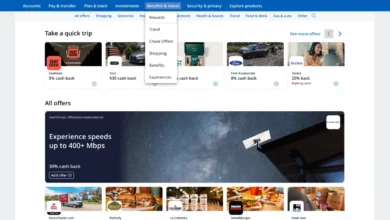
To understand how points and miles are reshaping European tourism, one must examine the mechanics of the modern credit card rewards industry. Financial institutions and co-branded airline and hotel partners invest billions of dollars annually into acquisition campaigns, offering lucrative welcome bonuses that can instantly cover a round-trip business class ticket to Italy or multiple nights at a five-star property overlooking the Arno River.
Data compiled by industry analysts indicates that travel rewards participation has grown exponentially over the past five years. Consumers are increasingly sophisticated, utilizing "transferable point currencies"—such as American Express Membership Rewards, Chase Ultimate Rewards, and Capital One Miles—to maximize flexibility. Instead of being locked into a single airline or hotel chain, travelers can transfer their balances to dozens of international airline partners, booking flights on carriers like ITA Airways, Lufthansa, or Air France to reach Italian hubs like Florence Airport (Peretola) or nearby Pisa International Airport.
This financial agility has allowed a broader socioeconomic demographic to experience destinations that were previously cost-prohibitive. Consequently, the profile of the average tourist wandering through the Uffizi Gallery or the historic center of Florence is diversifying. Families, younger professionals, and middle-income earners are increasingly utilizing accumulated points to fund multi-week European itineraries, spending less of their liquid capital on baseline transportation and lodging, and redirecting those savings into local experiences, dining, and retail.
Chronology of the Points-and-Miles Boom
The convergence of digital finance and international travel did not happen overnight. Tracing the trajectory of this phenomenon reveals a steady escalation in consumer adoption and industry adaptation:
- 2010–2015: The post-recession era saw banks aggressively compete for affluent consumers by introducing high-tier travel cards with premium perks, such as airport lounge access and comprehensive travel insurance. Co-branded hotel partnerships began expanding their global footprints, making it easier to redeem points internationally.
- 2016–2019: Transferable point currencies gained mainstream popularity. Travel bloggers and online communities demystified the process of "award travel," leading to a surge in everyday consumers mastering points optimization strategies for European vacations.
- 2020–2021: The COVID-19 pandemic temporarily paralyzed global tourism. In response, airlines and credit card issuers introduced flexible redemption policies, lowered status requirements, and offered lucrative everyday spending multipliers to retain customer loyalty. This period resulted in a massive stockpile of unused points and miles among consumers.
- 2022–2024: As international borders reopened, a phenomenon known as "revenge travel" swept the globe. Travelers rapidly deployed their accumulated balances, leading to historic demand spikes for flights and hotels in major European destinations, including Italy.
- 2025–2026: The ecosystem matured into its current state. Financial institutions introduced more restrictive rules and higher annual fees for premium cards, while airlines and hotels adopted dynamic pricing models for award bookings. Despite these hurdles, consumer engagement with travel rewards remains at an all-time high, fundamentally altering how trips to cultural epicenters are budgeted and executed.
Economic Implications for Florence and Tuscany
The influx of reward-travel tourists carries complex economic implications for Florence and the wider Tuscan region. On one hand, the local economy benefits from sustained, year-round visitor spending. Because reward travelers often save thousands of dollars on flights and hotels, they frequently report having a larger discretionary budget for destination-specific activities, such as private wine-tasting tours in Chianti, artisanal leather goods purchases, and dining at high-end traditional trattorias.
Local business owners and hospitality associations have noted that these travelers tend to stay longer. Traditional cash-strapped tourists might limit a Florence itinerary to two hurried days, whereas points-and-miles enthusiasts—maximizing multi-night hotel award stays or leveraging elite status perks like complimentary breakfast and late check-out—frequently extend their visits to four or five days. This extended dwell time distributes tourism spending more evenly across local commerce.

However, this dynamic also introduces significant challenges. The heavy concentration of global hotel brands participating in major loyalty programs—such as Marriott Bonvoy, Hilton Honors, and IHG One Rewards—has intensified competition for real estate within historic city centers. Independent boutique hotels find it increasingly difficult to compete with multinational properties that can offer guests the security and value proposition of point redemptions. Furthermore, the sheer volume of visitors facilitated by reward travel contributes to the ongoing pressures of overtourism in Florence, prompting municipal leaders to grapple with infrastructure wear, crowd management, and the preservation of residential neighborhoods.
Industry and Official Responses
In response to the shifting demographics and financial behaviors of incoming visitors, tourism boards, municipal authorities, and hospitality providers in Italy are adapting their strategies.
Local government officials in Florence have increasingly emphasized sustainable tourism initiatives, attempting to steer reward-travel visitors away from congested monuments and toward lesser-known neighborhoods, artisan workshops, and surrounding Tuscan hills. By collaborating with digital platforms and tourism bureaus, the city aims to disperse foot traffic and encourage longer, more immersive stays rather than brief, high-impact visits.
Meanwhile, major hotel chains and travel providers operating in Italy are refining their inventory management. With dynamic pricing algorithms dictating how many points are required for a night’s stay, properties in prime locations—such as those overlooking the Duomo or the Ponte Vecchio—frequently command record-high point redemptions during peak seasons. This has forced savvy travelers to book further in advance or travel during shoulder seasons (such as late autumn and early spring), which paradoxically aids Italy’s ongoing effort to mitigate seasonal tourism bottlenecks.
Credit card issuers have also expanded their concierge and lifestyle services, partnering directly with local Italian tour operators, high-end retailers, and cultural institutions to offer cardholders exclusive access. These partnerships often include curated experiences, such as after-hours museum tours or reserved seating at renowned culinary establishments, bridging the gap between digital financial products and tangible local commerce.
Broader Impact and Future Outlook
The intersection of travel rewards and international tourism is no longer a niche hobby for finance enthusiasts; it is a primary driver of modern global mobility. As financial institutions continue to innovate their product offerings and consumers become increasingly adept at maximizing rewards, destinations like Florence will continue to feel the effects.
The long-term implications point toward a permanent restructuring of how travel is planned, financed, and consumed. While challenges related to urban capacity, housing, and resource management remain pressing for historic cities, the economic resilience provided by a steady stream of financially empowered visitors is undeniable.
Ultimately, the ability of a traveler to watch the sunset from the steps of San Miniato al Monte—funded in part by everyday credit card rewards—symbolizes the democratization of global exploration. As this trend matures, the success of destinations like Florence will depend on their ability to balance the economic advantages of this new wave of tourism with sustainable policies that protect the cultural and structural integrity of one of the world’s most cherished historical landscapes.
Related posts: