The Ultimate Guide to Maximizing Chase Offers How Cardholders Can Leverage Targeted Discounts and Statement Credits to Optimize Everyday Spending

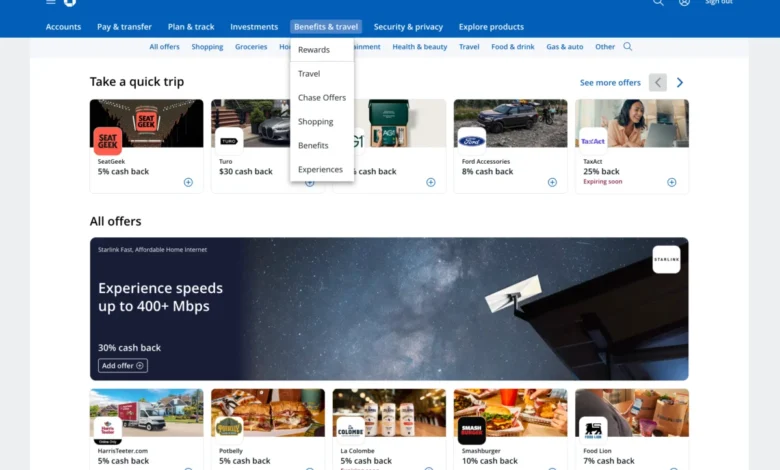
JPMorgan Chase & Co. has established one of the most robust financial ecosystems in the United States, providing a diverse array of credit and debit products to millions of consumers. Among the various perks offered to cardholders, Chase Offers remains one of the most effective yet frequently underutilized tools for reducing expenses and increasing the overall value of card membership. Operating as a merchant-funded rewards program, Chase Offers provides targeted, card-specific discounts that allow users to earn statement credits on purchases they are already making. As the cost of living and travel expenses continue to fluctuate, understanding the nuances of this program has become essential for financially savvy consumers looking to optimize their returns on every dollar spent.
Understanding the Framework of Chase Offers
Chase Offers is a digital rewards program integrated directly into the Chase mobile app and online banking portal. It functions similarly to Amex Offers or Citi Merchant Offers, providing cardholders with a list of "activated" discounts at specific retailers, restaurants, and service providers. Unlike traditional rewards points, which are earned as a percentage of a purchase and can be redeemed for travel or cash back later, Chase Offers provide a direct statement credit to the account once a qualifying transaction is completed. These credits typically appear within 7 to 14 business days after the transaction posts to the account.
The program is fundamentally built on a personalized algorithm. This means that two different cardholders may see entirely different lists of available deals. Furthermore, a single individual who holds multiple Chase cards—such as the Chase Sapphire Preferred and the Chase Freedom Flex—may find different offers assigned to each card. This personalization is driven by spending habits, geographic location, and the specific merchant’s target demographic. By tailoring these offers, Chase and its merchant partners aim to drive customer loyalty and incentivize spending at specific outlets.

Eligibility and Access Requirements
To participate in Chase Offers, an individual must be a primary cardholder of an eligible U.S.-issued Chase consumer or business credit card or a Chase debit card. While the program is expansive, there are specific administrative requirements for access. The cardholder must have a U.S. address listed as their primary residence or place of business. Furthermore, while authorized users can help fulfill the requirements of an offer by making a purchase on their secondary card, only the primary cardholder has the authority to view and "add" the offers to the account via the digital interface.
Popular eligible cards include the Chase Sapphire Reserve, Chase Sapphire Preferred, the Chase Freedom suite (including Freedom Flex and Freedom Unlimited), and the Ink Business line of cards. Even co-branded cards, such as those issued in partnership with Hyatt, Marriott, or United Airlines, frequently feature Chase Offers, making the program nearly universal across the issuer’s portfolio.
The Evolution of Card-Linked Offers
The rise of Chase Offers is part of a broader trend in the financial services industry known as card-linked offers (CLOs). This industry has seen significant growth over the last decade as banks seek to move beyond simple flat-rate cash back. By partnering with companies like Cardlytics, financial institutions can offer merchants a way to reach high-value customers with surgical precision.
Historically, Chase launched its offers program in late 2018, significantly trailing American Express, which had pioneered the concept years earlier. However, Chase quickly scaled the program by integrating it into its highly-rated mobile application. Today, the CLO market is a multi-billion dollar industry, with merchants willing to pay for the "statement credit" as a form of customer acquisition cost (CAC). For the merchant, it is often more cost-effective to give a 10% discount to a Chase cardholder than to spend that same money on broad-spectrum television or social media advertising.

Navigating the Chase Digital Interface
Accessing and activating Chase Offers is a straightforward process, though it requires consistent monitoring as offers are dynamic and frequently expire. On the Chase website, users can find the "Chase Offers" section on the right-hand side of the main account dashboard. Alternatively, navigating to the "Benefits & Travel" tab provides a more comprehensive view of available deals across all linked accounts.
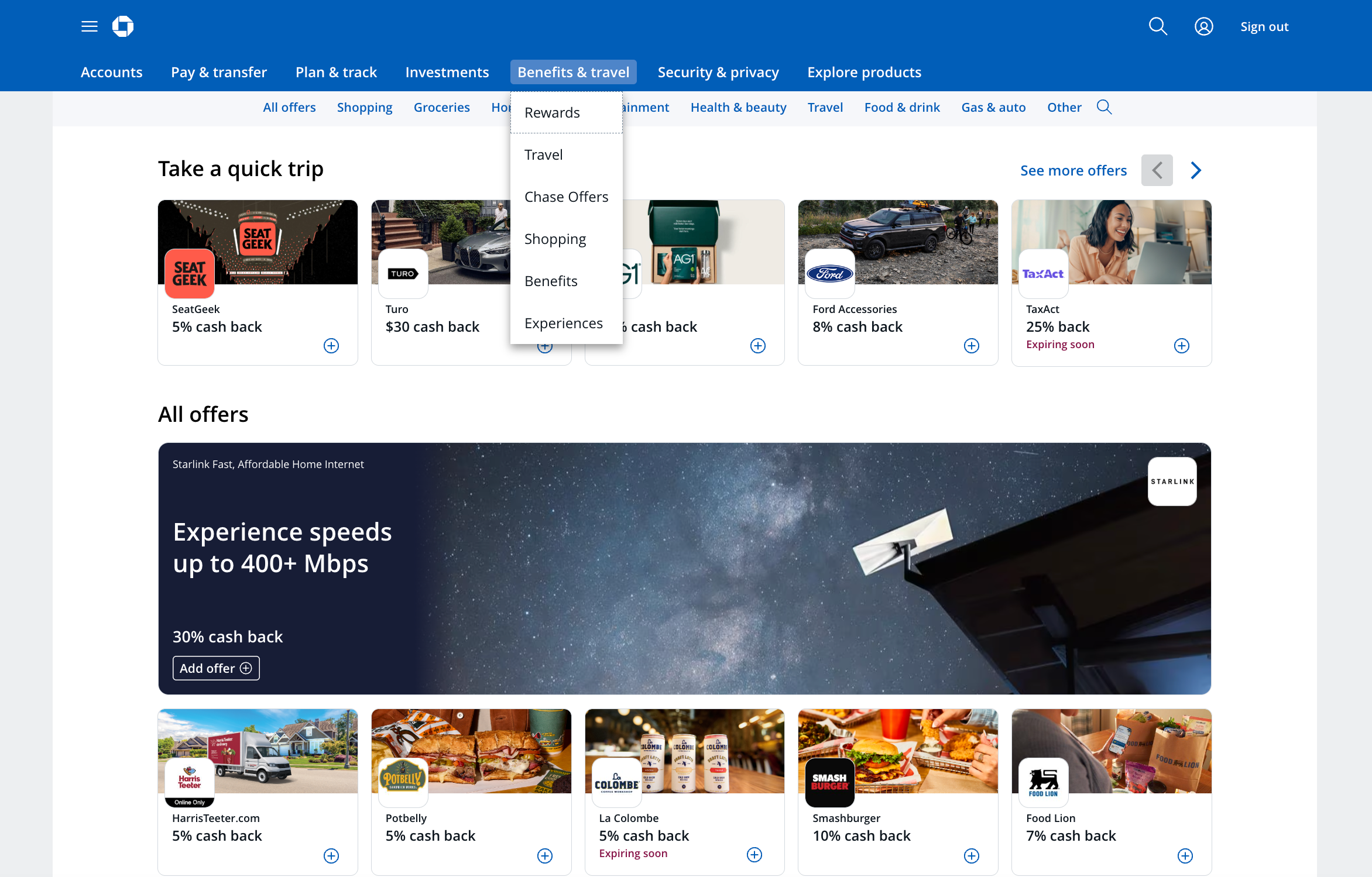
On the mobile app, which is the preferred method for most users, the Chase Offers section is typically located toward the bottom of the home screen. By clicking "See all offers," cardholders can browse through categories such as Dining, Shopping, and Travel. Each offer includes a "plus" icon or an "Add to card" button. Once clicked, the offer is tethered to that specific card. It is important to note that adding an offer to a Chase Sapphire card does not automatically add it to a Chase Freedom card; if a user wants the discount on both, they must add it manually to each, provided it is available on both.
Analyzing the Types of Available Deals
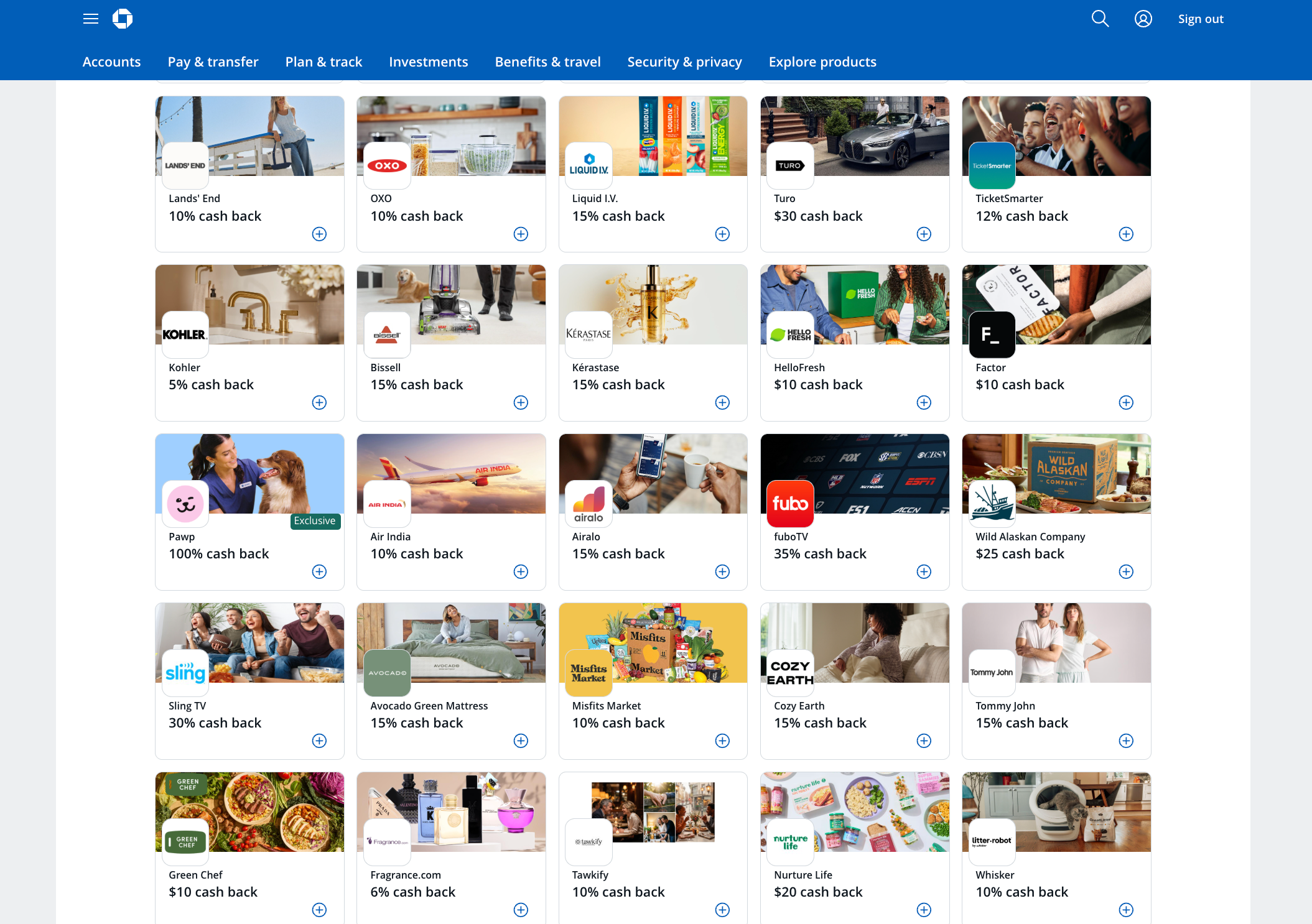
The variety of deals available through Chase Offers is vast, ranging from small everyday savings to significant rebates on high-ticket items. Common offer structures include:
- Percentage-Based Cash Back: These are the most common, typically offering between 5% and 15% back. For example, a cardholder might see a 10% back offer at Starbucks or a 15% back offer at a clothing retailer like Gap. These almost always come with a "maximum cash back" cap, such as "$10 maximum," meaning the discount applies to the first $100 of spending.
- Fixed Statement Credits: These require a minimum spend to trigger a specific reward. A common example is "Spend $100 or more at Marriott, get a $20 statement credit."
- Subscription Rebates: Chase frequently partners with streaming services or software providers. Offers might include $5 back on a Disney+ subscription or $20 back on TurboTax software during tax season.
- Travel and Hospitality: High-value offers often appear for hotel chains (Hyatt, Hilton, IHG), rental car companies, and occasionally airlines. These are particularly valuable for travelers who can stack these credits on top of the points they earn for the booking.
Data-Driven Savings: Real-World Examples
The efficacy of Chase Offers is best demonstrated through real-world application. Internal data and user testimonials suggest that active users can save anywhere from $100 to $500 annually simply by checking their offers before making planned purchases.
For instance, a contributing editor at a major travel publication recently utilized a Chase Offer for a Whoop health band. The total cost for a 12-month membership and device was $392. By leveraging a high-value Chase Offer on a Sapphire Reserve card, the user received a statement credit that covered nearly the entire cost of the device, reducing the out-of-pocket expense to just $33. In another instance, a traveler booking a stay at an "At Home" furniture store utilized a 15% back offer to save $50 on a single transaction. These examples highlight that while 5% back on a cup of coffee is a nice perk, the true power of the program lies in large, infrequent purchases.
The Strategy of "Stacking" Rewards
To truly maximize the value of Chase Offers, advanced users employ a strategy known as "stacking." This involves layering multiple rewards programs on top of a single purchase to achieve a "double" or "triple dip."
Consider a hypothetical purchase at a major retailer like Sephora. A strategic cardholder would follow these steps:
- Activate the Chase Offer: Ensure a 10% back Sephora offer is added to their Chase Freedom Unlimited.
- Use a Shopping Portal: Navigate to the retailer’s website through a portal like Rakuten or the Chase Ultimate Rewards shopping portal to earn an additional 2% to 10% in cash back or points.
- Leverage Category Bonuses: Since the Freedom Unlimited earns 1.5% cash back on all purchases (or more if it falls under a quarterly bonus category for the Freedom Flex), the user earns their standard points on top of the other discounts.
- Merchant Loyalty Programs: Finally, the user earns Sephora Beauty Insider points on the transaction.
By the end of the transaction, the consumer may have effectively achieved a 20% to 25% total return on their spending, far exceeding the standard 1.5% to 2% offered by most credit cards.
Critical Terms and Conditions
While Chase Offers provide significant benefits, they are governed by strict terms and conditions that users must respect to ensure the statement credit posts correctly.
- Expiration Dates: Every offer has a hard expiration date. The purchase must be made by this date. Interestingly, as long as the transaction is initiated by the deadline, the credit usually posts even if the merchant doesn’t finalize the charge (the "post date") until a few days later.
- Direct Payment Requirement: One of the most common reasons for an offer failing to trigger is the use of third-party payment processors. To qualify, the payment must typically be made directly with the merchant. While mobile wallets like Apple Pay and Google Pay generally work, using PayPal or a third-party delivery service like DoorDash for a restaurant offer may disqualify the transaction because the merchant of record becomes the delivery service rather than the restaurant.
- One-Time Use: Most Chase Offers are "one-time use only." Once the credit is triggered, the offer disappears from the dashboard, even if the user did not hit the maximum allowable cash-back limit.
- U.S. vs. International: Most offers are restricted to U.S. locations of a merchant. However, global hotel brands occasionally allow for credits on international stays, provided the bill is settled in a way that allows Chase to identify the merchant.
Impact on Consumer Behavior and Industry Implications
The proliferation of Chase Offers has broader implications for the banking and retail sectors. For Chase, the program increases "app engagement." By requiring users to log in to add offers, Chase ensures that customers are frequently interacting with their digital platform, where they may also see advertisements for loans, mortgages, or other financial products.
For retailers, Chase Offers provide a way to combat "brand switching." In a competitive market, a 10% discount can be the deciding factor for a consumer choosing between two similar brands. Furthermore, because the discount is applied as a statement credit by the bank, it does not devalue the brand’s premium image in the same way a "clearance" sign or a public coupon code might.
From a macroeconomic perspective, these programs represent the increasing "fintech-ization" of traditional banking. By using data to drive consumer spending, Chase is moving away from being a passive holder of funds and toward being an active participant in the consumer’s commerce journey.

Conclusion and Future Outlook
Chase Offers represents a win-win-win scenario in the modern economy: merchants gain targeted sales, Chase gains increased card loyalty and app engagement, and consumers receive tangible financial rebates. As the technology behind these targeted offers continues to improve, cardholders can expect even more personalized and high-value deals.
The key to success with the program remains consistency. By spending a few minutes every two weeks to "Add to card" all potentially relevant offers, consumers can ensure they never miss an opportunity to save. When combined with strategic stacking and an understanding of the program’s limitations, Chase Offers serves as a powerful tool for turning everyday expenses into a source of significant financial return. In an era where every percentage point of savings counts, mastering the Chase Offers ecosystem is a hallmark of the modern, informed consumer.
Related posts: