Pink addresses backlash over social media response to Macklemore pro-Palestine remarks during Ed Sheeran tour

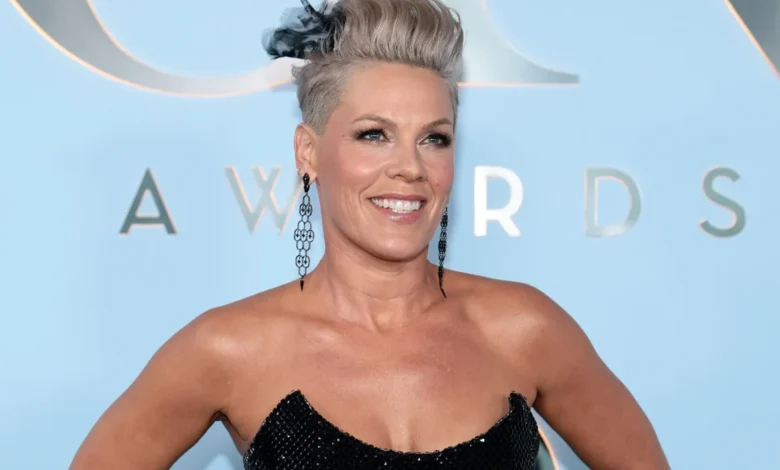
Pop star Pink has issued a detailed clarification regarding her recent social media activity, which sparked significant public debate after she shared a post criticizing fellow musician Macklemore for his onstage advocacy for Palestine. The controversy unfolded following Macklemore’s opening sets for Ed Sheeran’s ongoing "Loop Tour" at MetLife Stadium in East Rutherford, New Jersey, on September 4 and 5, 2026. During these performances, the rapper—known for his outspoken political activism—made explicit calls to "free Palestine," a gesture that drew both vocal support from segments of the audience and sharp condemnation from others, including the singer herself.
The Timeline of the Controversy
The tension began immediately following the September performances at MetLife Stadium. Shortly after the concerts concluded, Pink, whose birth name is Alecia Beth Moore, utilized her social media presence to amplify a message originally posted by the organization StopAntisemitism. The repost criticized Macklemore’s onstage comments and explicitly advocated for his removal from the remainder of Ed Sheeran’s stadium tour.
For several days, the singer’s action became a flashpoint for digital discourse, leading to an influx of criticism from fans and commentators who questioned her position on the Israel-Hamas conflict. On Friday, September 11, Pink took to Instagram to provide a comprehensive, multi-part explanation of her actions, expressing regret for the nature of her initial response while reiterating her personal stance on the war.
A Reflective Statement from the Artist
In her statement, Pink acknowledged that her initial decision to repost the criticism was reactionary and lacked the nuance required for such a sensitive geopolitical topic. "Last Sunday I reposted somebody else’s post about Macklemore’s set at Ed Sheeran’s show," she wrote. "It said things in words I didn’t write, and I wouldn’t have chosen all of them. Then the comments came, and I did what I do when I’m hurt, which is post snarky memes and act like I’m fine. That’s on me. A repost isn’t a statement, and a meme isn’t a spine."
The singer, who has frequently been open about her Jewish heritage, addressed the assumptions made by the public regarding her political beliefs. She emphasized that being Jewish does not equate to blind adherence to the policies of any specific government. "I was born a Jew. I didn’t pick it, and I’ve never hidden it. And this week a whole lot of people decided what I believe without asking me… because a repost and the word ‘Jew’ were apparently enough to fill in the rest."
Pink clarified her stance on the current conflict, stating firmly that she does not speak for the State of Israel or any other government entity. She described Hamas as a "terrorist organization" while simultaneously advocating for the dignity and future of Palestinian civilians. "Protecting innocent life comes first, everywhere, and nobody should ever celebrate the death of a child," she noted, underscoring her long-standing humanitarian work as a UNICEF ambassador, which she cited as evidence of her commitment to children affected by global conflicts, regardless of their nationality.
Historical Context and Past Friction
A significant portion of Pink’s grievance stemmed from a historical incident involving Macklemore that predates the current conflict. In 2014, the rapper faced widespread backlash for wearing a costume that was widely criticized as relying on antisemitic tropes. While Macklemore issued a formal apology at the time, stating that he "respects all cultures," Pink noted that the memory of that event influenced her reaction to his recent performances.
"Every Jew I know knew exactly what it was," Pink wrote, referencing the 2014 incident. "But he apologized, and I let it go, because that’s what we do. We let it go. Then last weekend he stood in front of a stadium full of music-loving families, with violent images from a war on the screens, dedicated a song to the movement of his choice, and then took the mic to tell all of the Jews in the stadium that it wasn’t about them. You don’t get to decide that for us."

Pink maintained that her repost was a manifestation of fear and unease rather than a political crusade to silence other artists. "I have never asked for another artist to be silenced and I’m not asking now," she clarified. "I don’t need anyone fired, and I don’t need a refund. What I need is to be able to say, as a Jewish mom, that scared me."
Macklemore’s Stance and Institutional Reactions
Macklemore has remained steadfast in his messaging despite the criticism. Following the backlash, he took to the social media platform X (formerly Twitter) to reiterate his position. "Wanting all humans to be treated equal should never be controversial," he wrote, accompanying the text with video footage of his speech from the September 5 show at MetLife Stadium.
The incident has also mobilized institutional responses. The Israeli-American Council (IAC) launched a petition demanding that the rapper be removed from the remaining eight dates of the Ed Sheeran tour, which are scheduled to run through early November. The petition reflects the broader polarization surrounding the use of performance stages as platforms for political advocacy during the ongoing war.
Broader Implications for the Music Industry
The clash between these two high-profile artists highlights the increasingly complex landscape for touring musicians in the post-October 7 world. As concert venues transform into spaces where political expression and fan expectations collide, artists are finding it difficult to navigate the boundaries of public discourse.
For major touring acts like Ed Sheeran, the controversy presents a unique challenge in maintaining the atmosphere of a stadium tour while their opening acts engage in divisive political commentary. Industry analysts suggest that this event underscores a growing trend of "audience alienation," where fans attending for musical entertainment are increasingly confronted with the political agendas of performers.
Furthermore, the "social media cycle" mentioned by Pink—where complex geopolitical issues are reduced to memes and soundbites—has fundamentally changed how artists manage their public images. The speed at which a celebrity’s post can be interpreted, amplified, and debated creates a high-pressure environment where nuance is often lost.
As the music industry navigates these waters, the incident serves as a case study in the risks and responsibilities of celebrity activism. Pink’s effort to re-center the conversation on her personal fears as a mother, rather than a political analyst, marks a shift from the typical "take-no-prisoners" style of social media engagement. However, the lasting impact of this disagreement—both on the remaining tour dates and the professional relationship between the artists—remains to be seen.
Ultimately, the event highlights a profound divide in how the public perceives the intersection of art and protest. While some argue that artists have a moral obligation to use their platforms to highlight global crises, others, like Pink, argue that the method and context of such advocacy can alienate members of the community and exacerbate existing anxieties. As the industry looks forward, the balance between personal conviction and professional environment will undoubtedly remain a focal point for artists performing on the world stage.
Related posts: