For decades, the standard for bathroom design has been dictated by a rigid adherence to clinical minimalism, specifically regarding the most utilitarian object in the room: the toilet. While homeowners and interior designers frequently invest significant capital into artisanal tiling, high-end brassware, and rain-style showerheads, the toilet has largely remained a static fixture of white porcelain. This aesthetic choice is rooted in a historical association between white surfaces and sanitary hygiene, a sentiment so pervasive that even failed cultural experiments, such as the plush, fuzzy toilet covers of the late 20th century, are now viewed with a sense of collective aesthetic regret. However, a burgeoning movement in maximalist interior design is beginning to challenge this "porcelain-white" status quo, repositioning the toilet as a central piece of decorative art through the introduction of hand-painted Talavera ceramic units.
The Cultural Shift Toward Maximalist Utility
The bathroom is often the final frontier for home personalization. Traditionally, the "upgrade" path for a toilet was limited to technological advancements, such as the integration of bidet seats, heated surfaces, and motion-activated lids popularized by manufacturers like the Japanese firm TOTO. While these features enhance comfort and hygiene, they rarely deviate from the neutral visual palette of the modern home.
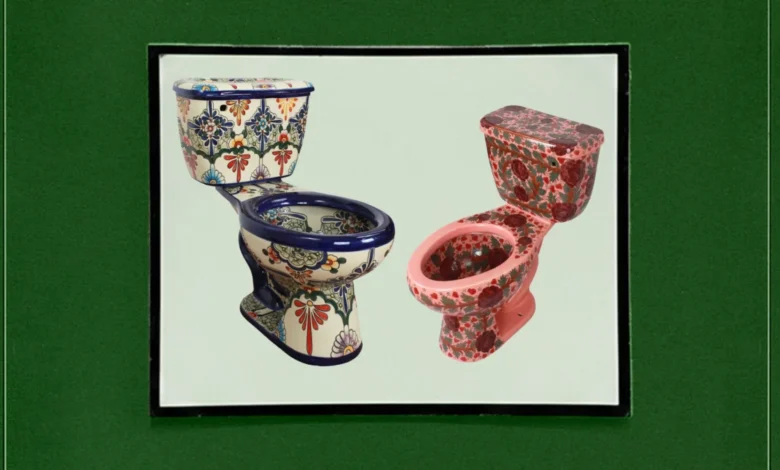
In recent years, however, a segment of the design community has embraced what some call "dopamine decor"—a philosophy that prioritizes vibrant colors, intricate patterns, and objects that elicit joy over traditional notions of "safe" resale value. This shift has led to the discovery of Talavera toilets, which represent a radical departure from the clinical norm. Unlike standard fixtures, these toilets are treated as canvases, with every inch of the bowl, tank, and even the interior of the water reservoir covered in elaborate, hand-painted motifs.
Historical Context: The Journey of Talavera Pottery
To understand the significance of these ornate fixtures, one must look to the history of the Talavera tradition. The style is a form of majolica—a process where colorful glazes are applied to a white-base ceramic—that takes its name from the Spanish city of Talavera de la Reina. This Spanish capital of pottery influenced global ceramics for centuries, but the specific iteration found in contemporary "Mexican-style" toilets has a more complex, global lineage.
When Spanish immigrants brought majolica techniques to Puebla, Mexico, in the 16th century, the local craft began to evolve. A critical turning point occurred via the Manila Galleon trade route, which brought Chinese porcelain across the Pacific to "New Spain." The blue-and-white color schemes often associated with the most iconic Talavera pieces were not originally Spanish; they were a Mexican reinterpretation of Chinese aesthetics, blended with Mediterranean and indigenous influences.
By 2019, the process of making artisanal Talavera from Puebla and Tlaxcala, Mexico, as well as the ceramics of Talavera de la Reina and El Puente del Arzobispo, Spain, was inscribed on the UNESCO Representative List of the Intangible Cultural Heritage of Humanity. This recognition underscores the cultural weight of the patterns now being applied to modern plumbing fixtures.
The Marketplace for Artisanal Sanitation
The sourcing of these units remains a niche endeavor, often conducted through global artisanal marketplaces like Etsy. One prominent figure in this field is an artisan named Salvador, who operates the shop Casa Castillo Art out of Guanajuato, Mexico. Salvador’s operation highlights a significant trend in the "maker economy": the ability of local artisans to reach a global audience seeking high-end, unconventional home goods.
Market data from the artisanal sector suggests a growing appetite for "functional art." At the time of reporting, Casa Castillo Art maintained an inventory of over 250 distinct toilet designs, alongside thousands of complementary pieces, including sinks, floor tiles, and mirrors. This allows for a "head-to-toe" Talavera bathroom, a concept that appeals to the maximalist’s desire for immersive environments. The pricing for these units—typically ranging from $1,100 to $1,400 USD—positions them as luxury items, comparable to high-end designer furniture rather than standard hardware store stock.
Celebrity Endorsement and High-End Validation
The transition of the Talavera toilet from a folk-art curiosity to a high-design statement piece was solidified by its appearance in the homes of high-profile cultural figures. Most notably, supermodel Cara Delevingne’s Los Angeles residence features a prominent Talavera toilet sourced from Casa Castillo Art.
Delevingne worked with architect Nicolo Bini to create a home described by critics as a "delightfully dizzying" blend of disparate styles, including jungle themes and English cottage aesthetics. The inclusion of a hand-painted toilet beneath banana-leaf wallpaper served as a proof of concept for the design community: a utilitarian object, when treated with artistic intent, can anchor a room’s theme rather than detract from it. This endorsement by a major fashion icon helped move the conversation from "why would you decorate a toilet?" to "why haven’t we always decorated them?"
Technical Specifications and Maintenance
While the visual appeal of a hand-painted toilet is evident, the practical implications of such a fixture are a point of concern for many homeowners. These units are not merely decorative shells; they are fully functional toilets designed to meet modern plumbing standards.
- Plumbing Compatibility: Most Talavera toilets are built with standard "rough-in" dimensions (usually 12 inches), making them compatible with standard US and European plumbing configurations.
- Durability: The pieces are fired at high temperatures to ensure the ceramic is non-porous and durable. The glazes used are typically lead-free and resistant to the chemicals found in standard bathroom cleaners, though manufacturers often recommend avoiding abrasive scouring pads to preserve the hand-painted detail.
- Internal Artistry: A unique feature of the Talavera toilet is that the artistry is not limited to the exterior. Many designs, such as the "Rosas 2" or "Acapulco Azul" models, feature painting inside the tank and under the lid, ensuring that the "maximalist" experience is consistent throughout the unit’s operation.
Public Reception and the "ATBGE" Debate
The rise of the beautiful toilet has not been without controversy. On social media platforms like Reddit, these fixtures are frequently the subject of debate in communities such as "Awful Taste But Great Execution" (ATBGE). Critics often argue that a toilet’s function—managing biological waste—is inherently at odds with the concept of fine art. The "conundrum" posed by skeptics is whether one truly wants to perform mundane biological tasks in a work of art.
Proponents of the trend, however, argue that this skepticism is a form of cultural conditioning. If humans value beauty in every other aspect of their living space—from the thread count of their sheets to the grain of their wooden spoons—it is logically inconsistent to exclude the toilet. The maximalist perspective suggests that by beautifying the "unmentionable" aspects of home life, one can remove the stigma and embarrassment associated with them, transforming a clinical necessity into a point of pride.
The Broader Impact on Interior Design Trends
The emergence of the Talavera toilet is indicative of a broader shift in the post-pandemic housing market. As people spent more time at home, the focus shifted from "staging for resale" to "decorating for personal identity." This has led to a decline in the dominance of "Millennial Gray" and a resurgence of color, texture, and global craftsmanship.
Industry analysts suggest that the demand for unique, hand-crafted home fixtures will continue to grow as consumers seek alternatives to mass-produced, flat-pack furniture. The Talavera toilet represents a convergence of several high-growth trends:
- Artisanal Sourcing: The desire to support individual creators and traditional crafts.
- Biophilic and Global Design: The integration of floral motifs and patterns that reflect diverse cultural histories.
- Maximalism: The "more is more" approach to home styling.
Conclusion: Redefining the Domestic Landscape
The toilet, long the "forgotten" object of the domestic landscape, is undergoing a significant reclassification. By applying the centuries-old tradition of Talavera pottery to the modern commode, artisans and designers are challenging the boundaries between utility and art. While it may remain a contentious choice for those who prefer the safety of white porcelain, the Talavera toilet stands as a testament to the human desire to find beauty in the most unexpected places. As interior design continues to prioritize personal expression over rigid standards, the bathroom—and its most essential fixture—is likely to remain a vibrant site of artistic innovation.