Mikel Arteta gathers evidence of rival manager technical area breaches as Arsenal keep pace with Premier League leaders

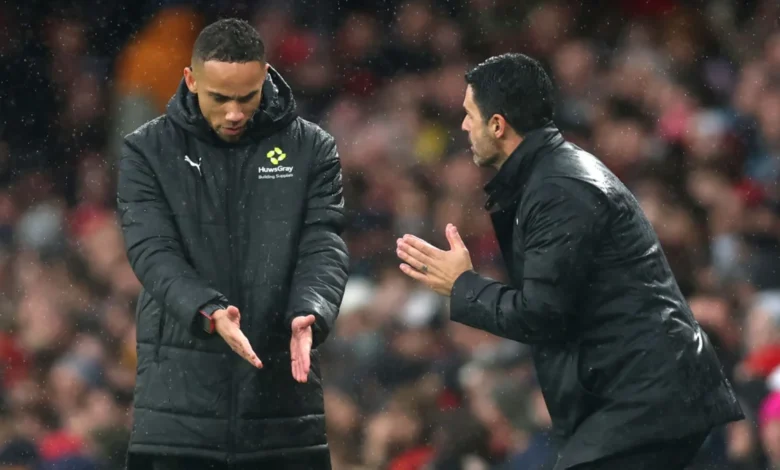
The Premier League landscape has once again been dominated by discussions surrounding the conduct of managers in the technical area following Arsenal’s authoritative 2-0 victory over Everton at the Emirates Stadium. While the focus of the match was largely centered on the tactical brilliance displayed by the Gunners, Arsenal manager Mikel Arteta utilized his post-match media availability to address the growing friction between himself and match officials regarding touchline behavior. Having received his second yellow card of the 2026/27 campaign, Arteta faces the looming prospect of a one-match suspension—a disciplinary consequence that he believes is being applied inconsistently across the division.
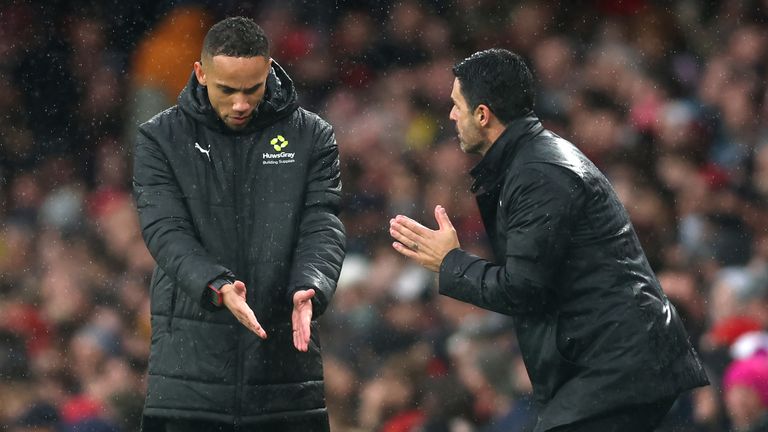
The Spaniard, known for his fervent and high-energy approach to coaching, has expressed frustration at what he perceives as a targeted enforcement of technical area regulations. During the win against the Toffees, referee Tony Harrington cautioned Arteta for stepping beyond his designated zone, a decision that has pushed the Arsenal manager to the brink of a mandatory touchline ban. In a defiant response, Arteta revealed that he is currently curating a comprehensive library of video footage documenting rival managers who frequently exit their technical areas without receiving similar disciplinary action from match officials.
A Growing Archive of Discontent
Arteta’s comments suggest that he feels the Premier League’s current officiating guidelines are being interpreted with a lack of uniformity. By compiling his own "storage of images," the Arsenal boss aims to highlight what he views as a discrepancy in how the rules are applied to different clubs and personalities.
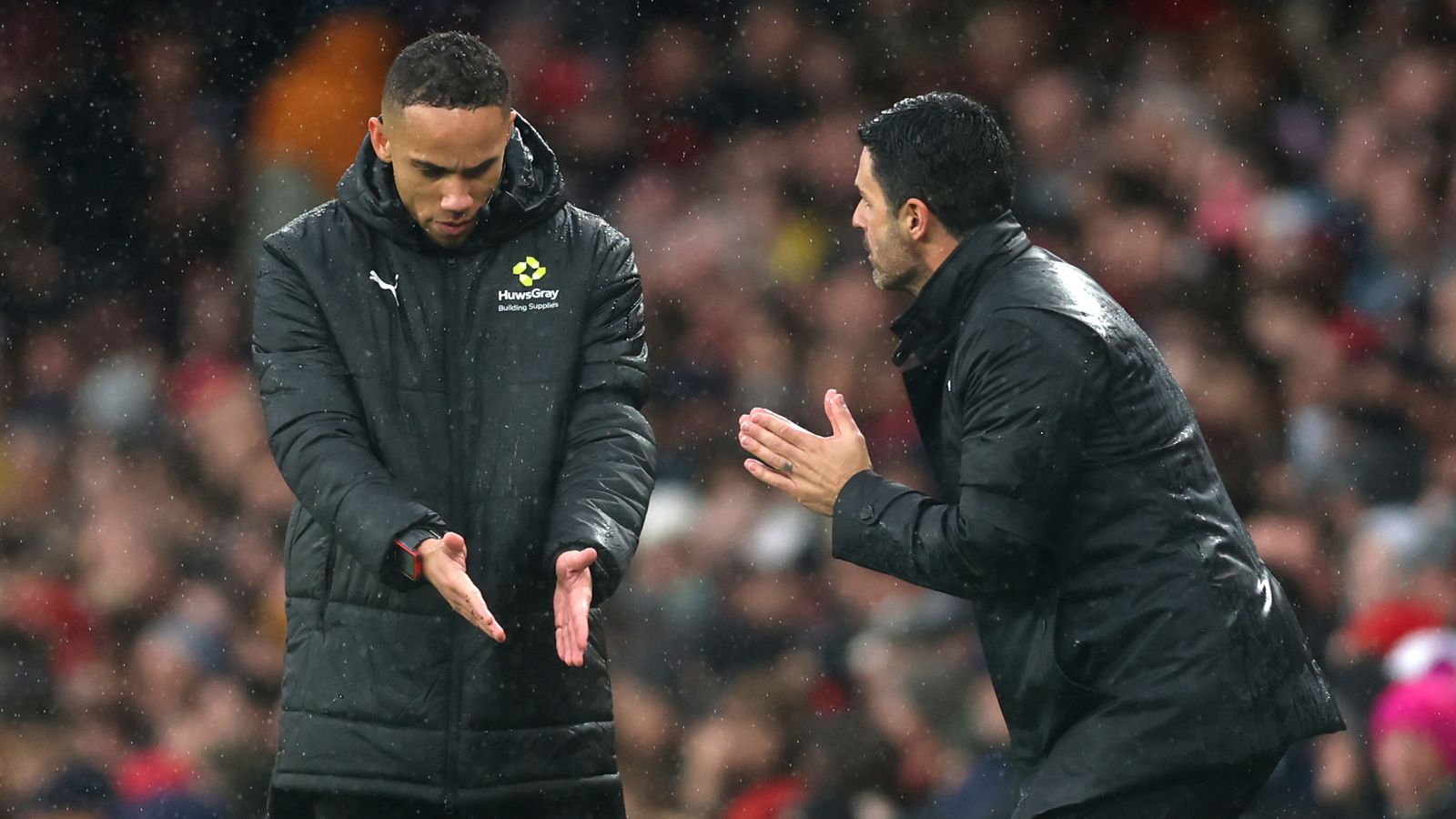
"I do have to be careful, yeah," Arteta stated when pressed on the looming threat of a suspension. "I’m going to put sensors there! There are other managers, there are managers that have the record in the league: 36 times in 10 minutes they leave the touchline, no yellows. So I am clipping all of that so I have a massive storage of images, so if somebody comes to me, I can say, ‘I’m not in the record yet, somebody else has the record.’"
The implication of these remarks is significant. As the Premier League intensifies its efforts to crack down on sideline volatility, managers are increasingly finding themselves under the microscope. For Arteta, the concern is not merely about the rules themselves, but the fairness of their execution. Should he receive a third yellow card, he would be forced to watch a pivotal fixture from the stands, a scenario he is clearly hoping to avoid by presenting evidence of widespread non-compliance across the league.
Tactical Superiority and the Set-Piece Breakthrough
While the sideline controversy garnered headlines, the on-pitch reality was a testament to Arsenal’s evolving tactical maturity. The 2-0 victory served as a crucial result that moved the Gunners level on points with league leaders Manchester City, underscoring their title credentials in a highly competitive campaign.
The breakthrough came early, signaling a shift in Arsenal’s attacking strategy. In the seventh minute, Ezri Konsa—a summer acquisition who has seamlessly integrated into the defensive unit—opened his account for the club. The goal originated from a Martin Odegaard corner, marking a notable milestone for the side: it was the first time this season that Arsenal had successfully capitalized on a set-piece situation. For years, set-piece efficiency has been a hallmark of elite title contenders, and this development suggests that Arsenal’s coaching staff has placed renewed emphasis on dead-ball scenarios during their training cycles.
The second goal, arriving in the 68th minute, was a product of collective resilience. Gabriel Magalhães, who had been involved in an injury scare earlier in the half, rose highest to head home, effectively sealing the points. His ability to recover from a physical setback and immediately contribute to the scoreline drew high praise from his manager, who characterized the Brazilian’s performance as the embodiment of the club’s current mentality.
The Chemistry of a Resilient Defense
Arteta was quick to highlight the impact of his defensive pairing, particularly the rapid adaptation of Ezri Konsa. Arriving from Aston Villa during the summer transfer window, Konsa has been thrust into a high-pressure environment without the benefit of a full pre-season with the squad. Despite this, he has formed an immediate and seemingly unbreakable partnership with Gabriel.
"Unbelievable," Arteta said of Konsa’s performance. "He’s come to a huge club like Arsenal with no pre-season when William Saliba is here, with other players that are already here. And to position yourself in that manner, with that naturality and performing at the level that he’s doing and building already a chemistry and a balance with Gabi that seems so solid, it’s very, very difficult to do and we are really lucky to have him."
The statistics back up the manager’s assessment. The solidity of the defensive block has allowed Arsenal to remain in the title hunt, even while managing the health of key personnel. The "slight issue" reported for Riccardo Calafiori adds another layer of complexity to the squad management, yet the current chemistry between Gabriel and Konsa provides a stable foundation that allows the midfield and forward line to operate with greater creative freedom.
Everton’s Struggles and the Moyes Perspective
On the opposing bench, the atmosphere was markedly different. Everton manager David Moyes, returning to the Emirates with a side struggling to find rhythm, admitted that his team failed to reach the necessary levels to compete with a title-challenging outfit. The loss, which follows a 2-0 defeat to Chelsea, leaves the Toffees in a precarious position as they look to find consistency.
Moyes offered a blunt, objective analysis of the afternoon. "I don’t have big thoughts on it," he conceded. "I just felt we didn’t really get to a level which I think would have been good enough to win on the day. We gave away a goal very early which meant we were chasing the game. I felt we’d got a bit better in the second half, got a bit back into it a little bit more, got a bit closer to Arsenal and then they come up with the second goal."
For Everton, the primary takeaway was a defensive performance that had glimpses of quality but lacked the attacking penetration to threaten the Arsenal goal. The early deficit forced a reactive approach, which ultimately proved unsustainable against a disciplined Arsenal press.
Implications for the Title Race
As the Premier League season enters its next phase, the implications of this fixture are clear. Arsenal’s ability to win without playing at their absolute peak—and their newfound success at set-pieces—highlights a team that is learning to grind out results in the face of adversity. The "mentality" Arteta speaks of is no longer just a buzzword; it is a observable trait evidenced by players like Gabriel fighting through pain and new signings like Konsa integrating into the backline with ease.
However, the shadow of disciplinary action looms large. The Premier League’s Professional Game Match Officials Limited (PGMOL) body has been consistent in its directive to control technical areas more stringently this season. If Arteta’s "archive of images" proves that other managers are operating with impunity, it could lead to a broader conversation regarding the officiating standards in the league.
For now, the focus shifts to the upcoming fixture list. Arsenal will need to balance the intensity of their play—which has been vital to their success—with the technical constraints imposed by the referees. Whether or not Arteta’s "sensors" comment leads to a change in behavior or a formal dispute with league officials remains to be seen. What is certain is that the intensity on the pitch is being matched by the pressure on the sidelines, creating a compelling narrative that will likely continue to unfold as the title race heats up in the coming months.
With both Manchester City and Arsenal currently locked in a battle for the top spot, every goal, every clean sheet, and indeed, every yellow card, carries immense weight. As the season progresses, the technical area might just become the most contested space on the pitch, both in terms of tactics and the regulatory battles that define the modern game. For Mikel Arteta, the challenge is clear: keep the team focused on the title while navigating a disciplinary framework that he believes requires a much closer look.
Related posts: