High-Profile Arrests and Mass Walkouts: Inside the Historic Protests Against Benjamin Netanyahu at the United Nations General Assembly

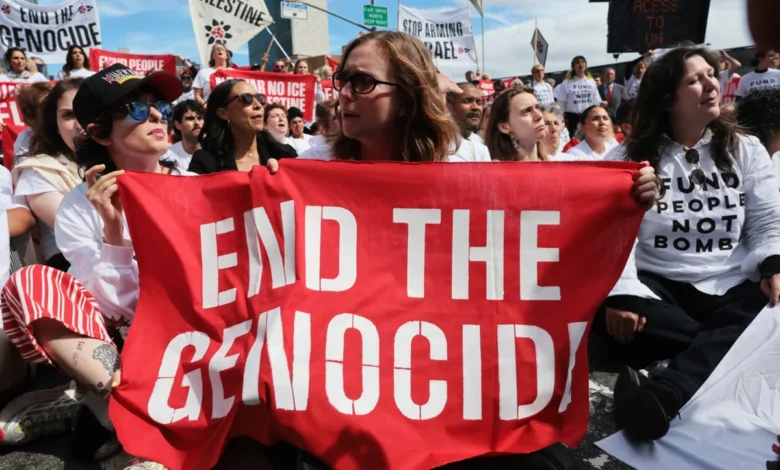
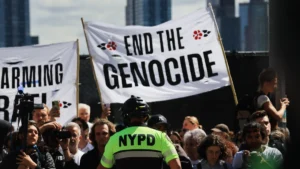
The intersection of First Avenue and 39th Street in Manhattan transformed into a focal point of international dissent as high-profile entertainers, political figures, and hundreds of activists gathered to denounce Israeli Prime Minister Benjamin Netanyahu’s address to the United Nations General Assembly. Organized primarily by the advocacy group Jewish Voice for Peace (JVP), the demonstration combined classic civil disobedience with a striking display of cultural and political figures willing to risk arrest. While the Israeli leader delivered a defiant speech inside the heavily fortified UN headquarters—rejecting accusations of war crimes and launching verbal counter-attacks against his critics—the scene outside underscored a deepening global chasm over the ongoing conflict in the Gaza Strip.
The Anatomy of the Demonstration
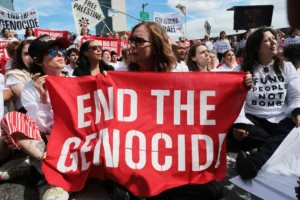
As prison buses lined First Avenue and the New York Police Department prepared for mass detentions, the protest manifested as a meticulously planned act of civil disobedience. More than a hundred demonstrators occupied the asphalt at the intersection, sealing off traffic while chanting slogans condemning the Israeli military campaign.
Among those seated in the front rows were prominent actors, musicians, and comedians whose presence instantly amplified the media visibility of the event. Actress Hannah Einbinder, musicians Julien Baker and Lucy Dacus of the indie-rock group Boygenius, and comedian Mary Beth Barone were joined by political figures, including New York City Councilmember Chi Osse and prospective congressional candidates. Further back in the crowd sat prominent actress Cynthia Nixon, alongside actor Elliott Page and comedian Caleb Hearon. Activist and former intelligence analyst Chelsea Manning was also present, dressed in a sharp blue pantsuit, speaking to reporters about the moral necessity of public dissent.
For the organizers and participants, the gathering served as an expression of profound cognitive dissonance experienced by citizens watching the humanitarian crisis unfold from afar. Stefanie Fox, executive director of Jewish Voice for Peace, articulated this sentiment while standing on the sidewalk as bicycle police formed a containment perimeter. She described the profound difficulty of maintaining normal daily routines—such as grocery shopping and sharing meals—while reports documented severe restrictions on humanitarian aid entering Gaza.
The Convergence of Civil Disobedience and Digital Media
The tactics utilized during the demonstration followed a well-established blueprint of modern progressive activism: coordinated flash-mobs, matching attire, and a deliberate refusal to disperse, resulting in peaceful arrests on misdemeanor charges. Within minutes of the police initiating detentions, digital platforms were flooded with images and video clips of cultural figures, including Susan Sarandon and Hannah Einbinder, being led away by officers in plastic zip-ties.
Media analysts note that while such demonstrations have a negligible impact on the immediate security protocols or schedule of visiting heads of state, their primary utility lies in agenda-setting and visual symbolism. The presence of globally recognized celebrities ensures that messaging regarding international law, human rights, and foreign policy bypasses traditional news filters and reaches millions of digital users instantly. For the artistic community, participating in direct action represents an escalation from digital advocacy to physical accountability. As Julien Baker remarked to reporters just as police loudspeaker warnings began to drown out interviews, direct action remains a viable avenue of expression regardless of an individual’s public platform.

Inside the General Assembly: A Defiant Address and Diplomatic Fallout
While activists staged their sit-in on the asphalt outside, the diplomatic arena inside the United Nations headquarters proved similarly hostile to the Israeli delegation. As Benjamin Netanyahu approached the podium to deliver his address, a significant bloc of international delegates staged a mass walkout, leaving vast sections of the General Assembly hall visibly empty. Those remaining greeted his entrance with audible boos and murmurs of disapproval.
Undeterred by the diplomatic snub, Netanyahu launched into an aggressive and uncompromising speech that addressed both his international detractors and domestic political figures. Rejecting findings from international bodies—including a 2025 UN commission report alleging genocidal acts in Gaza—the prime minister defended military operations as a necessary defensive campaign.
In a notable escalation, Netanyahu directly targeted municipal leadership in New York City, launching harsh criticisms at local figures and commentators. He singled out critics by name, accusing them of harboring sympathies for groups hostile to Western democracies and attempting to silence his appearance at the international forum. "You can’t silence me. You can’t silence the truth," Netanyahu declared from the lectern, maintaining that Israeli military strategy had actively prevented wider atrocities rather than committing them.
Counter-Protests and Flashpoints on the Periphery
The tension surrounding the prime minister’s visit extended beyond the primary JVP demonstration, drawing a small but vocal contingent of counter-protesters to the periphery of the security zone. Underneath scaffolding near 38th Street, interactions occasionally flared between passing pedestrians, counter-demonstrators, and event organizers. A small group bearing pro-Israel and conservative political insignia engaged in shouting matches with activists, highlighting the profound polarization among New York City residents regarding the Middle East conflict. Despite occasional verbal altercations, JVP marshals and security personnel maintained a buffer, preventing physical confrontations while police maintained order across the broader security perimeter.
Broader Implications and the Path Forward
The convergence of high-profile activism, mass walkouts at the United Nations, and a defiant counter-narrative from the Israeli leadership encapsulates the intractable nature of the current geopolitical crisis. For the participants who willingly submitted to arrest, the demonstration was not designed to alter the immediate diplomatic calculus of the Israeli government, but rather to construct an enduring visual record of opposition.
As Chelsea Manning was led away by law enforcement following her detention, she reflected on the incremental nature of political movements. Whether measured by the passing of UN resolutions, shifts in domestic electoral politics, or the mobilization of cultural icons, the events of that afternoon along First Avenue demonstrated that the domestic fallout from the war in Gaza continues to reverberate deeply within American cultural and political institutions. With Netanyahu departing New York immediately following his address, the physical presence of the Israeli leader proved fleeting, but the societal and political divisions exposed by his visit remain deeply entrenched.
Related posts: