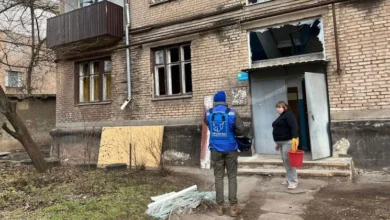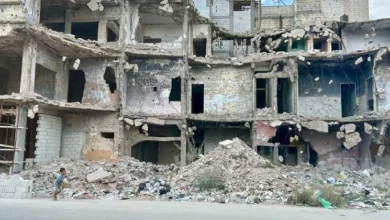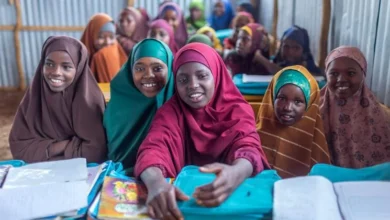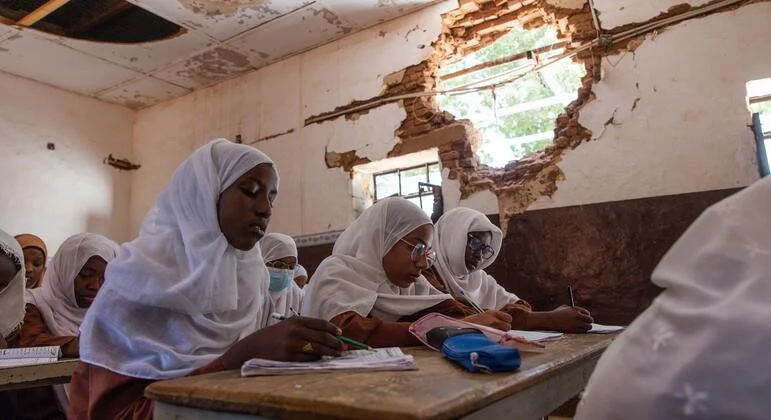
The global landscape for children caught in armed conflict has deteriorated to an unprecedented degree, according to stark new warnings issued by international humanitarian agencies. Marking the International Day to Protect Education from Attack, the global fund Education Cannot Wait (ECW) released comprehensive data revealing that a staggering 258 million children across 87 countries are currently facing severe, life-altering learning disruptions. Driven by escalating geopolitical instability, a brazen disregard for international humanitarian law, and a systematic erosion of global norms, schools and places of learning have increasingly transformed from sanctuaries of hope into frontlines of war.
The implications of this educational vacuum extend far beyond academic delays. Humanitarian experts emphasize that when a child is stripped of access to a classroom, they are thrust into profound vulnerability. Without the protective routine of school, children become easy targets for armed groups, forced recruitment, and human trafficking, effectively trading a future guided by educators for one dictated by warlords and exploiters.
Escalating Violence and Record Statistics
A newly published collaborative report paints a grim picture of the state of global education during the 2024–2025 period. Across the 28 heavily conflicted countries profiled in the research, educational institutions faced unrelenting aggression. Data indicates that at least 9,259 targeted attacks on education occurred, including over 3,600 direct assaults on schools. This figure represents an alarming surge of more than 50 percent compared to the 2022–2023 monitoring cycle.
The human toll of these violations is equally harrowing. More than 10,600 students, teachers, and education personnel were killed, injured, or abducted during the reporting period. Concurrently, the military use of schools—where armed forces or non-state actors commandeer educational facilities for barracks, supply depots, or firing positions—nearly doubled. This tactical conversion not only deprives children of their right to learn but explicitly turns civilian infrastructure into legitimate military targets, magnifying the danger to surrounding communities.
Maysa Jalbout, Director of Education Cannot Wait, underscored the holistic importance of safeguarding learning environments in crisis zones. Education in emergencies is fundamentally about physical and psychological survival, she noted, explaining that schools provide safety, stability, a sense of normalcy, and a vital bridge to a future unmarred by violence.
A Chronology of Declining Protection
The systematic targeting of schools is not a sudden anomaly but the culmination of years of eroding global adherence to the rules of war.
- Pre-2022: International humanitarian law, specifically the Geneva Conventions and subsequent protocols, theoretically established strict protections for civilian infrastructure, explicitly categorizing schools as protected sites. However, enforcement mechanisms remained weak, and accountability for violations was sporadic.
- 2022–2023: As multi-polar conflicts intensified across regions like Eastern Europe, the Middle East, and parts of Africa, the international community registered mounting violations against educational facilities, setting a dangerous baseline for subsequent years.
- 2024–2025: The situation deteriorated past previous thresholds. Urban warfare in densely populated areas became the norm, exposing civilian infrastructure to heavy artillery, airstrikes, and explosive drones. For the first time in official United Nations tracking, government forces were verified as responsible for the majority of grave violations against children in conflict zones, signaling a profound breakdown in state-level compliance with international norms.
The Geography of the Crisis
While educational disruption is a global phenomenon, its impacts are heavily concentrated. UNESCO, the United Nations educational and cultural agency, highlights that nearly 80 percent of all crisis-affected, out-of-school children—amounting to approximately 74 million minors—live in just 20 countries.
Within these high-risk environments, marginalized groups face insurmountable barriers to education. Statistical breakdowns reveal that 74 percent of refugee children, 52 percent of internally displaced children, and 45 percent of children living with disabilities are entirely excluded from formal learning structures.
According to the United Nations Secretary-General’s Annual Report on Children and Armed Conflict, 24,174 children were directly impacted by verified violations in 2025 alone, out of 38,558 total violations. Among these, killing and maiming stood out as the most widespread abuses, directly affecting 14,224 children. Additional violations included forced recruitment into armed factions, systematic abductions, and the deliberate denial of humanitarian access. Geographically, the highest volume of verified grave violations occurred in Israel and the Occupied Palestinian Territory, followed closely by the Democratic Republic of the Congo, Nigeria, Myanmar, and Somalia.
Legal Obligations and International Responses
International bodies have repeatedly called on all parties involved in armed conflicts to uphold their obligations under international humanitarian law. The fundamental tenet of the Safe Schools Declaration—endorsed by numerous nations—explicitly urges governments and armed groups to deter the military use of schools and to protect education during times of war.
UNESCO has amplified these calls, demanding immediate accountability for perpetrators who weaponize infrastructure against children. Legal experts and human rights organizations stress that attacking schools is not merely a byproduct of war, but a strategic tactic often used to destroy cultural identity, break community resilience, and subjugate future generations. When educational networks collapse, the societal fabric frays, making post-conflict recovery exceptionally difficult and protracted.
Broader Implications and the Path Forward
The long-term socio-economic implications of this generational learning crisis are profound. A generation denied foundational education faces diminished economic prospects, heightened susceptibility to extremist ideologies, and a diminished capacity to participate in the civic rebuilding of war-torn nations. The economic cost of lost human capital runs into the billions of dollars, virtually guaranteeing that affected regions will struggle with poverty and instability for decades to come.
Recognizing the urgency of this emergency, global stakeholders are mobilizing financial and logistical resources to stem the tide. Education Cannot Wait has spearheaded the "Hope Starts Here" campaign, an ambitious global fundraising initiative seeking to secure $600 million. The campaign is designed to provide safe, inclusive, and high-quality educational access to 10 million children living in the world’s most perilous and challenging environments.
Ultimately, the international community faces a stark choice. Without renewed political will, strict enforcement of international legal frameworks, and robust financial backing for emergency education initiatives, millions of children will remain trapped in a cycle of violence, poverty, and exploitation—sacrificed to the shifting frontlines of modern warfare.