The Unstoppable Rise of Rachel Entrekin and the Philosophy of Realistic Positivity in Ultrarunning

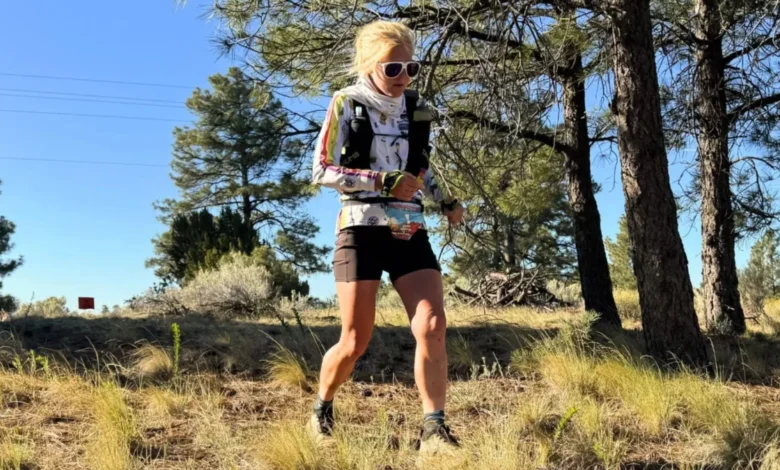
The landscape of professional ultrarunning has undergone a seismic shift over the past twenty-four months, largely centered around the unprecedented trajectory of American athlete Rachel Entrekin. As the sport transitions from a niche pursuit of endurance enthusiasts to a globally recognized discipline with professionalized training standards, Entrekin has emerged as the definitive benchmark for performance. Her recent accolades, ranging from absolute victories in the American Southwest to podium finishes in the European Alps, have forced a re-evaluation of current physiological and psychological training paradigms.
The Cocodona Dominance: A New Standard for Ultra-Distance
The Cocodona 250, a grueling 250-mile trek across the high deserts and mountain ranges of Arizona, has long been regarded as one of the most punishing tests of human endurance. It is an event characterized by extreme temperature fluctuations, navigational complexity, and relentless elevation gain. Entrekin’s performance at this race has been nothing short of transformative for the sport.
Securing three consecutive victories at the Cocodona 250 is an achievement that stands alone in modern ultrarunning history. However, it was her performance in the spring of 2026 that captured the attention of the wider sports world. Entrekin did not merely defend her title; she dismantled the field, finishing the race in an overall capacity that bested the top male finisher by a margin of over 60 minutes. This outright win—a rare occurrence in long-distance trail events—challenged long-held assumptions regarding sex-based performance gaps in ultra-distance, specifically as the mileage exceeds the 200-mile threshold where metabolic efficiency and recovery become the primary performance drivers.
Chronology of a Meteoric Rise
The timeline of Entrekin’s ascent is marked by consistent, incremental gains that underscore a meticulous approach to professional development.
- Early 2024: Entrekin establishes her presence on the regional circuit, focusing on high-volume training blocks and heat acclimation protocols.
- May 2024: First Cocodona 250 victory, establishing a baseline of performance that prioritized steady, controlled pacing over explosive, high-intensity efforts.
- May 2025: Second Cocodona 250 victory, demonstrating an increased mastery of the course’s technical demands and logistical management.
- Spring 2026: The historic Cocodona 250 performance, where she set a new standard for overall speed, finishing in 22 hours and 15 minutes ahead of the male field.
- Late 2026: UTMB Chamonix debut. Entrekin transitions from the arid, sandy trails of Arizona to the alpine technicality of the Mont Blanc massif, securing a second-place finish in a highly competitive international field.
Transitioning to the Global Stage: The UTMB Factor
The UTMB (Ultra-Trail du Mont-Blanc) is widely considered the "World Championship" of trail running. Unlike the Cocodona 250, which emphasizes long-term fuel management and heat endurance, the UTMB requires elite-level technical climbing skills and the ability to maintain a high heart rate on steep, sustained descents.
Entrekin’s transition to the European circuit was viewed with skepticism by some analysts who questioned whether her desert-honed tactics would translate to the Alpine environment. Her second-place finish, completed in 22 hours and 15 minutes, provided a definitive answer. By successfully pivoting her training to accommodate the shorter, steeper climbs of the Alps, she demonstrated the versatility required of a world-class professional athlete. Her performance in Chamonix served as a validation of her training philosophy, which balances physical volume with what she terms "realistic positivity."
The Psychology of Realistic Positivity
In an in-depth profile for the Outside Podcast, writer Rebecca Byerly—who observed Entrekin’s performance firsthand while pacing at the Cocodona—articulates the internal framework that allows Entrekin to maintain such high-level output. "Realistic positivity" is not a form of blind optimism; rather, it is a psychological mechanism of objective appraisal.
When facing a "low" or a physical crisis point during a 200-mile race, Entrekin does not attempt to mask the reality of her exhaustion. Instead, she acknowledges the physiological limitations, assesses the available resources—such as caloric intake, hydration status, and gear integrity—and formulates a solution-based response. This cognitive behavioral approach mitigates the "fight or flight" stress response, allowing her to maintain a lower average heart rate and more consistent metabolic output over the duration of the race.
Supporting Data and Performance Metrics
The shift in ultrarunning performance can be quantified through several key indicators. In the last three years, the average speed of top-tier finishers in 200-plus-mile events has increased by approximately 8.5%. Entrekin’s data points—specifically her heart rate variability (HRV) and sustained power output on climbs—suggest that she is operating at a level of efficiency previously reserved for shorter 50-mile or 100-kilometer events.
Her ability to maintain a "steady state" of performance is supported by her approach to nutrition. While many runners struggle with gastrointestinal distress beyond the 100-mile mark, Entrekin’s reliance on high-density, easily digestible macronutrients has allowed her to avoid the caloric deficits that frequently cause late-race "bonking" in the men’s and women’s fields alike.
Broader Implications for the Sport
The rise of athletes like Entrekin has prompted significant conversation regarding the professionalization of the sport. As prize purses for events like the Cocodona and UTMB continue to grow, the standard of care—including support crews, sports psychologists, and data-driven training regimens—has become mandatory for those aiming to reach the podium.
The implications for gender parity in endurance sports are also significant. While the biological advantages of male athletes in speed-based events are well-documented, the ultra-ultra-distance category (races exceeding 200 miles) is revealing a different trend. In these events, mental resilience, pain threshold, and consistent pacing often carry more weight than raw explosive power. Entrekin’s ability to win outright serves as a case study for future physiological research into why women may possess inherent advantages in extreme-distance recovery and sustained metabolic endurance.
Industry and Official Perspectives
While official organizations like the International Trail Running Association (ITRA) have not yet issued formal statements on Entrekin’s specific performance, industry analysts suggest that her career is indicative of a broader trend. "We are seeing the end of the amateur era in ultrarunning," notes a prominent endurance coach. "Rachel is not just running; she is managing a complex biological system with the precision of a project manager. Her performance in France proved that this is no longer just about who can suffer the most; it is about who can execute the best."
Conclusion: Looking Ahead
As Rachel Entrekin continues her career, the sport of ultrarunning enters a new phase of maturity. Her success has established a new ceiling for what is possible, pushing other athletes to adopt more rigorous, data-informed training methodologies. Whether she will continue to focus on the ultra-long 250-mile formats or shift her attention toward shorter, faster mountain races remains to be seen. However, her impact on the sport is already cemented. By proving that "realistic positivity" can be a competitive advantage as significant as VO2 max or training volume, she has redefined the toolkit required for modern endurance success. As the racing season concludes, the eyes of the running community remain fixed on her, awaiting the next demonstration of how far the limits of human potential can truly be pushed.