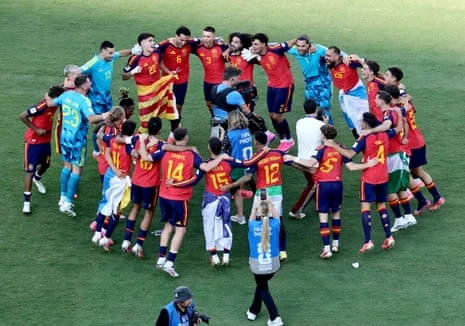
Spain have lifted the 2026 FIFA World Cup, securing a dramatic 1-0 victory over Argentina in a final marred by a contentious red card and a tense, attritional battle that ultimately swung in favour of the European champions. Ferran Torres proved to be the decisive figure, netting the solitary goal in the 106th minute of extra time to deny Argentina a historic second consecutive World Cup title.

The match, held under the sweltering July sun in New Jersey, was a stark contrast to the attacking flair witnessed in the semi-finals. Argentina, perhaps employing defensive tactics that mirrored their 1990 campaign which also ended with a final red card, struggled to impose themselves offensively. Their inability to register a single shot on target throughout the regulation 90 minutes underscored their passive approach, a stark statistic given their status as defending champions.
A Tense Affair from the Outset
From the opening whistle, the final was characterized by a physical and often fractious tone. Spain, who had showcased a vibrant and youthful energy throughout the tournament, particularly with the emergence of talents like Lamine Yamal, initially sought to control possession. Yamal himself had an early chance in the fifth minute, his deflected effort being saved by Argentina’s veteran goalkeeper, Emiliano Martínez. However, Argentina’s defensive structure, marshalled by Nicolás Otamendi and Lisandro Martínez, proved robust, frustrating Spain’s attacking endeavors.

The match statistics painted a clear picture of the territorial dominance by the Spanish side. By halftime, Spain had registered 19 attempts at goal, with 11 on target, while Argentina’s attacking output was virtually non-existent. Their tactical approach appeared focused on disrupting Spain’s rhythm, a strategy that, while effective in limiting clear-cut chances, ultimately offered little threat going forward. The poor condition of the pitch was also cited as a contributing factor to the disjointed nature of play, impacting the fluidity of both teams’ attacking movements.
Red Card and Rising Tensions
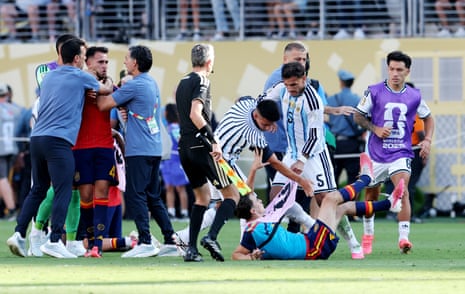
The second half continued in a similar vein, with Spain dominating possession but lacking the incisiveness to break the deadlock. The pivotal moment of the match arrived in the 90th minute when Argentina’s Enzo Fernández received a second yellow card for a rash challenge on Barcelona defender Ronald Araújo. This dismissal, deemed "brainless" by observers for its timing and lack of necessity, left Argentina to face extra time with ten men, a significant disadvantage against a technically superior Spanish side.
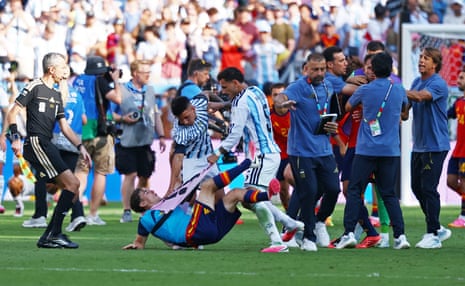
The tensions, simmering throughout the match, boiled over in the aftermath of Fernández’s sending off. Reports indicated unsavoury incidents, including one of Argentina’s players allegedly striking a Spanish substitute. Leandro Paredes, already on a yellow card, was later shown a red card after the final whistle for his involvement in post-match altercations, mirroring the disciplinary issues that plagued Argentina’s title defence in 1990. The question of retrospective action for incidents occurring after the match’s conclusion remains a pertinent point for football’s governing bodies.
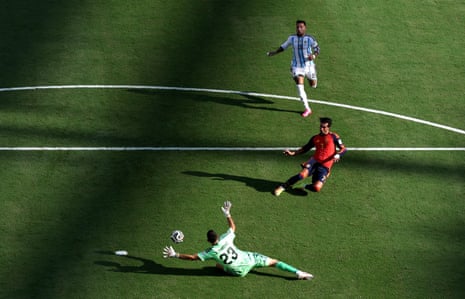
Extra Time and the Decisive Moment
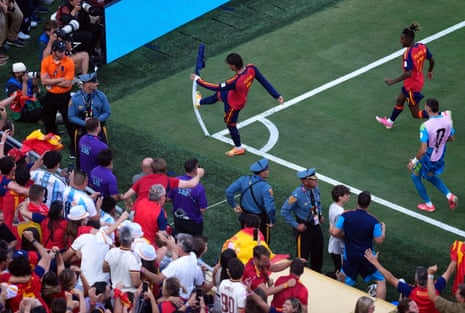
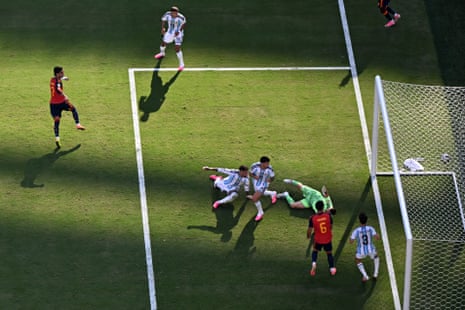
With Argentina forced to play extra time a man down, Spain seized the initiative. The breakthrough finally arrived in the 106th minute. Pedro Porro delivered a deep cross from the left flank, which Nico Williams skillfully headed back into the path of Ferran Torres. The Barcelona winger made no mistake, firing a powerful left-footed shot into the roof of the net, a moment that ignited jubilant celebrations among the Spanish squad and their supporters.
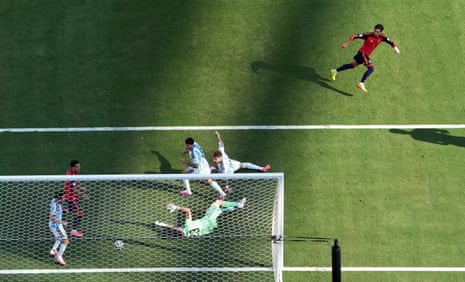
The goal marked the culmination of a consistent attacking effort from Spain, who had consistently probed and created opportunities despite Argentina’s defensive resolve. Torres, often lauded for his technical ability and composure, etched his name into football history with this crucial strike, following in the footsteps of legendary World Cup final goalscorers like Andrés Iniesta and Mario Götze.
Argentina’s Valiant but Ultimately Futile Defence
Despite their numerical disadvantage and a complete lack of offensive threat for much of the match, Argentina displayed remarkable resilience. Their defensive organization, while ultimately breached, had managed to frustrate Spain for an extended period. However, the late dismissal of Fernández proved to be an insurmountable hurdle.
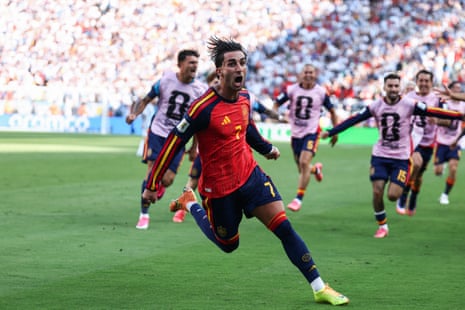
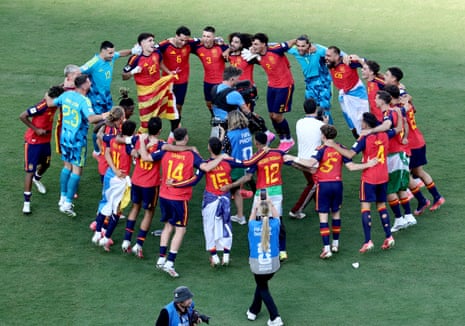
The final whistle confirmed Spain’s triumph, marking a significant achievement for the national team. This victory not only secures their second World Cup title, following their triumph in 2010, but also makes them the first nation to hold both the men’s and women’s World Cup trophies simultaneously. The team, under manager Luis de la Fuente, has been lauded for its fluid, attacking style and its ability to blend established stars with emerging talent, embodying a joyous and modern approach to the game.
Implications and Future Outlook
Spain’s victory is a testament to their consistent development and their ability to perform under pressure on the grandest stage. Their journey to the title, marked by a strong showing in the Euros and a dominant campaign in the World Cup, suggests a new era of dominance for Spanish football.
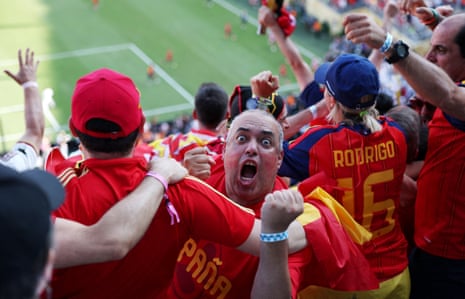
For Argentina, the defeat will be a bitter pill to swallow. Having entered the tournament as defending champions with the legendary Lionel Messi still at the helm, their inability to mount a consistent attacking challenge in the final will likely lead to introspection. While their defensive solidity was commendable, their lack of offensive potency proved to be their undoing. Messi’s final World Cup campaign, though marked by moments of brilliance in earlier stages, ultimately ends in disappointment, leaving questions about the future of the national team’s leadership and playing style.
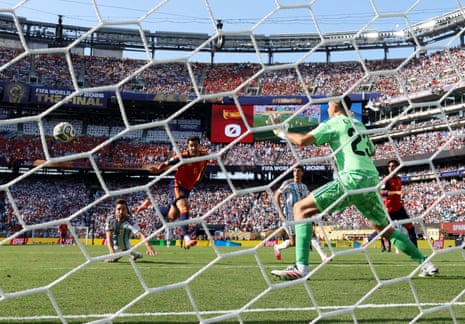
The tournament itself, hosted across North America, has been lauded for its scale and innovation, including the introduction of half-time entertainment. However, the final’s attritional nature and the post-match disciplinary issues served as a reminder of the intense pressures and emotions that accompany such high-stakes encounters. Spain’s triumph, secured through a combination of skill, tactical discipline, and a moment of individual brilliance, will undoubtedly be celebrated for years to come.
Related posts: