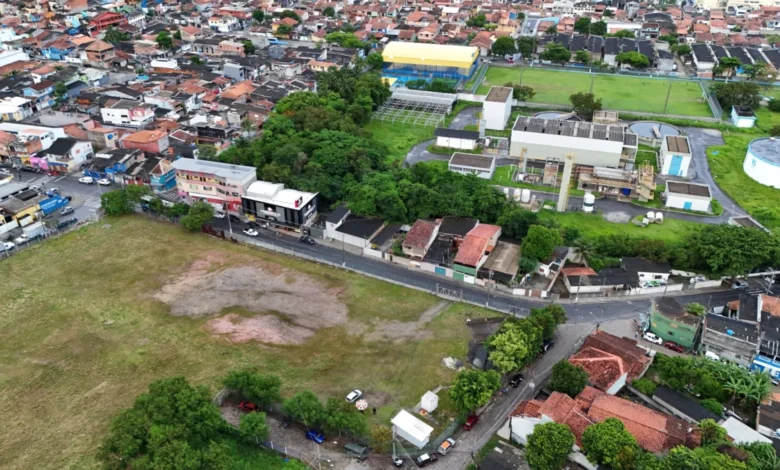
In the coastal city of São Sebastião, Brazil, the neighborhood of Itatinga stands as a stark testament to the long-term consequences of industrial negligence and the complexities of environmental justice. For decades, residents like Cosma da Silva have lived in the shadow of an invisible threat, pointing to a mounting tally of cancer cases among their neighbors and kin. Standing before her long-time home, da Silva gestures toward the surrounding buildings, recounting a grim census of the sick and the deceased. Her own husband, Paulo José da Silva, died at the age of 51 from a brain tumor, and she herself recently underwent surgery to remove a nodule. For those living in Itatinga, illness is not merely a personal tragedy but a permanent feature of the local geography.
The root of this pervasive fear lies beneath the soil. From the 1970s through the 1980s, a period marked by rapid industrial expansion and lax environmental oversight in Brazil, a portion of the Itatinga neighborhood was used as a dumping ground for oily sludge—a hazardous byproduct of oil exploration and processing. As the city grew, these contaminated lands were subdivided, sold, and built upon, often without the knowledge of the families who settled there. Today, the community finds itself at the center of a decades-old dispute involving the state-controlled oil giant Petrobras, municipal authorities, and environmental regulators, all while a promised comprehensive health study remains unfulfilled.

A Legacy of Contamination: From Bamboo Groves to Industrial Dumping
Before the urban sprawl reached this corner of São Sebastião, Itatinga was a landscape of bamboo groves and small-scale agriculture. Long-term residents recall a time when the local river was used for fishing, bathing, and washing clothes. However, the expansion of the oil industry, specifically the operations surrounding the Almirante Barroso Maritime Terminal (TEBAR)—the largest oil terminal in Brazil—changed the region’s trajectory.
During the late 20th century, oily sludge—a thick, toxic waste containing a cocktail of hydrocarbons and heavy metals—was deposited into the ground. By the early 2000s, the consequences of this disposal began to surface literally. Maria do Carmo Barbosa da Silva, a resident of over 30 years, recalls the emergence of a dark, foul-smelling substance in backyards, sidewalks, and vacant lots. The material, described by locals as "burnt oil," signaled the beginning of an environmental crisis that would eventually involve the São Paulo State Environmental Company (CETESB) and the Public Prosecution Service.
Technical investigations launched in the 2000s confirmed the presence of benzene and various hydrocarbons in the soil and groundwater. Benzene, a highly volatile organic compound, is classified by the International Agency for Research on Cancer (IARC) as a Group 1 carcinogen. Public health experts emphasize that there is no safe level of exposure to benzene, which is known to cause leukemia, bone marrow failure, and significant damage to the immune and reproductive systems.

The Chronology of Legal and Environmental Oversight
The legal battle to address the contamination in Itatinga has spanned more than two decades, characterized by a series of agreements that have struggled to produce tangible results for the affected population.
- 1970s–1980s: Oily sludge is disposed of in the area currently occupied by the Itatinga neighborhood.
- Early 2000s: Residents report the emergence of sludge in residential areas; environmental investigations begin.
- 2006–2010: Technical reports from CETESB and the Federal Prosecution Service (MPF) confirm high levels of soil and groundwater contamination, identifying Petrobras as the party responsible for the waste disposal.
- 2011: A Conduct Adjustment Commitment (TAC) is signed between Petrobras, the São Sebastião municipality, and the São Paulo State Prosecution Service (MPSP). The agreement aims to remediate the land and address the social impacts of the contamination.
- 2018: An amendment to the TAC is signed, specifically requiring a "Cross-Sectional Health Study" to evaluate the long-term health outcomes of the exposed population.
- 2020–2024: The municipality cites the COVID-19 pandemic and "failed bidding processes" as reasons for the delay and eventual abandonment of the health study.
- 2025: The requirement for the health study is officially replaced by a financial transfer of R$ 2.46 million (approximately $479,000) to the Municipal Land Regularization Fund, a move that has sparked outrage among environmental advocates.
The Broken Promise of a Health Study
The most significant point of contention remains the cancellation of the epidemiological study. For the residents of Itatinga, this study was the only mechanism capable of providing a definitive link between the industrial waste and the clusters of cancer and respiratory illnesses reported in the community.
The São Sebastião municipality has defended its decision to abandon the research, citing the "methodological complexity" of conducting household surveys and a lack of interest from qualified research institutions. However, critics argue that the substitution of a vital health investigation for a monetary payment to a land regularization fund effectively silences the community’s search for the truth.

Juliano Bueno, director of Arayara, a leading Brazilian environmental litigation organization, views this development as a failure of the justice system. "The transfer turns the fundamental right to health and truth into a bargaining chip," Bueno stated. He argues that without the data provided by an independent study, the government cannot plan preventive actions or offer adequate medical assistance. In Bueno’s view, Itatinga has become a "sacrifice zone"—a term used in environmental sociology to describe areas where vulnerable populations are subjected to extreme pollution in the name of industrial or economic interests, with their health treated as an acceptable loss.
Official Responses and Statistical Discrepancies
The parties involved in the TAC maintain that they have fulfilled their legal obligations, though their interpretations of the risks vary significantly.
Petrobras has consistently stated that there is no scientific evidence linking the health issues in Itatinga to the historical contamination. While the company funded remediation works—which included the removal of some contaminated soil and the fencing off of the most affected plots—it maintains that it was not responsible for the urbanization and subdivision of the land that occurred decades ago. The company frames its involvement in the remediation as an act of "socio-environmental responsibility" rather than an admission of legal liability for the current health crisis.

The municipality of São Sebastião has downplayed the severity of the situation by citing its own epidemiological data. According to municipal records from the Oncology and Nephrology Support Center (CAON), there have been 25 cancer patients in Itatinga over the last decade. Authorities argue that this average of two to three cases per year is consistent with other neighborhoods. However, this data is disputed by residents and advocates who note that the figure does not specifically track the population living directly on the contaminated plots, nor does it account for those who have died or moved away. Furthermore, Itatinga is a large neighborhood of over 5,000 people; a generalized statistic may mask a concentrated cluster of illness in the specific blocks built over the sludge.
CETESB, the state environmental regulator, considers the remediated areas to be "safe for current use," provided they remain unoccupied and fenced. The agency has stated that while groundwater monitoring is no longer deemed necessary, further studies on "underground vapor intrusion"—the process by which toxic gases from the soil enter buildings—are required for any future development scenarios.
Broader Implications and the Search for Environmental Justice
The situation in Itatinga reflects a broader pattern of environmental injustice in Brazil, where the legacy of industrialization often clashes with the rights of marginalized communities. The case highlights the limitations of "Conduct Adjustment Commitments" (TACs) when they are used to manage liability rather than to provide comprehensive reparations to victims.

For an environmental solution to be considered just, experts like Juliano Bueno argue it must rest on three pillars: Truth, Reparation, and Guarantees of Non-repetition. In Itatinga, the "Truth" remains buried without an independent epidemiological study. "Reparation" is currently limited to land regularization funds that do not directly address the medical needs of the sick. "Guarantees of Non-repetition" require a permanent health monitoring system that is currently non-existent.
The residents of Itatinga continue to live in a state of perpetual uncertainty. For Geraldo Ribeiro, who cares for his wife as she undergoes cancer treatment, the technical jargon of regulators and the financial settlements of corporations offer little comfort. "They have studied the land, but we are also here," Ribeiro says, echoing a sentiment shared by many in the community.
As Petrobras prepares for further field work to analyze vapor intrusion later this year, the people of Itatinga remain caught in a cycle of advocacy and disappointment. The case serves as a warning for other industrial hubs across South America, demonstrating that unless human health is prioritized alongside environmental remediation, the ghosts of industrial waste will continue to haunt the communities built upon them. The struggle in São Sebastião is no longer just about cleaning up the soil; it is about restoring the fundamental right of a community to know if the land they call home is slowly killing them.
Related posts: