What is Blockchain: A Comprehensive Overview of the Distributed Ledger Technology Transforming the Global Digital Infrastructure

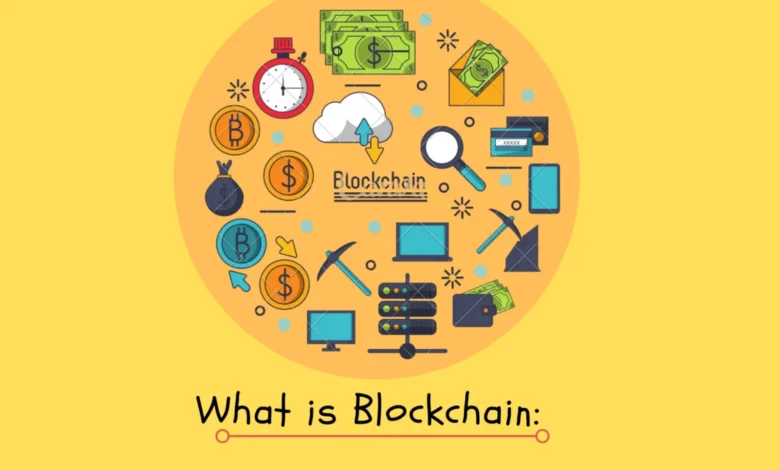
The traditional framework of digital interaction relies heavily on centralized authorities. Whether executing an online retail purchase or verifying a banking transfer, users are compelled to entrust their sensitive personal data and financial assets to intermediaries, such as commercial banks, credit card processors, or centralized government databases. This reliance introduces inherent vulnerabilities, including single points of failure, data latency, and the risk of unauthorized information exposure. Blockchain technology represents a paradigm shift in this operational model, offering a decentralized, cryptographically secure alternative that enables peer-to-peer value exchange and data integrity without the necessity of a trusted third party.
At its core, a blockchain is a distributed ledger technology (DLT) that functions as a shared, immutable database. It records transactions across a network of disparate computers, or "nodes," ensuring that once information is appended to the chain, it cannot be altered, deleted, or retrospectively manipulated. By replacing central servers with a decentralized consensus mechanism, blockchain creates a high-trust environment in inherently untrusted networks.
The Historical Evolution of Distributed Ledgers
The conceptual framework for blockchain did not emerge overnight; it is the culmination of decades of research into cryptography and secure data timestamping. In 1991, researchers Stuart Haber and W. Scot Stornetta published a foundational paper detailing a cryptographically secured chain of blocks that would ensure the chronological integrity of digital documents. Their objective was to prevent the tampering of timestamps, which at the time was a significant hurdle in digital record-keeping.
The progression continued in 1998 when computer scientist Nick Szabo introduced the concept of "Bit Gold." While Bit Gold was never fully implemented, it introduced the revolutionary idea of a decentralized digital currency that required computational work to verify transactions—a precursor to the proof-of-work consensus mechanism used by Bitcoin today.
The modern iteration of this technology arrived in 2008 with the publication of the Bitcoin whitepaper by an anonymous entity known as Satoshi Nakamoto. Nakamoto successfully combined existing cryptographic innovations with a novel incentive structure, enabling a decentralized electronic cash system. This breakthrough moved blockchain from an academic concept to a functional global utility.
Technical Mechanics: How Blockchain Operates
To understand the resilience of blockchain, one must examine the mechanics of the "block" and the "chain." Each block typically contains three essential components: the data (which varies based on the application), a unique cryptographic hash, and the hash of the preceding block.
When a transaction occurs, it is broadcast to a network of nodes. These nodes use specific algorithms—consensus mechanisms—to validate the transaction’s legitimacy. Once verified, the transaction is bundled with others into a block. The new block is assigned a hash, a digital fingerprint generated through complex mathematical computation. Crucially, the block also includes the hash of the block before it. This linking creates a chronological chain. If an actor attempts to alter the data in a historical block, the hash of that block changes, breaking the chain and immediately alerting the network to the attempted fraud.
This architecture renders the ledger "immutable." In a centralized database, an administrator can change a record at will. In a blockchain, the distributed nature of the ledger means that the majority of the network must agree on the validity of any change, making unauthorized tampering computationally and economically unfeasible.
Beyond Cryptocurrency: Enterprise Adoption and Real-World Utility
While the technology gained public recognition through the rise of cryptocurrencies like Bitcoin and Ethereum, its utility extends far beyond digital assets. The capacity for transparent, auditable, and secure tracking has attracted major corporations across various sectors.
In the global supply chain, companies such as Walmart and IBM have integrated blockchain to enhance traceability. The IBM Food Trust platform, for instance, allows retailers to track the provenance of food items in near-real-time. In the event of a foodborne illness outbreak—such as those linked to E. coli or Salmonella—this granularity allows for precise identification of contaminated batches. Historically, tracing the source of a contaminated product could take weeks of manual log-auditing; with blockchain, this process is reduced to seconds, significantly mitigating public health risks.
Similarly, the energy sector is exploring blockchain to manage peer-to-peer electricity trading, while the healthcare industry is investigating the use of distributed ledgers to maintain patient records, ensuring that individuals retain control over their medical history while granting temporary, secure access to practitioners.
Decentralization and Security Implications
The defining characteristic of blockchain is its decentralization. By dispersing data across multiple nodes, the system eliminates the "single point of failure" risk. If a central database is breached, the entire repository is compromised. In a blockchain, a successful attack would require the perpetrator to gain control over the majority of the network’s computing power—a feat known as a "51% attack"—which is prohibitively expensive and technically daunting for large, established networks.
Furthermore, blockchain offers a solution to the "double-spending" problem, which historically plagued digital currency efforts. By maintaining a public, synchronized ledger, the system ensures that a single digital token cannot be spent twice, providing the same level of finality traditionally associated with physical cash.
Frequently Asked Questions and Industry Clarifications
As blockchain technology matures, common misconceptions persist. It is vital to clarify that blockchain and cryptocurrency are not synonymous. Cryptocurrency is an application built on top of blockchain technology, much like email is an application built on top of the internet.
Regarding security, while the underlying architecture is robust, the surrounding ecosystem is not immune to risk. Vulnerabilities often arise in the interfaces, such as digital wallets or exchange platforms, rather than the blockchain protocol itself. Investors and institutions are increasingly focusing on "custody solutions" to bridge the gap between secure blockchain technology and traditional security standards.
The question of "ownership" is also frequently raised. Because blockchain is decentralized, no single entity owns the network. It is a shared protocol governed by community consensus. Major entities, such as Coinbase, serve as essential infrastructure providers for the digital economy, but they do not own the blockchain networks themselves.
The Future Landscape: A 2025-2030 Outlook
The next five years are expected to be a period of intensive institutional integration. As regulatory frameworks become clearer, particularly in jurisdictions like the European Union and parts of the United States, we can anticipate a shift from experimental "proof-of-concept" projects to full-scale enterprise production.
Financial institutions are currently transitioning from internal private ledgers to more interoperable public-private hybrid models. This evolution is likely to streamline cross-border payments, reduce settlement times in stock markets, and lower the costs associated with international trade finance.
However, challenges remain. Scalability—the ability of a network to process thousands of transactions per second without high energy consumption—is the primary focus of current research. Innovations such as "Layer 2" scaling solutions and more energy-efficient consensus mechanisms, such as Proof-of-Stake, are already addressing these concerns.
Ultimately, blockchain represents a fundamental change in how we conceive of trust in the digital age. By moving from a model of institutional trust to a model of cryptographic verification, society is moving toward a more transparent, efficient, and resilient digital infrastructure. Whether in the verification of legal contracts, the management of state identities, or the tracking of global commerce, the implications of this technology are only beginning to be realized. As barriers to entry continue to lower, the integration of blockchain into the daily operations of governments and corporations appears not only likely but inevitable.