Elon Musk Drops Apple From Antitrust Lawsuit But Pledges to Continue Legal Battle Against OpenAI Over iPhone Integration

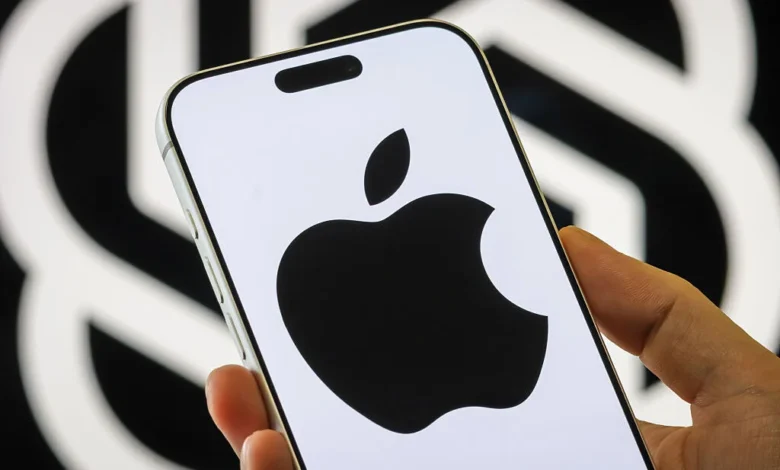
The high-stakes legal battle surrounding artificial intelligence integration on mobile devices has taken a sudden and unexpected turn. Elon Musk has officially dropped all legal claims against tech giant Apple, bringing a quiet end to a bitter feud that began when Cupertino first announced plans to bring OpenAI’s ChatGPT directly into the core user experience of the iPhone. While Apple has been removed entirely from the litigation, Musk’s legal crusade against Sam Altman and OpenAI is far from over. Court filings submitted on Monday indicate that the billionaire entrepreneur intends to press forward with antitrust allegations solely against the Microsoft-backed AI developer, even as legal experts question the viability of the remaining claims.
The resolution of the dispute with Apple marks a significant pivot in a multifaceted corporate war that has spanned multiple years, crossed into federal courtrooms, and intersected with the fierce, multi-billion-dollar race for artificial intelligence dominance. Yet, the sudden dismissal of Apple leaves more questions than answers, particularly regarding the motivations behind the voluntary exit and what it signals for the future of mobile AI ecosystems.
A Contentious Partnership: The Genesis of the Apple-OpenAI Deal
The animosity between Musk and Apple originated in June 2024, during Apple’s Worldwide Developers Conference (WWDC). It was then that the iPhone maker unveiled Apple Intelligence, a sweeping suite of generative AI features designed to permeate iOS, iPadOS, and macOS. As part of this initiative, Apple announced a landmark partnership with OpenAI to integrate ChatGPT into Siri and system-wide writing tools, allowing users to access advanced language models seamlessly without needing to switch applications.
For Musk, who views OpenAI as a primary competitor through his own artificial intelligence ventures, the announcement was nothing short of a declaration of war. Shortly after the reveal, Musk launched into a blistering public critique across social media, characterizing the agreement as a backdoor arrangement that permitted OpenAI to install what he termed "creepy spyware" directly onto consumer devices. Musk argued that embedding a third-party model so deeply into the world’s most ubiquitous mobile operating system presented severe privacy vulnerabilities and tilted the competitive playing field unfairly in favor of a single enterprise.
The tensions simmered for months before boiling over into formal legal action. In August 2025, Musk escalated the conflict by filing a formal lawsuit naming both Apple and OpenAI as defendants. The complaint alleged that the exclusive integration arrangement granted the two firms an unfair monopoly over iPhone users’ AI prompts and queries. Musk’s legal team argued that this closed-loop ecosystem severely harmed open-market competition in both the mobile operating system sector and the burgeoning consumer chatbot market, effectively locking out rivals from gaining meaningful access to hundreds of millions of potential users.
App Store Grievances and the Allegations of Market Manipulation
The friction between Musk and Apple extended far beyond architectural integration and privacy concerns, spilling directly into the mechanics of the iOS App Store. As the competitive landscape heated up, Musk’s own conversational AI assistant, Grok—developed under his umbrella of companies—sought to capture consumer market share on mobile platforms.
However, by the summer of 2025, Musk became convinced that Apple was actively and illicitly suppressing Grok’s visibility. In August of that year, public frustrations boiled over when Musk accused Apple of manipulating its algorithms and editorial curation to block Grok from climbing to the number-one spot in the App Store rankings.
In characteristic fashion, Musk took to his social media platform to voice his grievances, stating publicly that Apple was behaving in a manner that made it mathematically and logistically impossible for any artificial intelligence company other than OpenAI to reach the coveted top position in the App Store. He labeled this alleged behavior an unequivocal antitrust violation, suggesting that Apple’s curation practices amounted to anticompetitive gatekeeping designed to protect its financial and strategic partner.
These accusations formed a core pillar of the initial lawsuit, leading industry observers to believe that Apple would remain a primary target of Musk’s litigious strategy for the foreseeable future. The assertion that a platform owner could systematically disadvantage competing AI applications under the guise of neutral curation struck at the heart of modern platform economics, drawing intense scrutiny from antitrust scholars and digital rights advocates alike.
The Sudden Court Filing: Apple Dismissed, OpenAI Targeted
The landscape shifted dramatically on a Monday in September 2026, when newly uncovered court documents revealed that Musk had filed a motion for the voluntary dismissal of all claims against Apple. The filing confirmed that X (formerly Twitter) and its associated entities had reached a point of closure regarding the iPhone manufacturer, agreeing to permanently drop the litigation against Cupertino.
Crucially, the motion did not disclose the existence of any negotiated settlement, financial agreements, or regulatory concessions between Musk and Apple. Industry analysts noted the conspicuous absence of explanatory text detailing why X would abruptly abandon a high-profile lawsuit against one of the world’s most valuable companies. Furthermore, the terms of the dismissal stipulate that Musk has agreed to never raise these specific claims against Apple again, effectively closing the door on any future legal challenges regarding the initial ChatGPT integration.
However, the legal reprieve applies exclusively to Apple. The filing explicitly maintains all claims against OpenAI. By severing Apple from the complaint while doubling down on OpenAI, Musk has narrowed the scope of his legal attack, focusing squarely on the notion that OpenAI leveraged the partnership to establish an unlawful monopoly over the consumer chatbot sector.
This strategic retreat regarding Apple aligns with recurring statements made by Apple executives throughout the litigation. From the outset, Apple maintained that the integration with OpenAI was never contractually exclusive. Apple repeatedly emphasized to the court that iOS users retain the freedom to select alternative AI models, pointing out that future software updates would support integration with other foundational models, such as Google’s Gemini and Anthropic’s Claude. By demonstrating that the platform remained open to multi-vendor integration, Apple successfully neutralized the core premise of Musk’s tying and monopolization arguments.
OpenAI’s Defense and the Battle Over Market Definition
With Apple out of the picture, OpenAI now stands alone as the defendant facing Musk’s antitrust challenges. The artificial intelligence pioneer has consistently pushed back against the litigation, characterizing Musk’s legal maneuvers as little more than a persistent campaign of harassment driven by commercial jealousy rather than genuine antitrust concerns.
OpenAI’s legal representatives have frequently pointed out the timing of Musk’s legal actions, noting that they coincided with the aggressive scaling of his rival enterprise—now operating under the banner of SpaceXAI—as it races to catch up to market leaders in foundational model capabilities. In late 2025, OpenAI lawyers filed scathing motions mocking the economic arguments put forward by Musk’s legal team.
At the core of OpenAI’s defense is the fragility of Musk’s market definition and quantitative analysis. During previous hearings, OpenAI’s legal counsel ridiculed what they described as "back-of-the-envelope math" utilized by Musk to substantiate his claims of market foreclosure. Rather than presenting rigorous empirical data or authoritative economic studies regarding market shares and consumer switching costs, Musk’s filings reportedly estimated that the OpenAI-Apple partnership could foreclose anywhere from 0 to 55 percent of the chatbot market.
OpenAI argued before the court that such a wildly speculative range—spanning from zero impact to total market dominance based on informal calculations—failed to meet the basic pleading standards required for antitrust litigation. Legal scholars have largely agreed with this assessment, noting that antitrust claims typically demand precise definitions of relevant product markets and demonstrable evidence of anticompetitive harm, rather than sweeping projections born from corporate rivalry.
Broader Implications for the AI Landscape and Platform Neutrality
The winding down of Musk’s litigation against Apple while the OpenAI suit continues offers a fascinating case study in the intersection of big tech platforms and generative artificial intelligence. As foundational models become increasingly commoditized and integrated directly into the foundational layers of consumer operating systems, the question of platform neutrality has emerged as a central battleground.
For Apple, the voluntary dismissal is a welcome victory. It allows the company to move past a distracting public relations and legal headache, enabling Cupertino to continue refining its Apple Intelligence ecosystem without the looming threat of a protracted federal trial. Apple’s strategy of keeping its platform open to multiple AI providers ultimately proved resilient against antitrust scrutiny, establishing a precedent that hardware and operating system makers can forge deep partnerships with specific AI developers so long as consumers retain choices and alternative providers are not explicitly locked out of the ecosystem.
For OpenAI, the continuation of the lawsuit means defending its market position against a deeply capitalized and highly vocal rival, even if the quantitative foundations of the plaintiff’s case remain open to aggressive challenge. While OpenAI’s leadership has repeatedly dismissed the claims as meritless distractions, the ongoing legal proceedings will continue to require significant resources and public relations management.
For Musk and SpaceXAI, the pivot represents a calculated refocusing of energy. By shedding the complex multi-defendant litigation against Apple—a fight complicated by Apple’s contractual flexibility and pro-consumer integration defenses—Musk has streamlined his legal efforts to target what he perceives as the root of the competitive threat: OpenAI’s aggressive market capture and strategic partnerships.
As the legal proceedings move forward into late 2026, the case will likely serve as a crucial bellwether for how courts evaluate competition in the age of generative artificial intelligence. With Apple successfully exiting the stage, all eyes are now on the courtroom battles remaining between two of the industry’s most prominent and fiercely competitive entities, as they vie for supremacy in shaping the future of human-computer interaction.