The summer months have long been associated with leisure, warmth, and outdoor activities, but the recent summer season redefined the word "hot" on a global scale. Registering as the most record-breaking and uncomfortably extreme period in modern meteorological history, nations across the globe reported their highest average temperatures ever documented. Western Europe, a region historically temperate during the summer months, bore the brunt of this punishing weather. The continent sweated through five grueling, back-to-back heat waves that fundamentally altered landscapes and strained public infrastructure.
These severe meteorological events did not merely cause localized discomfort; they systematically dismantled natural ecosystems. The relentless heat and lack of precipitation sucked vital moisture directly from the soil, transforming once-lush vegetation into tinderbox-ready wildfire fuel. Major river systems shrank dramatically, dropping to levels so critically low that fish populations ran out of water and aquatic life collapsed. Municipal emergency rooms and ambulance fleets were overwhelmed within days of each heat wave’s onset, as vulnerable populations succumbed to heat stroke and dehydration.
Early epidemiological estimates from the region indicate that at least 35,000 excess deaths occurred as temperatures soared to unprecedented heights. Crucially, this grim figure only accounts for the first four heat waves across roughly half of the European continent, leaving the full human toll of the entire summer even higher. Yet, according to official statements from the World Health Organization (WHO), this catastrophic season was merely a "dress rehearsal" for what lies ahead. Global climate dynamics ensure that future summers will bring even more intense and lethal conditions.
The Convergence of El Niño and Anthropogenic Warming
Two primary drivers are converging to push global temperatures into uncharted territory over the coming years: the naturally occurring climate cycle known as El Niño and relentless, human-caused climate change. El Niño is a recurring climate pattern characterized by the warming of surface waters in the central and eastern tropical Pacific Ocean, which historically pumps extra warmth into the global atmosphere every two to seven years.
Meteorological agencies have confirmed that the Earth is currently in the early stages of a new El Niño cycle. Alarmingly, historical data modeling suggests this cycle is on a trajectory to become the strongest in a millennium, amplifying baseline temperatures across multiple continents.
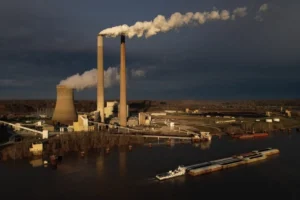
Compounding this natural phenomenon is the steady accumulation of heat-trapping greenhouse gases in Earth’s atmosphere, driven primarily by the global burning of fossil fuels. Mitigating the long-term severity of climate change requires a radical and accelerated transition away from carbon-intensive energy sources toward renewable technologies, such as solar, wind, and advanced storage systems.
In 2015, nearly every nation on Earth signed the historic Paris Agreement, a voluntary commitment designed to limit global warming to well below 2 degrees Celsius above preindustrial levels, with a more ambitious aspirational target of holding the increase to 1.5 degrees Celsius (2.7 degrees Fahrenheit).
However, a sobering United Nations report released late last year revealed that humanity is virtually guaranteed to overshoot the 1.5-degree Celsius threshold within the next few years. Crossing this critical tipping point locks in an accelerated trajectory of more severe heat waves, prolonged droughts, catastrophic wildfires, accelerated sea-level rise, and the irreversible loss of global glaciers. As the dual forces of El Niño and unchecked greenhouse gas emissions converge, atmospheric scientists predict that the coming years—most notably 2027—are exceptionally likely to shatter previous global temperature records.

The Adaptation Gap: Wealthy and Vulnerable Nations Alike Fall Behind
Despite decades of academic warnings and international policy summits, global infrastructure remains fundamentally unsuited for the rapid escalation of extreme weather. "There really is nowhere that is terribly well adapted to these very extreme events," noted Kristie Ebi, a lead author of the United Nations report and a professor of global health at the University of Washington. While developing nations in the Global South remain disproportionately vulnerable due to economic constraints, the U.N. report underscores a broader systemic failure: even wealthy industrialized nations are failing to adapt their societies at the pace required by a rapidly warming planet.
Public health officials and urban planners have struggled to keep pace with the shifting calendar of extreme weather. Heat waves are no longer confined to the traditional mid-May to mid-September window; they are extending further into the spring and autumn months, catching municipalities off guard. Furthermore, many warning systems were calibrated for historical maximums, rendering them inadequate when faced with the extreme intensity of recent summers.
"The temperatures were just so high, much higher than the heat wave early warning systems were designed to manage," Ebi explained.
The human body operates within strict biological tolerances, and recent scientific findings suggest the thermal threshold at which heat becomes hazardous is lower than previously understood. The danger zone can begin at temperatures as low as 26 degrees Celsius (79 degrees Fahrenheit) when combined with high relative humidity. Under these humid conditions, the human body cannot effectively cool itself through perspiration, putting lethal levels of physiological stress on vital organs, including the heart, lungs, and kidneys.
Learning from the Past: The Limits of Modern Adaptation
Some nations have demonstrated that targeted policy interventions can successfully mitigate heat-related mortality. Following the catastrophic European heat wave of 2003, which claimed an estimated 70,000 lives, countries such as France instituted comprehensive national protection frameworks. These measures included early warning systems, designated public cooling centers, and upgraded hospital preparedness protocols.
France enacted an aggressive national playbook mandating air-conditioned communal rooms in nursing homes, directing municipal health workers to conduct physical wellness checks on elderly and frail citizens during heat advisories, and investing heavily in urban green spaces to mitigate the urban heat island effect.
"A given heat wave is now actually much less deadly in France than it was before," noted Christopher Callahan, a climate scientist specializing in heat, health, and economics at Indiana University.
Yet, as global temperatures continue to climb—having already surpassed 1.4 degrees Celsius of warming above preindustrial baselines—experts warn that current adaptation strategies possess a hard ceiling. "The heat waves will become so intense that they will sort of outstrip that adaptation progress," Callahan cautioned. Statistical modeling published by researchers at Stanford University suggests that if countries continue upgrading their infrastructure at the same pace observed in recent decades, these measures will only prevent roughly 1 in 10 of the excess heat-related deaths expected under future warming scenarios.

Navigating the Overshoot: Scenarios for a Warming World
The United Nations report explicitly states that there are no environmentally favorable outcomes once global temperatures exceed 1.5 degrees Celsius. The updated best-case emissions scenario indicates that global temperatures will likely peak around 1.8 degrees Celsius before gradually declining through aggressive carbon dioxide removal and emissions reductions.
However, returning global averages to safer levels after a temporary peak does not equate to a complete reset of the Earth system. Once crossed, certain tipping points are irreversible: bleached and dead coral reefs cannot easily regenerate, and melted polar ice sheets cannot be refrozen on human timescales. Nevertheless, bringing peak temperatures down from their highest possible trajectory remains a vital goal for dampening the frequency and severity of future heat waves.
To prevent cascading societal failures, experts argue that governments and private sectors must adopt rigorous "stress-testing" methodologies, treating climate extremes with the same analytical foresight that financial institutions and military organizations apply to worst-case geopolitical and economic scenarios. Without proactive stress-testing, communities are forced to learn the limits of their infrastructure in real time during unprecedented weather events.
A Historical Precedent of Infrastructure Failure
A stark illustration of this vulnerability occurred in June 2021, when a historic "heat dome" settled over the Pacific Northwest, pushing temperatures in Portland, Oregon, to an unprecedented 116 degrees Fahrenheit (46.7 degrees Celsius). The sudden, extreme thermal expansion overwhelmed civil engineering systems designed for a much milder climate regime.
During the event, asphalt roadways buckled, steel bridge joints warped, power cables supplying streetcars melted, and the overhead copper wires powering the city’s light rail system expanded and sagged to dangerous levels, halting public transit networks.
"There are a million different ways in which we can imagine making our society resilient to this kind of threat," Callahan observed, summarizing the monumental task ahead. "And we just aren’t there yet."