The Silent Disappearance of the Pacific Gray Whale Ignites Scientific Alarm and Legal Battles

NEWPORT, Oregon — In the coastal hub of Newport, Oregon, an unusual and deeply tense summit brought together several hundred scientists, government officials, and environmental advocates last week. The focus of the two-day gathering was singular and pressing: the alarming, rapid decline of the eastern North Pacific gray whale population. Over the past decade, the numbers of these iconic marine mammals have plummeted by thousands, effectively halving a population that once showed a historic recovery. As researchers presented stark new data regarding plummeting birth rates and rising mortality, the atmosphere inside the conference rooms remained thick with anxiety. Beneath the discussions of marine biology lay a heavy political shadow: the current federal administration’s inaction, ongoing cutbacks at key scientific agencies, and an impending legal showdown over Endangered Species Act protections.
A Species on the Brink: The Current Crisis
The statistics driving the Newport conference paint a grim picture of a species struggling to survive in a rapidly warming ocean. U.S. government scientists estimate that the eastern gray whale population peaked between 2016 and 2017, reaching an estimated 25,000 to 30,000 individuals. However, recent counts indicate the population has crashed to somewhere between 11,700 and 17,000.
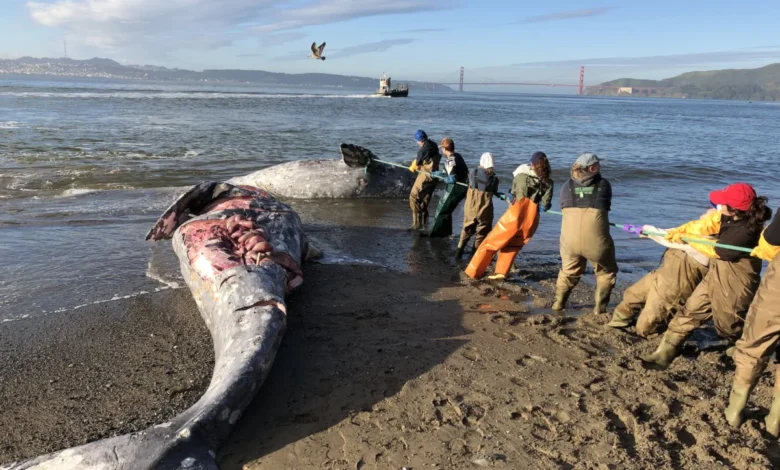
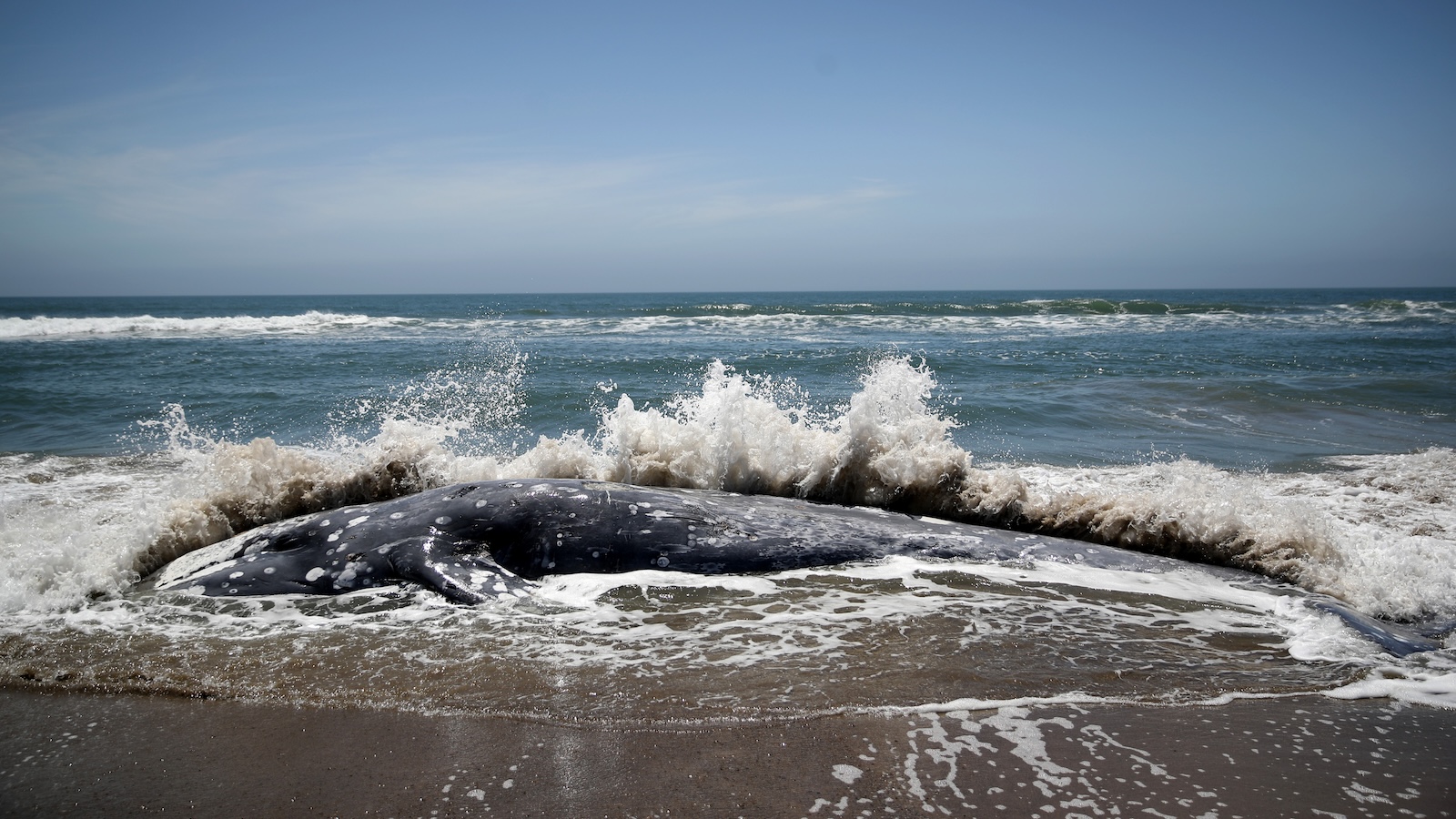
Normally, a healthy population yields approximately 1,000 calves annually. Last year, however, surveys recorded a devastating low of just 85 births. This catastrophic drop in reproduction coincides with staggering mortality events. This past summer alone, 187 gray whale carcasses washed ashore along the West Coast of North America.
Scientists point to climate change as the primary driver of the crisis. The Arctic is warming nearly four times faster than the rest of the planet, leading to unprecedented losses in sea ice. This environmental disruption has triggered cascading ecosystem changes, drastically reducing the abundance of amphipods and other small crustaceans that gray whales feed on during their summer months in Alaskan waters.
Migrating up to 12,000 miles round-trip between their Arctic feeding grounds and their breeding lagoons in Mexico—one of the longest migrations of any mammal—requires immense caloric reserves. Biologists explain that malnourished whales begin their grueling journeys with insufficient energy, leading directly to high mortality rates and failed pregnancies.
Historical Context and Previous Recoveries
The fortunes of the gray whale have long been intertwined with human industrial activity and conservation policy. During the 19th and 20th centuries, commercial whaling decimated global populations. The Atlantic gray whale was hunted to extinction, marking the only known extinction of a whale species in human history.
By the mid-20th century, eastern Pacific gray whales were similarly depleted. However, international whaling bans implemented in the mid-1940s, followed by robust domestic protections under the newly minted U.S. Endangered Species Act in the 1970s, sparked a remarkable revival. The population rebounded so successfully that federal officials removed them from the endangered species list in 1994, heralding the comeback as a major conservation victory.
For three decades, that recovery held steady—until anthropogenic climate change and human maritime pressures began to unravel decades of progress.
The Political Tense-Wire and Legal Challenges
At the heart of the tension in Newport was the delicate relationship between government researchers and the federal administration. Since taking office in 2025, the Trump administration has implemented sweeping staff and funding reductions at the National Oceanic and Atmospheric Administration (NOAA) and proposed the elimination of the Marine Mammal Commission. Furthermore, the administration has rolled back key habitat protections associated with the Endangered Species Act, leaving a backlog of roughly 400 species awaiting federal listing decisions.
Attendees at the conference described an environment where participants felt compelled to "walk on eggshells." Event organizers explicitly mandated that discussions remain strictly focused on science rather than policy, largely to protect government-employed scientists and researchers reliant on federal grants from political retribution.
This administrative friction has direct consequences for wildlife management. NOAA has faced severe criticism for missing statutory deadlines. The agency failed to respond within the legal timeframe to a formal petition submitted by conservationists to relist gray whales under the Endangered Species Act. Additionally, NOAA is several months late in releasing its annual count of gray whale calf births.
In response to the federal delay, three prominent conservation groups filed a formal notice of intent to sue at the end of August. Led by organizations such as the Center for Biological Diversity and the Earth Island Institute, the impending lawsuit seeks to force the administration to legally evaluate the species’ peril using the best available science.
Miyoko Sakashita, an attorney at the Center for Biological Diversity, emphasized that a federal listing is a critical procedural step. "Once a species is formally protected, federal agencies are generally required to develop a recovery plan," Sakashita noted. "Listing also opens the door to federal funding for monitoring, research, and efforts to protect or restore habitat. That could buy us some time for us to solve that bigger climate change problem."
Data Discrepancies and Skepticism
Adding to the controversy, recent NOAA estimates suggested that the gray whale population may have rebounded by roughly 5,000 individuals over the past year. Independent marine scientists and conservationists have met these figures with profound skepticism.
Mark Palmer of the Earth Island Institute pointed out the mathematical impossibility of such a rapid recovery given the historically low birth rates recorded just prior. "Especially considering the low number of calves born last year, it’s just physically impossible for gray whales to produce that many animals in such a short time," Palmer said.
Compounding the biological crisis is the behavioral shift observed in malnourished whales. Driven by hunger, vulnerable animals are increasingly straying into dangerous, high-traffic shipping lanes and shallow bays to forage.
In the San Francisco Bay Area, scientists have tracked a surge in whale strandings and ship strikes in recent years. Researchers estimate that between 20 percent and 50 percent of all gray whales entering the San Francisco Bay ultimately die from vessel collisions. This summer alone, 13 dead whales were documented in the area, though experts warn that many more sink into the depths before ever reaching a beach.
Mitigation Efforts: Slowing Down Ships
While legal battles play out in federal courts and scientists await policy reforms, various academic and nonprofit groups are racing to implement localized protections.
One of the most promising initiatives is Whale Safe, a project led by the Benioff Ocean Science Laboratory at the University of California, Santa Barbara. Utilizing a combination of underwater sonar, thermal imaging cameras, and satellite telemetry, the program maps real-time whale locations in busy shipping corridors.
Rachel Rhodes, a scientist with the project, explained that while avoiding whales entirely in congested waterways is often impossible, vessel speed reduction offers a proven lifeline. "So the next best thing is to ask ships to slow down to 10 knots or less," Rhodes said, noting that lower speeds drastically reduce the lethality of ship strikes.
While mandatory vessel speed limits exist along parts of the U.S. East Coast, West Coast measures remain largely voluntary. Programs like Blue Whales Blue Skies have incentivized compliance by publicly recognizing and financially rewarding shipping lines that voluntarily reduce speeds. However, enforcement remains inconsistent, with certain commercial vessels and cruise liners continuing to transit high-risk zones at high speeds.
Broader Implications for Global Marine Ecosystems
The plight of the eastern gray whale serves as a bellwether for the broader health of marine ecosystems under siege by a warming climate. Marine biologists warn that without aggressive, global reductions in greenhouse gas emissions, the degradation of Arctic sea ice will continue unabated through the 21st century.
Richard Steiner, a marine conservation biologist who initiated the petition to relist the species, offered a sobering assessment of the road ahead. "The science on this is perfectly clear," Steiner stated. "As goes Arctic sea ice, so goes the gray whale population. And Arctic sea ice will continue its decline throughout this century."
Steiner added that failure to act could yield apocalyptic consequences not just for gray whales, but for a multitude of marine species dependent on stable polar habitats. "The scientists have done their job in reporting the dire situation for gray whales," he concluded. "Now it’s time for the policymakers to put that science to work in protecting them as much as possible."