Dyson Introduces the Supersonic Travel Hair Dryer: A Compact Revolution for Global Jetsetters and Chronic Overpackers Alike

The modern travel landscape has long been defined by a persistent logistical compromise: the friction between traveling light and maintaining personal grooming routines. For millions of frequent flyers, weekend vacationers, and business travelers, the suitcase real estate consumed by hair styling appliances has traditionally necessitated a trade-off between clothing versatility and hair care efficacy. Standard-sized hair dryers, multi-styler wands, and high-end drying systems frequently demand an outsized footprint within carry-on luggage or weekender bags, forcing many travelers to rely on substandard hotel-provided amenities or resign themselves to checking bags.
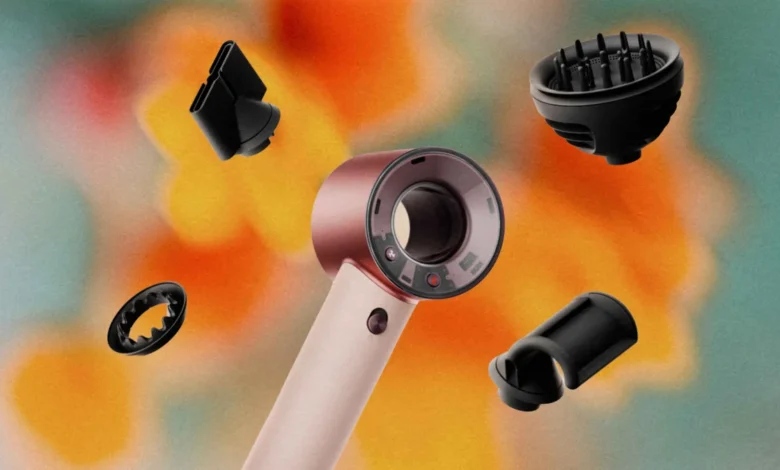
In response to these enduring consumer challenges, British technology company Dyson has officially launched its latest innovation within the personal care sector: the Dyson Supersonic Travel Hair Dryer. Engineered specifically to address the demands of mobile consumers, this newly released appliance seeks to bridge the gap between heavy-duty salon performance and ultra-portable design. Marketed at a retail price point of $300 and available through major beauty and electronics retailers including Amazon, Nordstrom, and Sephora, the device enters the market as a premium solution for travelers seeking to optimize their packing efficiency without sacrificing styling performance.
Engineering Specifications and Design Innovations
The core engineering achievement of the Dyson Supersonic Travel Hair Dryer lies in its substantial physical reduction compared to its predecessors. According to manufacturer specifications, the new travel iteration is engineered to be 32 percent smaller and 25 percent lighter than the brand’s original, flagship Supersonic hair dryer. This geometric and mass reduction fundamentally alters how the device integrates into travel packaging, allowing it to occupy minimal space alongside standard clothing items or fit comfortably within compact accessories.
Beyond its physical dimensions, the device introduces critical functional upgrades tailored to international travel. Most notably, the Supersonic Travel Hair Dryer features a dual-voltage system, a vital technical specification that distinguishes it from the brand’s original Supersonic model and the popular Dyson Airwrap multi-styler. Traditional high-powered hair styling tools often lack native dual-voltage capabilities, requiring travelers to use external voltage converters that can malfunction, damage equipment, or create electrical hazards when used with foreign power grids. By incorporating native dual-voltage compatibility, Dyson has engineered the device to operate safely and reliably across varying international electrical standards, making it particularly well-suited for travelers navigating global destinations.

From a functional standpoint, the appliance features a simplified control interface consisting of an on-off switch, a dedicated button for three distinct heat settings, and a separate control for two airflow speeds. The unit is equipped with a shorter power cable measuring 6.5 feet—reduced from the 8.6-foot cord found on the original model—further minimizing bulk during storage and transit. Additionally, the travel hair dryer comes bundled with a Styling Concentrator attachment designed to minimize frizz and enhance smoothness. In a move toward consumer compatibility, the device is also backward-compatible with existing attachments from the original Supersonic ecosystem, enabling users to leverage prior investments in Dyson hair care accessories.
Chronology of the Product Launch and Market Positioning
The rollout of the Supersonic Travel Hair Dryer represents the latest milestone in Dyson’s ongoing expansion within the premium hair care market, a sector the company entered in 2016 with the debut of the original Supersonic hair dryer. Over the subsequent decade, Dyson expanded its portfolio to include the Airwrap multi-styler and the Airstrait wet-to-dry straightener, establishing a dominant market share in high-end consumer beauty technology.
However, despite widespread consumer adoption of these flagship tools, feedback from frequent travelers consistently highlighted a gap in the product lineup. While devices like the Airwrap delivered exceptional styling versatility, their extended barrels, numerous attachments, and bulky power bricks rendered them impractical for minimalist packers or those restricted by strict airline carry-on weight and dimension limits.
Industry analysts noted that the development of a dedicated travel variant was a natural progression for the brand as global travel volumes rebounded post-pandemic. Throughout 2024 and early 2025, consumer travel trends increasingly prioritized efficiency, compact luggage solutions, and streamlined packing strategies. By introducing a device that scales down physical size without compromising thermal output or airflow velocity, Dyson positioned the new travel dryer to capture market share among affluent consumers who refuse to compromise on personal care routines while away from home.
Consumer Response and Practical Performance Analysis

Early field testing and consumer reviews of the Dyson Supersonic Travel Hair Dryer have highlighted both the distinct advantages and the inherent trade-offs associated with the product. Field evaluations conducted by lifestyle and commerce reviewers during domestic and international trips—including destinations ranging from boutique hotels in New York City to vacation rentals in coastal Florida—have provided empirical insights into the device’s real-world performance.
A primary focal point of consumer evaluation has been the appliance’s drying capability relative to its diminutive size. Early testers expressed initial skepticism regarding whether a miniaturized motor could match the velocity and thermal efficiency of full-sized counterparts. However, operational tests demonstrated that the device generates airflow strength comparable to larger models, capable of thoroughly drying long, thick hair from a saturated state in approximately 10 minutes. Furthermore, users reported that the device imparts a glossy, finished appearance superior to that typically achieved by standard hotel-provided hair dryers, which frequently generate excessive heat that can leave hair brittle or dehydrated.
The appliance’s physical ergonomics have also received positive assessments. The slim barrel design provides a balanced, comfortable grip during prolonged styling sessions, while its minimal footprint frees up valuable counter space in cramped hotel bathrooms. Beyond travel applications, a notable trend among early adopters is the migration of the travel dryer into daily, at-home routines. Consumers with limited bathroom storage or those seeking a lightweight alternative to heavier styling systems have increasingly adopted the travel model as their primary, day-to-day hair care tool.
Economic Considerations and Market Implications
Despite its technological and practical successes, the Dyson Supersonic Travel Hair Dryer enters a highly scrutinized economic landscape regarding its price point. Retailing at $300, the device commands a substantial financial investment that positions it at the absolute apex of the travel hair appliance market. Standard travel hair dryers produced by mainstream personal care brands typically retail between $30 and $80, rendering the Dyson model roughly four to ten times more expensive than conventional market alternatives.
Industry experts and consumer advocates have weighed these cost dynamics against the device’s specialized feature set. The intersection of ultra-lightweight engineering, compact dimensions, high-velocity airflow, and native dual-voltage capabilities justifies the premium pricing for a specific demographic of high-frequency travelers and brand loyalists. For consumers who frequently navigate international borders and demand salon-grade performance from portable equipment, the appliance offers a unique value proposition that currently faces minimal direct competition within the luxury beauty sector.

However, price sensitivity remains a primary barrier to mass-market adoption. For casual travelers who take only one or two trips per year, the $300 expenditure may be difficult to rationalize, particularly when lower-cost travel dryers—albeit heavier and lacking advanced airflow technology—can fulfill basic drying requirements.
Broader Implications for the Travel and Beauty Industries
The introduction of the Dyson Supersonic Travel Hair Dryer underscores a broader convergence between the luxury beauty and travel accessories industries. As consumers increasingly view travel as an essential lifestyle component rather than an occasional luxury, the demand for specialized, high-performance gear that minimizes travel friction has surged.
Manufacturers of luggage, travel apparel, and personal care electronics are increasingly focusing on miniaturization, multi-functionality, and cross-border compatibility. Dyson’s ability to successfully scale down a high-powered digital motor without sacrificing aerodynamic efficiency sets a new benchmark for personal care appliance engineering.
Looking forward, market observers anticipate that competitors within the beauty technology sector will accelerate the development of comparable high-end, travel-optimized styling tools. As consumer expectations for mobile grooming continue to evolve, appliances that seamlessly bridge the gap between domestic luxury and portable convenience are poised to command an increasingly significant share of the personal care market. For now, Dyson’s entry into this specialized category establishes a definitive standard for what travelers can expect from compact grooming technology in the years ahead.
Related posts: