Why You Can Never Book a Domestic Flight on Emirates or Lufthansa: The Hidden Aviation Law Shaping US Skies

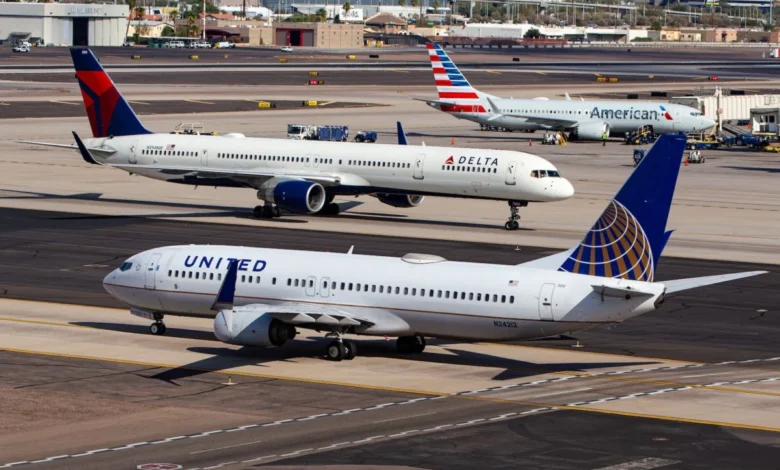
The modern commercial aviation landscape creates a world of seamless global connectivity where travelers can board a wide-body aircraft in Dubai or Frankfurt and touch down hours later in New York or Los Angeles. Yet, despite the borderless nature of international flight networks, a traveler stepping off an international aircraft in the United States faces a strict legal wall. While a foreign carrier like Emirates or Lufthansa can legally transport a passenger from its home hub directly to major American entry points, it is strictly forbidden from selling a ticket for the final leg of that journey between two domestic US cities, such as New York and Los Angeles.
This restriction is governed by a little-known, centuries-old aviation and maritime principle known as "cabotage." While largely invisible to the average consumer scanning online travel aggregators for the cheapest fare, cabotage laws fundamentally shape the economics, availability, and quality of domestic air travel. As the US airline industry becomes increasingly consolidated under a handful of major domestic legacy carriers, policymakers, economists, and frequent flyers are increasingly scrutinizing whether these protectionist measures shield domestic airlines at an unacceptably high cost to consumers.
Understanding Cabotage: From 16th-Century Maritime Trade to Modern Aviation
The term cabotage traces its linguistic roots to the French word caboter, which roughly translates to navigating or sailing along a coastline. During the 1500s, France and other European maritime powers enacted protectionist trade statutes that barred foreign-flagged merchant vessels from engaging in coastal commerce between domestic ports. The core objective was twofold: preserve maritime trade revenues for domestic operators and ensure a ready pool of domestic merchant ships and sailors that could be requisitioned during times of war.
As transportation technology evolved from wooden sailing ships to steamliners, railways, and eventually commercial aircraft, governments systematically adapted the doctrine of cabotage to protect domestic infrastructure across every modality. Today, versions of cabotage apply to shipping, trucking, cruising, and aviation. In the cruise industry, for example, the United States Passenger Vessel Services Act generally prohibits foreign-flagged cruise ships from transporting passengers directly between two US ports without an intervening stop in a foreign country—a legal reality that forces many domestic cruise itineraries to include quick stops in Canada, Mexico, or the Caribbean.
In aviation, the concept was formalized globally during the dawn of commercial flight. The first major federal aviation statute in the United States, the Air Commerce Act of 1926, was signed into law in May 1926, establishing federal oversight of civil aviation. Among its most blunt provisions was a clear restriction on foreign commercial operations, declaring that no foreign aircraft could engage in interstate or intrastate air commerce within US borders.
The Chronology of Global Aviation Restrictions
The legal framework governing international commercial aviation today was largely forged in the immediate aftermath of the Second World War. In November and December 1944, delegates from 54 nations gathered in Chicago to negotiate the future of international civil aviation. The resulting document, officially titled the Convention on International Civil Aviation but widely known as the Chicago Convention, established fundamental principles for peaceful global air navigation.
Crucially, the Chicago Convention established what aviation lawyers classify as the "freedoms of the air." While the agreement liberalized many aspects of international transit, it specifically reserved cabotage as a sovereign right. Under the convention’s framework, individual nations retain the legal authority to grant or withhold permission for foreign airlines to carry revenue-generating passengers or cargo between points entirely within their own national borders. It is not an absolute international mandate, but rather a permissive clause empowering states to institute strict domestic monopolies if they so choose.
The United States codified this permissive clause into domestic law through the Federal Aviation Act of 1958, cementing a ban that remains fully operational today. The United States is far from alone in maintaining these barriers. Similar cabotage restrictions are enshrined in the aviation laws of Canada, Australia, India, China, Brazil, and the European Union. Within the EU, cabotage rules operate on a bloc-wide basis, allowing carriers from any member state to fly domestic routes within another member state, while simultaneously excluding airlines from outside the European single aviation market.
The Case for Cabotage: National Security and Labor Protection
Supporters of strict cabotage laws—including major labor unions, trade associations like the Air Line Pilots Association (ALPA), and domestic airline executives—argue that commercial aviation is a strategic national asset that cannot be treated like ordinary retail commerce. From this perspective, shielding domestic airlines from foreign competition is a matter of economic stabilization and national defense.
A primary argument centers on the integration of commercial aviation into military readiness. Under the Civil Reserve Air Fleet (CRAF) program administered by the US Department of Transportation and the Department of Defense, participating US commercial carriers agree to make a portion of their aircraft available to the military during national security emergencies or large-scale deployments when military airlift capacity is insufficient. In exchange for this vital national defense backstop, participating US airlines receive preference for lucrative government passenger and cargo transportation contracts. Proponents argue that introducing foreign carriers with no legal obligation to the US military would undermine the economic viability of the domestic carriers that underpin the CRAF program.
Furthermore, domestic labor organizations emphasize the stark disparities in labor standards, wage structures, government subsidies, and regulatory burdens between US carriers and international competitors. Foreign airlines—particularly state-backed mega-carriers operating out of the Persian Gulf or carriers benefiting from distinct regional cost structures—could potentially undercut domestic pricing if permitted to operate domestic US routes. Such competition, labor advocates warn, could trigger a race to the bottom, depressing wages and threatening thousands of American jobs. According to the US Department of Transportation’s Bureau of Transportation Statistics, commercial cargo and passenger airlines in the United States employed more than 555,000 workers, making the sector a major pillar of domestic middle-class employment.
The Case Against Cabotage: Market Concentration and Consumer Costs
Conversely, critics of cabotage argue that the policy is an anachronistic form of economic protectionism that insulates major corporations from competitive market pressures, ultimately harming the flying public. While cabotage is not the sole architect of the modern US airline industry, it reinforces a heavily concentrated market structure.
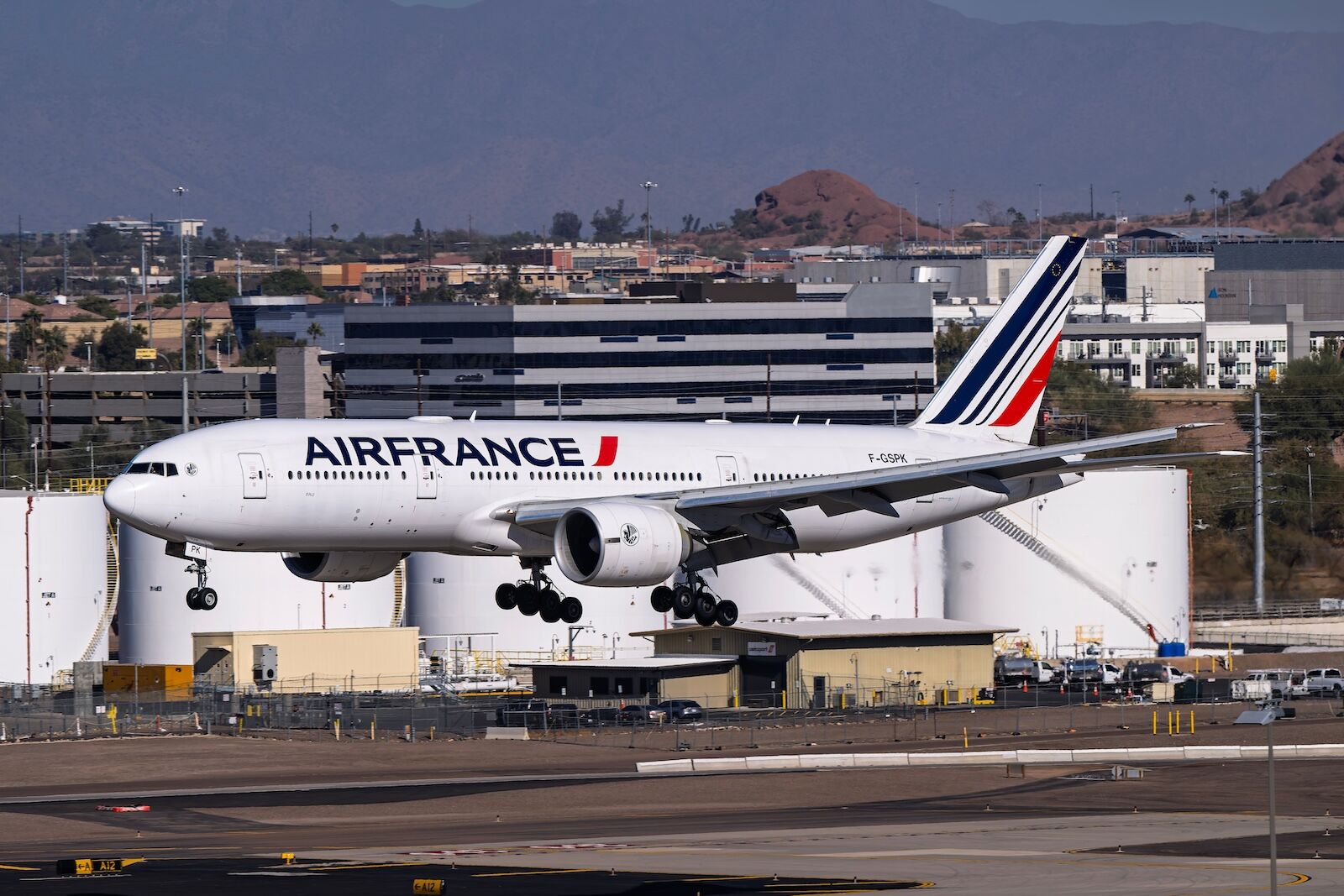
Decades of industry consolidation, bankruptcies, and regulatory approvals have transformed the US skies. A comprehensive report released by the non-partisan Government Accountability Office (GAO) highlights that between 2008 and 2013, a wave of major airline mergers reduced the competitive field to today’s "Big Four"—United Airlines, Delta Air Lines, American Airlines, and Southwest Airlines. Together, these four carriers control more than 75 percent of the domestic air travel market.
Economic watchdogs and antitrust authorities have repeatedly warned that this high level of market concentration correlates directly with diminished service quality and elevated ticket prices. The GAO report noted that customers consistently experienced higher fares and lower service quality on routes where previous mergers had eliminated competing options. Statistical analysis cited in government and academic research reveals a troubling pattern: when the number of competing airlines on a specific domestic route drops from three to two, average flight delays increase by 25 percent, and cancellation rates climb by seven percent.
The US Department of Justice has frequently intervened in airline joint ventures and proposed mergers, asserting in legal filings that robust competition is the single most effective mechanism for driving down airfares and elevating operational standards. Yet, because foreign mega-carriers are legally barred from entering domestic city-pairs, the Big Four face virtually no threat of disruptive low-cost entry from some of the world’s most acclaimed international airlines on domestic runs.
Global Passenger Sentiment and Airport Connectivity
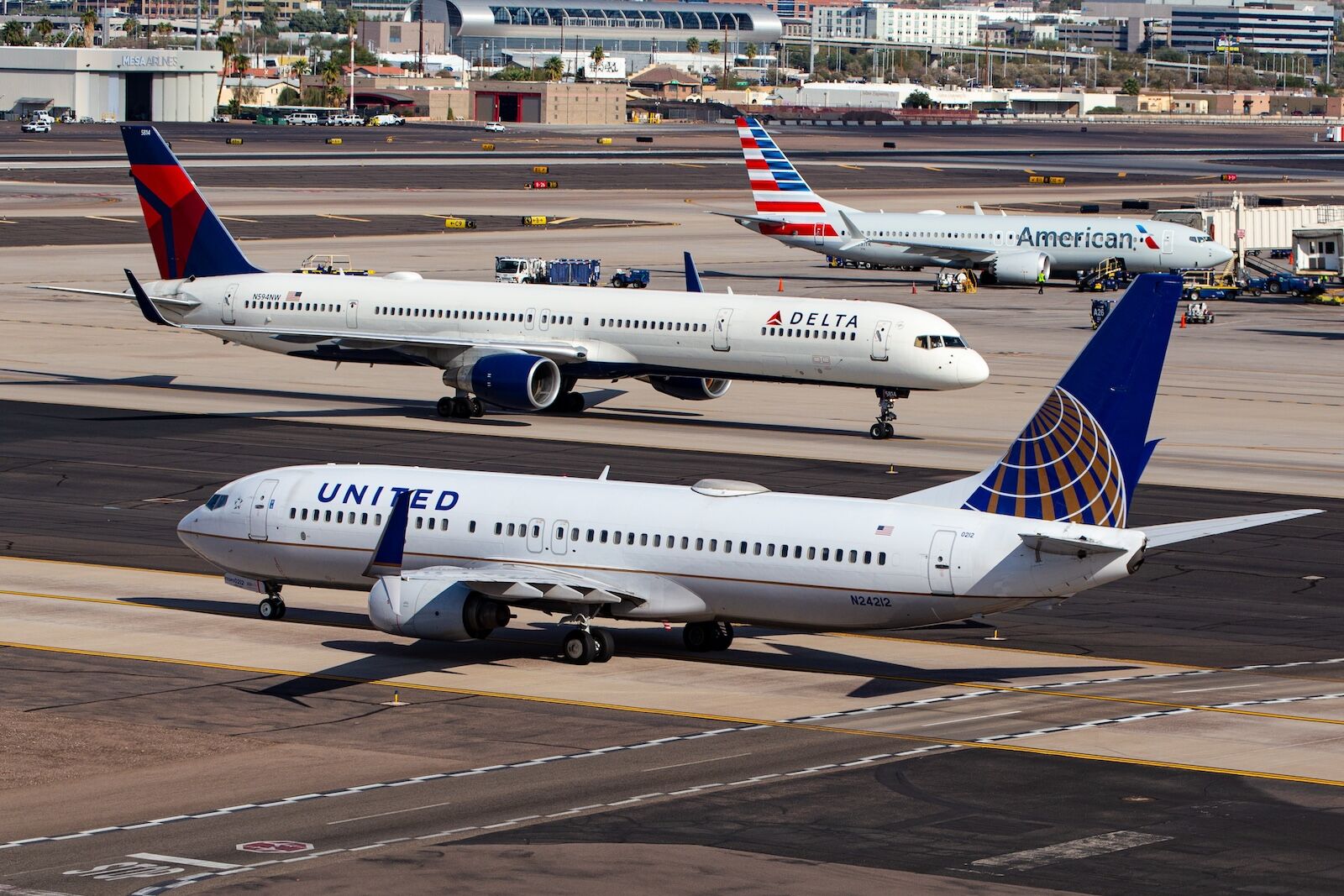
The consequences of this insulated market are frequently reflected in global passenger satisfaction metrics. In the annual Skytrax World Airline Awards—widely regarded as a benchmark for global passenger sentiment based on surveys of travelers across more than 100 countries—US-based carriers are routinely outperformed by international competitors. In recent years, major US airlines have struggled to secure positions within the global top 20, while the top tier is consistently dominated by carriers such as Qatar Airways, Singapore Airlines, Cathay Pacific, Emirates, ANA, Turkish Airlines, Korean Air, and Air France.
Industry analysts point out that international hubs are frequently exposed to vastly higher levels of airline diversity and competitive pressure. Major global hubs like Istanbul Airport are serviced by more than 110 airlines, Hong Kong accommodates roughly 140 carriers, Dubai hosts over 100, and Paris Charles de Gaulle works with a similar density of international operators.
In contrast, major US aviation gateways exhibit far lower airline variety. San Francisco International Airport (SFO) is served by 57 airlines, with only a small fraction operating domestic service. Chicago O’Hare and Hartsfield-Jackson Atlanta International Airport—consistently ranked among the busiest passenger airports on the planet—rely on a relatively concentrated roster of primary domestic operators, with Atlanta hosting fewer than 30 total passenger carriers.
Economic Implications and Future Outlook
Evaluating whether altering cabotage laws would definitively improve the passenger experience remains a complex economic question. There is no direct empirical proof that inviting foreign carriers to operate domestic routes would instantly solve structural issues like air traffic control delays or weather disruptions. However, economic literature suggests that increased contestability inherently drives performance improvements. Research by economists at the Federal Trade Commission and various academic institutions has demonstrated that increased market competition directly improves on-time performance and elevates overall service quality, noting that even the threat of potential competition incentivizes incumbent firms to upgrade their product offerings.
For the everyday traveler booking a cross-country flight, cabotage remains an invisible legal construct tucked away in international treaties and federal code. Yet, as passengers continue to navigate high ticket prices, limited choices, and frequent delays on domestic itineraries, the debate over cabotage touches a raw nerve regarding how government policy balances national protectionism against consumer welfare in the skies.