The Definitive 2026 Holiday Smartwatch Gift Guide: Matching Wearable Tech to Ecosystems and Athletic Ambitions

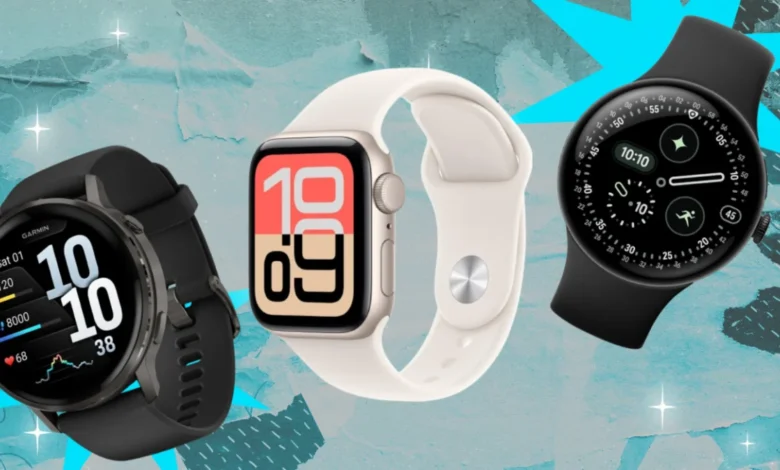
The consumer technology landscape in late 2026 presents a bewildering array of choices for individuals seeking to purchase a smartwatch as a gift. With major manufacturers iterating rapidly on hardware and software platforms, selecting the appropriate wearable requires careful consideration of the recipient’s existing technological ecosystem, primarily their smartphone. Unlike standalone consumer electronics, smartwatches function fundamentally as extensions of host devices. Consequently, compatibility, battery longevity, sensor suites, and fitness tracking capabilities dictate the overall utility of the gift. Industry analysts emphasize that matching a wearable to a user’s current mobile platform is the single most critical factor in ensuring long-term satisfaction. This guide evaluates the leading smartwatch options across the Apple, Google, Samsung, and Garmin ecosystems for the 2026 holiday gifting season, weighing value against bleeding-edge feature sets.
The Apple Ecosystem: Balancing Cost and Capability with the Apple Watch SE 3
For recipients embedded within the Apple ecosystem, the temptation to purchase the latest flagship hardware—such as the Apple Watch Series 12 or the Apple Watch Ultra 4—is significant. These top-tier models incorporate advanced silicon, specifically the S11 chip, alongside continuous health-monitoring sensors. However, market research and user utilization patterns indicate that the average consumer does not require the exhaustive feature sets found in premium models. For most users, daily tasks center on workout recording, sleep analysis, and notifications management.
Addressing this segment, the Apple Watch SE 3 emerges as the most practical and cost-effective gift choice. Available in 40mm and 44mm configurations, the SE 3 features an Always-On OLED display capable of reaching 1,000 nits of brightness. Although it utilizes the S10 processor—one generation behind the current flagship silicon—the hardware handles routine tasks with notable efficiency, fully supporting the Apple Intelligence and Siri AI capabilities introduced in watchOS 26 and watchOS 27.
Battery performance on the SE 3 delivers an estimated 18 hours of standard use, extendable to 32 hours under Low Power Mode. Fast-charging capabilities permit a zero-to-eighty-percent charge in approximately 45 minutes, with a 15-minute charge yielding up to eight hours of operational time. While the SE 3 omits high-frequency background heart rate tracking, advanced electrocardiogram (ECG) sensors, hypertension alerts, the Blood Oxygen application, and specialized depth gauge hardware, these omissions rarely impact casual users. By prioritizing core functionality over specialized metrics, the Apple Watch SE 3 offers robust value without unnecessary expense.
High-Performance Wearables for Extreme Conditions: The Apple Watch Ultra 4
Conversely, recipients with rigorous fitness regimens or those who engage in extreme outdoor activities require hardware engineered for durability and extended field use. The Apple Watch Ultra 4 addresses this demographic through a reinforced titanium design, increased display dimensions, and enhanced battery capacity.
Compared to its predecessor, the Ultra 3—which has experienced significant supply constraints and scarcity in unopened retail channels—the Ultra 4 offers incremental yet meaningful improvements. Powered by the S11 chip, the device provides up to 50 hours of battery life under normal operation, an upgrade from the 42-hour threshold of earlier iterations. The display reaches a peak brightness of 3,000 nits, ensuring legibility under direct sunlight. Furthermore, the Ultra 4 introduces an upgraded Health Sensing System, support for Audio Intelligence, and a dedicated Readiness application designed to gauge physical recovery and recommend appropriate workout intensities.
Standard health and safety specifications for the Ultra 4 include an integrated ECG sensor, a blood oxygen monitoring system, sleep tracking, and Emergency SOS with fall detection and an audible siren. Rated for water resistance up to 100 meters with a depth gauge functional to 40 meters, the device incorporates cellular connectivity as a standard feature, allowing untethered operation away from a host iPhone.
Navigating the Google Pixel Ecosystem: The Value Proposition of the Pixel Watch 4
Consumers utilizing Google Pixel smartphones find optimal integration within the Pixel Watch lineup. While the Pixel Watch 5 represents Google’s current flagship hardware offering, market analysts point to the Pixel Watch 4 as a compelling value alternative for holiday gifting.
The Pixel Watch 4 is offered in 41mm and 45mm form factors, both featuring AMOLED displays capable of a 3,000-nit peak brightness. Internal architecture comprises a Snapdragon W5 Gen 2 processor paired with 2GB of RAM and 32GB of internal storage. Battery metrics demonstrate significant variance by size: the 41mm model provides up to 30 hours of operation, while the larger 45mm variant extends endurance to 40 hours. A 15-minute rapid charge provides approximately 15 hours of use. The chassis carries an IP68 dust and water-resistance rating.

Sensor integration includes heart rate monitoring, ECG capabilities, and skin temperature measurement. Advanced software features encompass Gemini AI integration, emergency satellite connectivity, dual-band GPS, Google Health Coach, Loss of Pulse Detection, and a physiological Readiness score. While the Pixel Watch 5 introduces a minor processor speed enhancement and refined GPS accuracy, independent evaluations confirm that core software features—such as Workout Builder, Health Guardian, and advanced health tracking metrics—are fully supported on the Pixel Watch 4, making it an economically advantageous choice.
The Samsung Galaxy Lineup: Feature Parity and the Galaxy Watch 8
Samsung Galaxy smartphone owners achieve the highest level of functionality when paired with a Samsung Galaxy Watch. Similar to the pricing and generation dynamics observed in the Google ecosystem, the previous-generation Galaxy Watch 8 presents a strong economic proposition compared to its successor, the Galaxy Watch 9.
Powered by the Exynos W1000 processor with 2GB of RAM and 32GB of storage, the Galaxy Watch 8 is available in 40mm and 44mm standard variants, alongside a 46mm "Classic" model. The AMOLED displays match competitors with a 3,000-nit maximum brightness and support an Always-On display mode capable of delivering roughly 30 hours of battery life. The device carries an IP68 certification and includes safety protocols such as emergency SOS and fall detection.
Health monitoring suites on the Galaxy Watch 8 feature proprietary tools including sleep coaching, Running Coach, sleep apnea detection, stress monitoring, cycle tracking, and an aggregated Energy Score for workout readiness. While the device supports Google Gemini, it delivers deepest integration when synced with a Samsung Galaxy mobile device. Choosing the Watch 8 over the Watch 9 provides consumers with near-identical design parameters and performance metrics at a reduced price point.
Dedicated Fitness Tracking: The Garmin Venu 4 for Cross-Platform Users
For dedicated athletes, runners, and fitness enthusiasts, brand preference frequently centers on Garmin. While consumer electronics giants like Apple, Google, and Samsung emphasize smartwatch convenience, Garmin’s design philosophy prioritizes advanced biometric tracking, detailed physiological analytics, and industry-leading battery longevity.
The Garmin Venu 4 is available in 41mm and 45mm sizes, both equipped with OLED displays. Battery performance significantly outpaces conventional smartwatches: enabling the Always-On display yields up to four days of continuous operation, while disabling it extends battery life to a maximum of 12 days on a single charge.
The Venu 4 features a comprehensive sensor suite that records heart rate data on a one-second interval. Additional tracking capabilities include sleep analysis with nap detection, daily suggested workouts, and specialized coaching programs for running and cycling. Advanced metrics encompass heart rate zones, estimated caloric expenditure, recovery time calculations, VO2 max estimation, GPS-based distance tracking, stride length, running power, ground contact time, and projected race pacing.
Ecosystem compatibility considerations are notable for the Venu 4. While the device interfaces successfully with both Android and iOS operating systems, platform limitations apply. Android users retain the ability to compose text messages and view incoming media notifications directly from the wrist, whereas iOS security protocols restrict these features for iPhone users. Nonetheless, the core physiological monitoring capabilities remain fully accessible across both mobile platforms.
Broader Industry Implications and Gifting Strategy
As the wearable technology market matures in 2026, the trend toward iterative hardware updates has shifted consumer focus toward software longevity and ecosystem synergy. Manufacturers are increasingly decoupling major health features from flagship status, deploying updates across multiple generations of hardware. For holiday shoppers, this technological plateau offers a distinct advantage: purchasing previous-generation flagships or mid-tier devices allows consumers to secure high-tier performance, comprehensive health tracking, and advanced AI integration without paying the premium associated with the absolute newest releases.
Ultimately, analyzing the recipient’s primary smartphone platform and daily activity level remains the most reliable strategy for selecting a smartwatch that delivers sustained utility well beyond the holiday season.