The Hidden Costs of Fossil Fuel Subsidies: Why Global Energy Policy Remains Trapped in a Vicious Cycle

In a recent editorial published in the journal Science, energy policy experts Paasha Mahdavi of the University of California, Santa Barbara, and Michael Ross of the University of California, Los Angeles, have issued a stark warning to policymakers worldwide: the implementation of consumer fossil fuel subsidies in response to volatile energy prices represents what they characterize as the worst energy policy in the world. As nations grapple with the economic fallout of geopolitical conflicts, such as the U.S.-Israeli war on Iran and the resulting spikes in oil and gas costs, governments are increasingly resorting to artificial price suppression. While intended to shield citizens from immediate financial pain, these measures are increasingly viewed by experts as economic traps that exacerbate long-term fiscal instability, environmental degradation, and climate inaction.
The Anatomy of a Fiscal Trap
The mechanism behind these subsidies is often straightforward but structurally flawed. When global crude oil or natural gas prices climb, governments face immense public pressure to prevent domestic retail prices from reaching parity with the global market. To achieve this, authorities frequently step in to bridge the gap between market rates and consumer costs. This is typically financed through a combination of increased public borrowing, the redirection of funds from other essential social services—such as healthcare or education—or the imposition of new tax burdens.
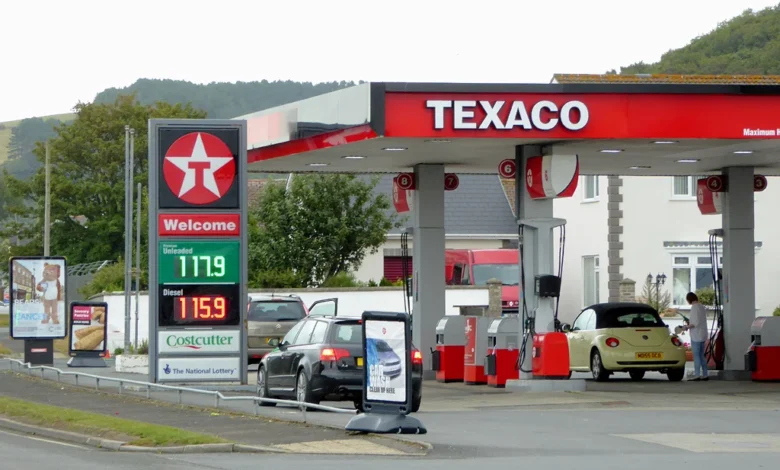
The core of the issue, according to Mahdavi and Ross, lies in the political difficulty of dismantling these subsidies once they are entrenched. Gasoline and diesel prices occupy a unique space in the public consciousness. Unlike electricity bills, which are often bundled with other utilities and paid monthly, fuel prices are displayed in large, prominent signage at every street corner. This daily visibility ensures that consumers are acutely aware of fluctuations, creating a "sticky" political environment where any move to remove a subsidy is perceived as an immediate attack on the household budget, frequently triggering civil unrest and protests.
A Chronology of Failed Reform
Historical data provides a sobering outlook on the durability of subsidy reforms. Between 2016 and 2023, the 21 nations that spent the most on fossil fuel subsidies attempted roughly 130 separate reform initiatives. The results were overwhelming: approximately 70% of these reforms collapsed within a single year of implementation. Looking at a three-year horizon, more than 90% of those efforts had failed, with governments either reverting to old subsidy structures or failing to maintain the transition to market-based pricing.
Michael Ross, in correspondence regarding these findings, noted that instances of successful, long-term subsidy removal are exceedingly rare. Mexico serves as a notable exception, having successfully navigated a complex and politically fraught process to phase out subsidies around 2017. However, such success stories are the exception rather than the rule. The persistence of these subsidies suggests that once a government commits to subsidizing consumption, it enters a cycle of dependency that is notoriously difficult to break without significant political capital and social buy-in.
The Economic and Environmental Rationale for Reform
The opposition to blanket fuel subsidies is rooted in both fiscal responsibility and environmental imperative. Jonas Kuehl, an energy researcher at the International Institute for Sustainable Development, emphasizes that while protecting vulnerable populations from sudden price shocks is a legitimate social policy goal, the current "blanket" approach is fundamentally inefficient.
"Blanket fuel subsidies—such as price caps, fuel tax cuts and fixed pump prices—are among the least effective ways for governments to spend public money," Kuehl stated. "They disproportionately benefit businesses and individuals who consume the most fuel, which is rarely the poorest segment of the population. Furthermore, they weaken the price signals necessary to encourage energy conservation or the transition to cleaner alternatives."

From an environmental perspective, these subsidies act as a direct disincentive for the adoption of renewable energy technologies. By keeping fossil fuels artificially cheap, governments inadvertently make electric vehicles (EVs), heat pumps, and renewable energy infrastructure appear less economically competitive than they otherwise would be. This creates a feedback loop: the subsidy suppresses the market for renewables, which keeps the country tethered to fossil fuel imports, which then necessitates further subsidies when global prices spike.
Global Shifts and Emerging Alternatives
Despite the prevalence of subsidies, there is a growing movement among some nations to pursue more sophisticated energy management strategies. Countries like Ethiopia, Norway, and Uruguay are frequently cited as leaders in the aggressive transition away from fossil fuel reliance. These nations have focused on systemic changes rather than temporary price interventions, prioritizing the build-out of wind, solar, and hydroelectric infrastructure, alongside the electrification of transport networks.
In place of blanket price cuts, experts are advocating for targeted, time-limited support for the most vulnerable households, or for structural changes that reduce the necessity of fuel consumption altogether. Indonesia, for instance, has experimented with policies like "work-from-home Fridays" for civil servants to reduce commuting demand. Similarly, the Netherlands has introduced monthly off-peak rail passes designed to shift commuter reliance from personal automobiles to mass transit. These alternatives address the underlying demand for mobility without locking the state into long-term fiscal commitments that undermine climate goals.
The Broader Implications for Global Energy Policy
The implications of this cycle are far-reaching. As the global community strives to meet the targets set by the Paris Agreement, the persistence of fossil fuel subsidies remains one of the largest hurdles to decarbonization. If governments continue to prioritize the short-term goal of price stability over the long-term necessity of energy transition, the resulting fiscal strain will only increase as global energy markets remain volatile.
There is also a growing consensus that the "subsidy trap" is inherently regressive. Wealthier households, who typically own more vehicles and have higher energy consumption patterns, receive a larger share of the total financial benefit from fuel price caps than those in the lowest income brackets. This paradox—where public funds are used to subsidize the lifestyles of the affluent under the guise of protecting the poor—is increasingly drawing criticism from international economic observers.
Policy Recommendations and Path Forward
To break this cycle, energy policy experts suggest a shift in strategy that centers on transparency and structural support:
- Targeted Social Safety Nets: Governments should replace universal price caps with direct cash transfers to low-income households, which protect the poor from inflation without distorting the price of fuel for the entire economy.
- Infrastructure Investment: Public funds currently allocated to subsidies should be redirected toward the mass adoption of electric vehicles, the expansion of public transit, and the rapid deployment of renewable energy sources.
- Communication and Transparency: Leaders must communicate the costs of subsidies clearly to the public, framing the transition away from fossil fuels not as a loss of a benefit, but as a necessary shift toward a more stable, sustainable, and independent energy future.
- Demand-Side Management: Policies that reduce the overall need for fuel—such as urban planning that favors walkability, remote work incentives, and efficiency standards—should be prioritized over price-based interventions.
The editorial in Science serves as a stark reminder that energy policy is as much about political psychology as it is about economics. As long as fuel prices remain the primary metric of success for a government’s energy performance, the temptation to subsidize will persist. However, as the world moves deeper into the 21st century, the environmental and economic costs of this inertia are becoming impossible to ignore. The transition to a sustainable energy future will require not just new technology, but a fundamental redesign of the social contract between governments and their citizens regarding how energy is valued, priced, and consumed. Moving forward, the success of global climate goals may well depend on the ability of policymakers to resist the short-term political allure of the subsidy, choosing instead to invest in the structural resilience of their national energy grids.
Related posts: