The Ultimate Guide to Maximizing Your American Airlines AAdvantage Miles and Loyalty Points in 2026


The American Airlines AAdvantage loyalty program remains one of the most prominent frequent flyer currencies in commercial aviation, prized by travelers for its extensive global partner network, lucrative flight redemption sweet spots, and customer-friendly award cancellation policies. For frequent travelers who rely heavily on these miles for luxury cabins and international getaways, maintaining a steady and robust inflow of points is essential. Understanding the mechanics of how these miles are generated—ranging from core flight operations and co-branded credit cards to everyday lifestyle spending—is critical for anyone looking to extract maximum value from the program. Navigating this ecosystem requires a firm grasp of the distinction between redeemable miles and Loyalty Points, as well as the operational rules governing partner airlines, elite status tiers, and recent policy shifts implemented by the carrier.
The fundamental architecture of the AAdvantage program rests on a crucial distinction between base miles and bonus miles. While both categories hold identical value when it comes to redeeming free flights, upgrades, or experiential awards, they function entirely differently when a traveler is pursuing elite status. Base miles are the primary driver of American Airlines Loyalty Points, which serve as the sole currency for climbing the elite tiers—from Gold up to Executive Platinum—and unlocking milestone rewards. Bonus miles, often distributed through specific promotional offers, credit card spending category bonuses, or sign-up incentives, provide extra redeemable currency but typically do not contribute toward elite status qualification. Recognizing this divergence is vital for corporate travelers and frequent flyers whose primary objective is securing upgrade priority, lounge access, and fee waivers.
Earning miles through actual flight operations forms the bedrock of the loyalty program, though the accumulation structure has grown increasingly nuanced due to the interplay between marketing and operating carriers. When booking paid travel on American Airlines or its Oneworld alliance partners, passengers must input their AAdvantage account number at the time of reservation to ensure proper crediting. However, the calculation of earned miles depends entirely on which airline markets the ticket—meaning the carrier whose flight code appears on the ticket stub—rather than the airline physically operating the aircraft.

For flights marketed directly by American Airlines, non-elite members earn 5 base miles per dollar spent on the ticket’s base fare, strictly excluding government-imposed taxes and airport fees. This revenue-based earning structure scales upward significantly for members who hold elite status. AAdvantage Gold members receive a 40% mileage bonus, netting 7 base miles per dollar. Platinum members earn a 60% bonus at 8 miles per dollar, Platinum Pro members receive an 80% bonus at 9 miles per dollar, and Executive Platinum members enjoy a 120% bonus, yielding 11 base miles per dollar spent. For example, a $1,000 ticket before taxes yields 5,000 base miles for a general member, but scales up to 11,000 base miles for an Executive Platinum tier holder. This same revenue-based calculation applies to paid cabin upgrades purchased directly through the carrier, and members can further accelerate their earnings by purchasing mileage multipliers prior to departure.
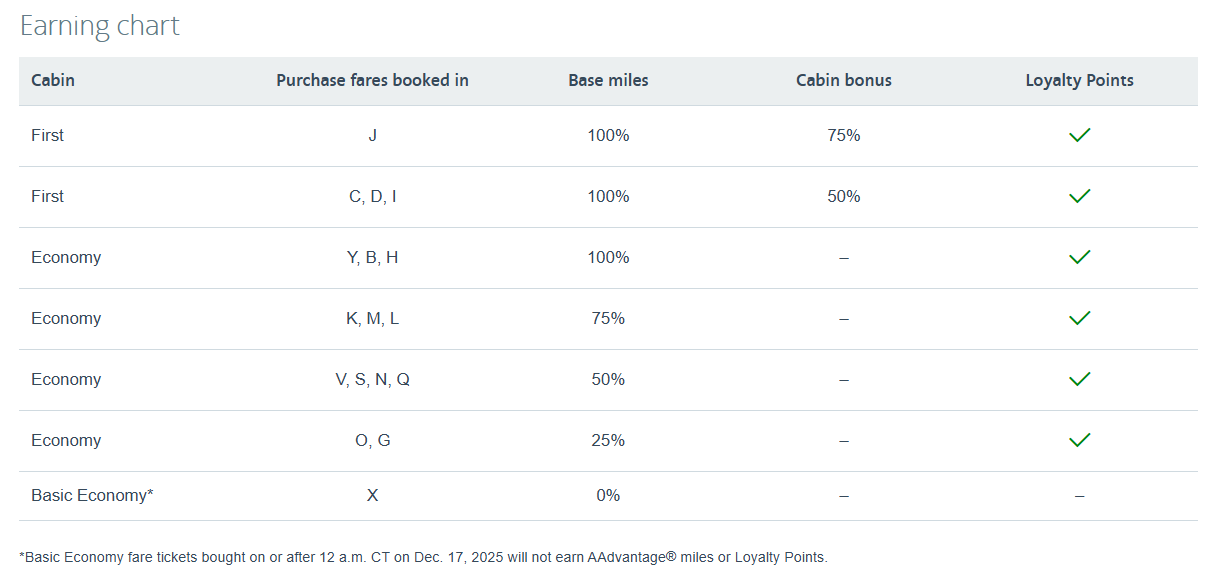
A significant policy update affecting flight-based accrual involves basic economy tickets. Under rules designed to curb low-fare discounting and incentivize higher-tier bookings, basic economy fares purchased on or after December 17, 2025, no longer earn any AAdvantage miles or Loyalty Points. Consequently, budget-conscious travelers must weigh the immediate savings of a basic economy ticket against the long-term value of forfeited miles and elite-qualifying status credits.
The earnings landscape shifts when dealing with partner-marketed flights. American Airlines maintains close commercial joint ventures and bilateral partnerships with a select group of carriers—namely Aer Lingus, British Airways, Fiji Airways, Iberia, JetSmart, and Oman Air. On flights marketed by these specific partner airlines, passengers earn AAdvantage miles based on the total ticket price, mirroring the revenue-based model used for American-marketed flights, provided the ticket is an eligible published fare booked in an approved booking code.
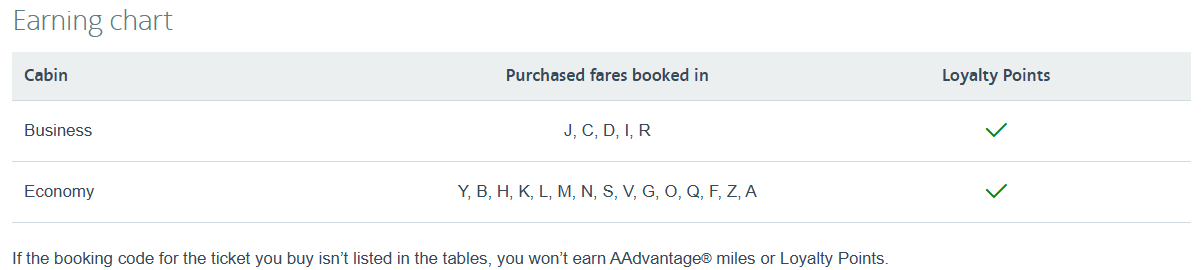
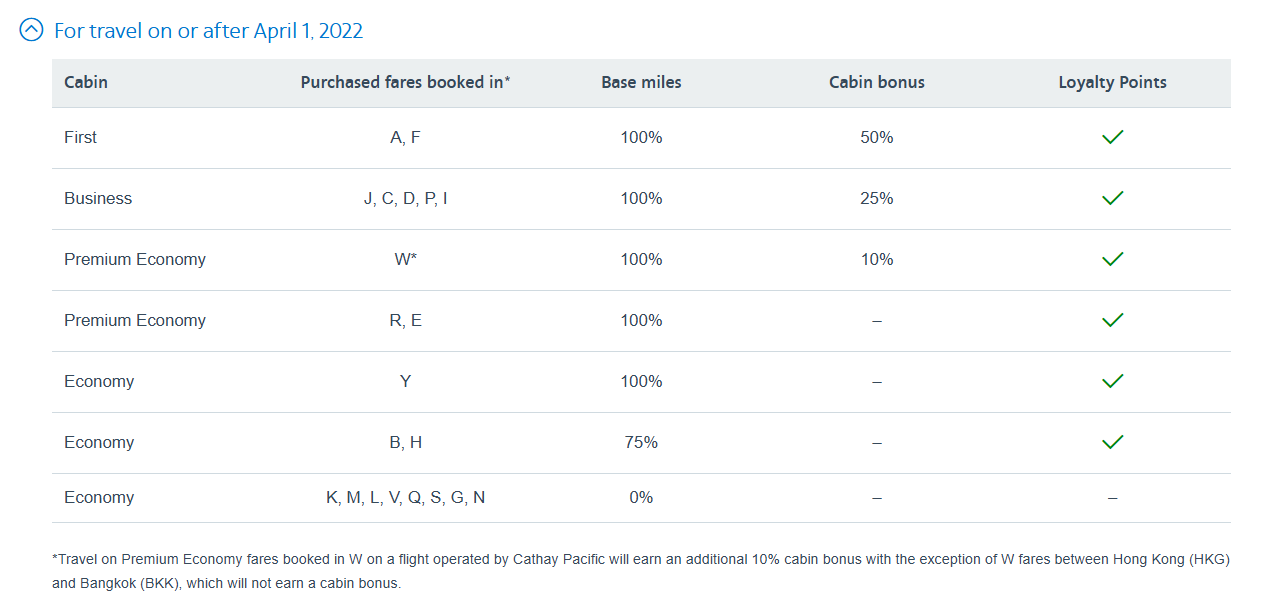
Conversely, for flights marketed by the remainder of American’s extensive global partner network—including Alaska Airlines, Cathay Pacific, China Southern Airlines, Etihad Airways, Finnair, Gol Airlines, Japan Airlines, Malaysia Airlines, Qantas, Qatar Airways, Royal Air Maroc, Royal Jordanian, and SriLankan Airlines—miles are calculated using a distance- and fare-class-based model. Under this system, travelers earn a percentage of the actual physical distance flown, determined by the specific booking class code printed on their ticket. Each partner airline maintains a distinct earning chart published by American Airlines. If a passenger purchases a deeply discounted promotional fare code that is omitted from a partner’s official earning chart, zero miles will post to their AAdvantage account. Travelers are routinely advised to review the fine print on partner-specific accrual pages before finalizing bookings to avoid unexpected gaps in their mileage accumulation.
Beyond traditional flying, co-branded credit cards issued by Citibank represent one of the most prolific channels for generating massive balances of AAdvantage miles. U.S. consumers can choose from a robust suite of personal and business credit cards tailored to different spending habits and travel frequencies. Premium offerings like the Citi / AAdvantage Executive World Legend Mastercard come with high annual fees—such as $695—but offset the cost by offering comprehensive airport lounge access, accelerated Loyalty Point accelerators, and substantial introductory welcome bonuses that frequently exceed 100,000 miles following meeting specific spending thresholds within the initial months of account opening. Mid-tier cards, such as the Citi / AAdvantage Platinum Select World Elite Mastercard, offer perks like free checked bags and priority boarding for a modest annual fee that is often waived for the first year, while entry-level options like the AAdvantage MileUp Card cater to consumers seeking to avoid annual fees entirely while earning modest returns on everyday supermarket and transit purchases.
In addition to co-branded airline cards, consumers holding select cards within the Citi ThankYou Rewards ecosystem enjoy enhanced flexibility. Points earned on premium ThankYou cards—such as the Citi Strata Elite Card and the Citi Strata Premier Card—can be transferred directly to the American Airlines AAdvantage program at a favorable 1:1 ratio. However, cardholders utilizing no-annual-fee ThankYou products or cash-back cards like the Citi Double Cash Card face a reduced transfer ratio of 1:0.7, making strategic credit card selection critical for maximizing the transfer value of everyday spend.
For individuals who rarely fly or wish to supplement their travel accruals through everyday consumer behavior, the AAdvantage program provides numerous non-air earning channels. The AAdvantage Dining program allows members to link standard credit and debit cards to a profile and earn up to 5 base miles per dollar spent at thousands of participating restaurants, bars, and clubs nationwide, depending on email subscription status and annual dining frequency. Similarly, the AAdvantage eShopping online portal serves as a digital gateway where consumers can earn bonus miles per dollar spent by clicking through to major online retailers, hotel booking engines, and retail brands before completing standard purchases. Cardholders with eligible Mastercard products can also register for SimplyMiles, a platform that pairs digital card-linked offers with targeted bonus mileage opportunities for both online and brick-and-mortar retail transactions.
Hotel accommodations offer another lucrative avenue for mileage generation, though travelers must navigate trade-offs regarding traditional loyalty benefits. Through the AAdvantage Hotels platform, members can book third-party lodging reservations and earn up to 15,000 base miles per reservation. While these bookings inject substantial mileage into an account, they typically do not earn hotel brand loyalty points, nor do they honor on-property elite status perks such as complimentary breakfast or room upgrades. Alternatively, travelers staying with major hotel chains like IHG One Rewards, Marriott Bonvoy, or World of Hyatt can elect to earn direct airline miles on qualifying stays instead of hotel points, or convert existing hotel point balances into AAdvantage miles. However, industry analysts consistently note that point-conversion ratios from hotel programs to airline currencies rarely yield optimal financial value, making direct cash or credit card accumulation a more prudent strategy for most consumers.
Car rental partnerships round out the travel sector, with major rental agencies providing fixed mileage bonuses per rental day or per completed rental agreement when members attach their AAdvantage numbers at the rental counter. Furthermore, American Airlines Vacations packages allow members to bundle flights, hotels, and car rentals, earning 1 base mile per dollar spent for general members and 5 base miles per dollar for elite status holders on the total package price, excluding taxes and fees. When multiple guests share a vacation package, base miles are split evenly among all travelers, regardless of whether every individual maintains an active AAdvantage account.
The broader implications of these diverse earning pathways highlight a strategic shift in modern frequent flyer programs. Airlines have successfully transformed loyalty currencies into sophisticated financial assets detached from the sole act of flying. For the consumer, navigating the AAdvantage ecosystem requires careful planning: balancing revenue-based flight tickets against basic economy restrictions, leveraging co-branded and transferable credit cards, and capitalizing on lifestyle portals for dining and retail. By prioritizing base-mile-generating activities when status is the objective and focusing on high-bonus opportunities when accumulating redeemable currency, travelers can maintain a healthy balance ready to capture high-value award seats across American Airlines and its global alliance partners.
Related posts: