The Living History of the East Broad Top Railroad: A Deep Dive into Pennsylvania’s Preserved Narrow-Gauge Heritage and Its Seasonal Fall Excursions

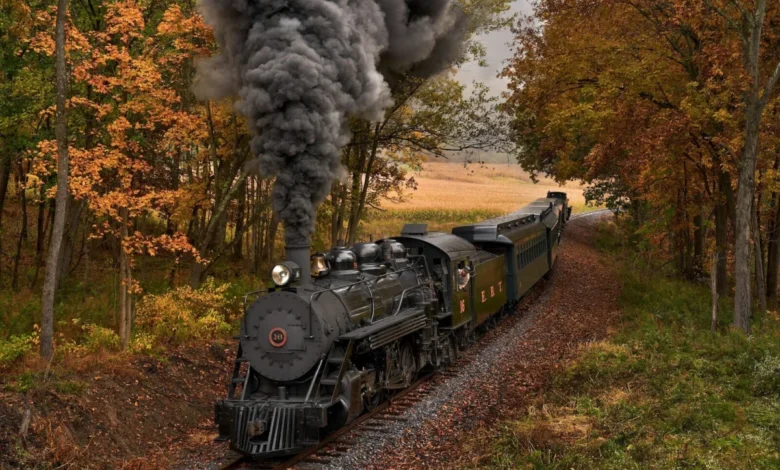
The East Broad Top Railroad, a National Historic Landmark nestled in the rolling hills of Central Pennsylvania, stands today as a peerless example of 19th-century industrial ingenuity and 21st-century preservation success. Originally chartered in the mid-19th century, this narrow-gauge line has transitioned from a vital artery of the American coal industry to one of the most significant heritage railways in the world. As the only surviving three-foot-gauge common carrier railroad east of the Rocky Mountains, the East Broad Top (EBT) offers more than just a scenic ride; it provides a visceral connection to the Gilded Age of American industry. This autumn, the railroad continues its tradition of seasonal excursions, drawing thousands of visitors to the Aughwick Valley to witness the intersection of historic steam power and the vibrant foliage of the Appalachian highlands.
A Legacy of Industrial Preservation
Construction on the East Broad Top began in earnest in 1872, designed to transport semi-bituminous coal from the Broad Top Mountain coal fields to the main lines of the Pennsylvania Railroad at Mount Union. For over eight decades, the narrow-gauge line served as the lifeblood of the region, hauling not only coal but also timber, iron ore, and passengers. However, as the American energy landscape shifted away from coal in the mid-20th century, the railroad’s primary purpose evaporated. Freight service officially ceased in 1956, and for many similar lines across the United States, this would have been the final chapter—a prelude to the scrapyard.
The EBT’s survival is often described as a near-miracle of preservation. When operations ceased in 1956, the Kovalchick family purchased the railroad with the initial intent of selling it for scrap. However, Nick Kovalchick chose to leave the infrastructure intact, maintaining the locomotives, rolling stock, and the sprawling machine shops in Rockhill Furnace. This decision created what the Smithsonian Institution has since characterized as one of the most remarkably intact 19th-century industrial sites in the United States. In 1964, the site’s historical value was formally recognized when it was designated a National Historic Landmark. After several decades of intermittent tourist operations and a period of dormancy, the East Broad Top Foundation—a non-profit supported by rail enthusiasts and philanthropists—acquired the railroad in 2020, leading to a triumphant return to steam-powered operations in 2021.
The Engineering of the Narrow-Gauge System
The "narrow-gauge" designation is central to the EBT’s identity. While standard American railroads utilize a gauge (the distance between the rails) of 4 feet, 8.5 inches, the EBT uses a 3-foot gauge. This narrower footprint allowed the railroad to navigate the tight curves and steep grades of the Pennsylvania mountains with lower construction and maintenance costs.
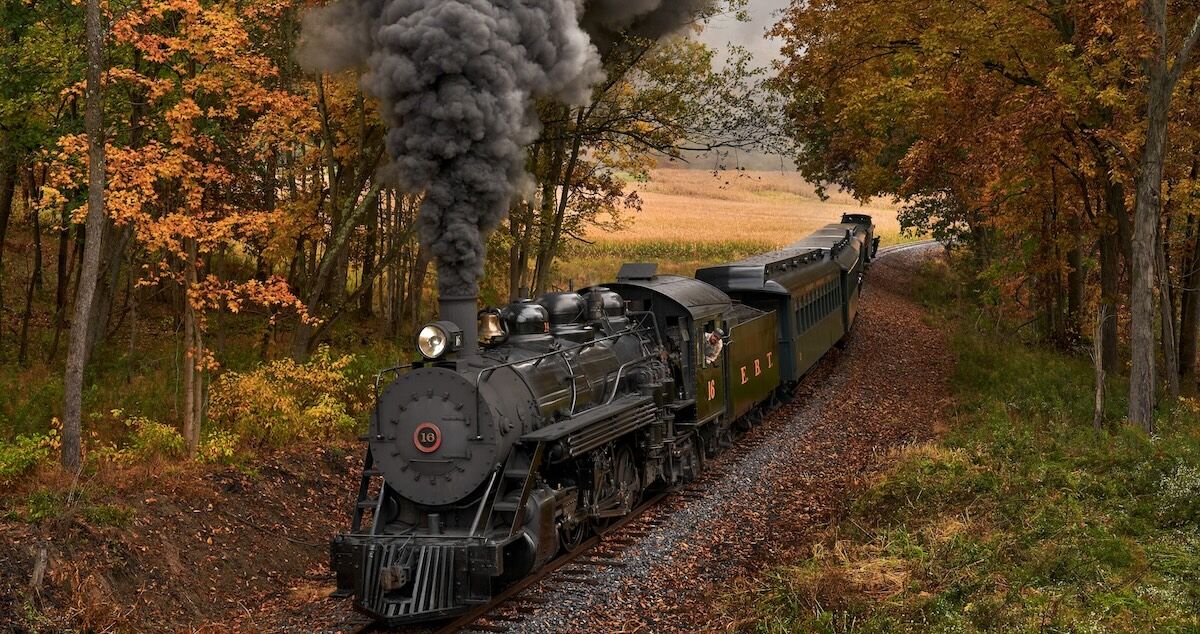
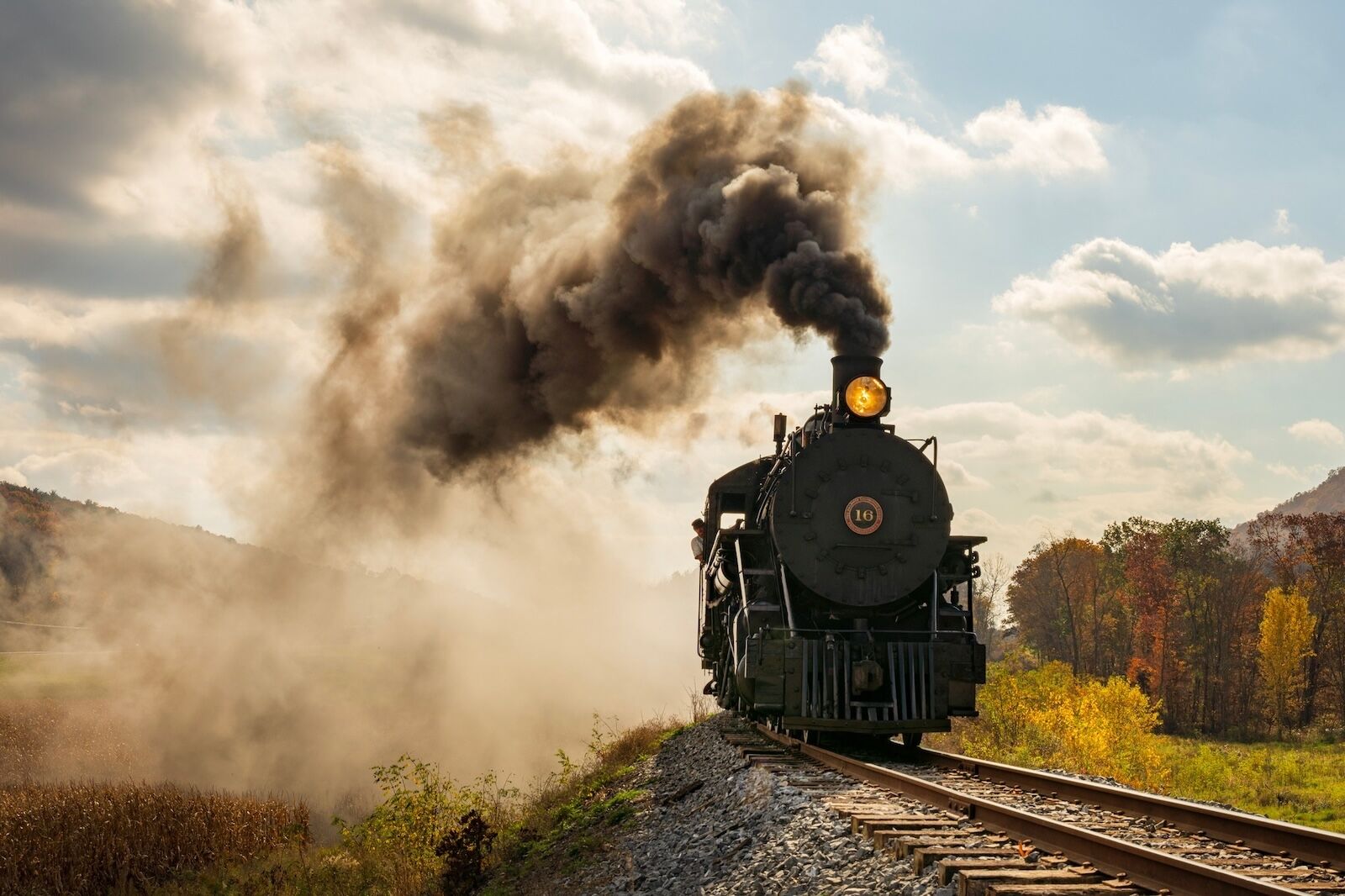
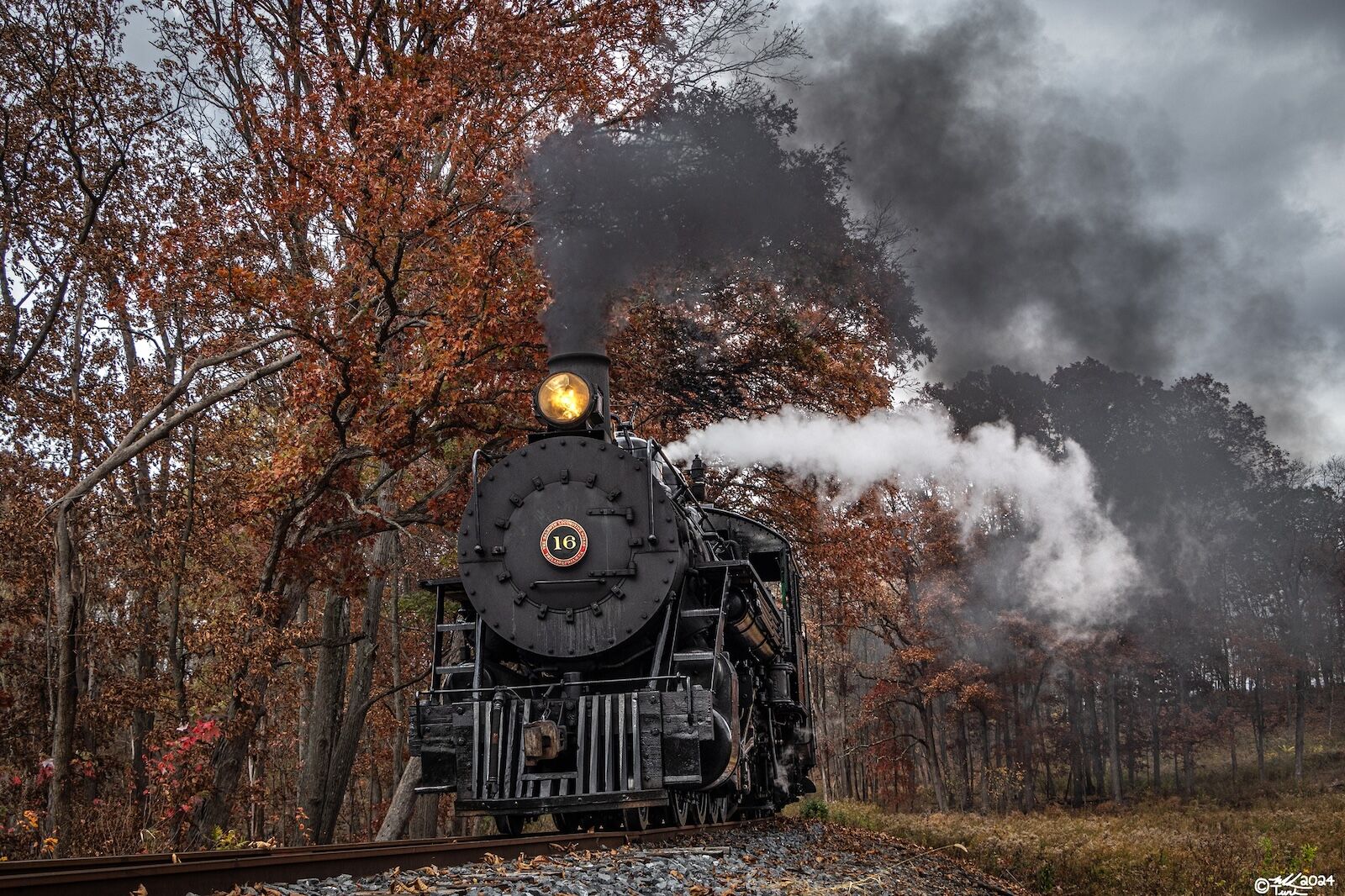
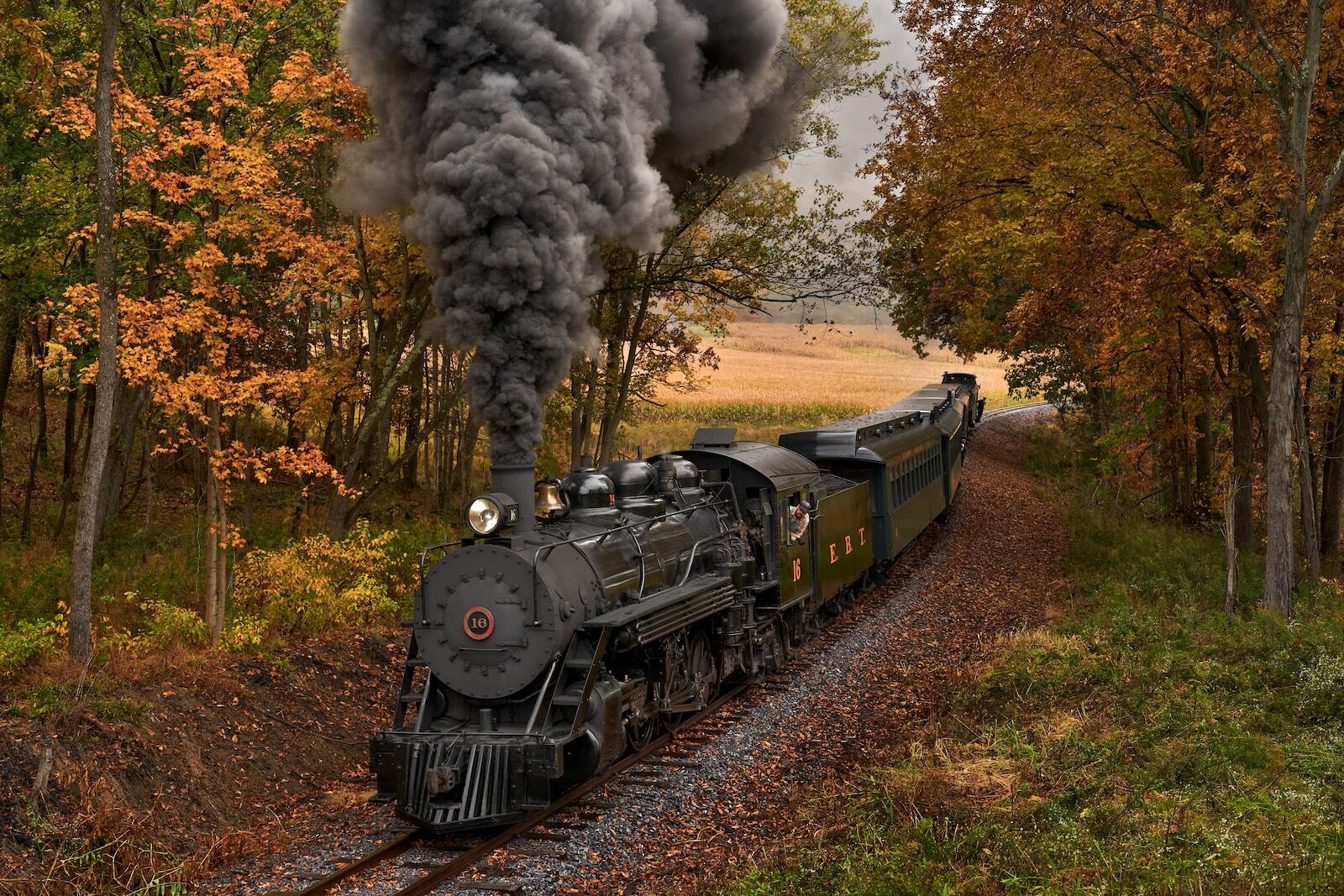
Today, the railroad is powered by a fleet of century-old, coal-fired steam locomotives. These massive machines are not mere replicas; they are the original engines that worked the line during its industrial peak. The restoration of these locomotives, particularly Engine No. 16, has been a centerpiece of the foundation’s efforts, requiring thousands of hours of specialized labor to ensure they meet modern safety standards while retaining their historical integrity.
Autumn Excursions and Scenic Routes
While the East Broad Top operates various events throughout the year, including the "Winter Spectacular" in February and holiday-themed trains in December, the autumn season is widely considered the peak of the visitor experience. Through October 31, the railroad operates a robust schedule with departures from the historic Orbisonia Station every Friday, Saturday, and Sunday.
The signature experience during this season is the Northbound Colgate Grove Excursion. This nine-mile, one-hour round trip traverses the picturesque Aughwick Valley, offering panoramic views of Central Pennsylvania’s farmland and dense forests. At the halfway point, Colgate Grove, the railroad provides a dedicated space for riders to disembark and immerse themselves in the fall atmosphere. Passengers can opt for a 1.5-hour picnic layover, allowing them to enjoy the crisp autumn air and changing colors before boarding a subsequent train for the return journey to Rockhill Furnace.
For those seeking a more comprehensive exploration of the railroad’s restored trackage, the Southbound Pogue Excursion offers a different perspective. Heading south from Orbisonia Station, this route takes passengers over a stretch of track that remained silent for nearly 70 years before its recent restoration. This excursion reverses near the community of Pogue and is typically offered on select dates. For the 2026 season, the railroad has scheduled these specialized runs for September 12 and October 3. To encourage a full exploration of the line, the EBT offers combo packages that provide a $10 discount for those booking both the Northbound and Southbound routes.
Onboard Accommodations and Service Classes
To cater to diverse visitor preferences, the East Broad Top offers four distinct classes of service, each providing a different sensory experience of the journey:
- Enclosed Passenger Cars: These traditional coaches feature padded seating and windows that can be opened, offering a comfortable environment that protects passengers from the elements while still allowing for fresh air.
- Open-Air Cars: Designed for maximum visibility, these cars feature outward-facing bench seats and a sunshade, making them a favorite for photographers looking to capture the autumn foliage.
- The Historic Caboose: For a more intimate and authentic experience, passengers can ride in the caboose, the traditional "home on wheels" for freight crews.
- The Cinder Car: Perhaps the most unique offering, the cinder car is a roofless, open-sided car. It is designed for the "true" rail enthusiast who doesn’t mind a light dusting of coal soot—a byproduct of the steam engine’s operation. The railroad recommends that passengers in this car wear eye protection to ensure comfort.
Pricing for the 2026 season remains accessible, with coach, open-air, and cinder car tickets priced at $25 for adults and $15 for children (ages 2-12). The caboose experience is offered at $30 for adults and $20 for children. In a commitment to inclusivity, the railroad ensures that every train includes at least one ADA-accessible car.
The Industrial Heart: Guided Tours and Machine Shops
Beyond the train rides, the East Broad Top serves as a massive outdoor museum. Visitors are encouraged to explore the Rockhill Furnace depot complex, which includes the original roundhouse and the largest belt-driven machine shop still in existence in the United States.
The machine shop is a marvel of Victorian-era engineering, where a single stationary steam engine once powered dozens of lathes, drills, and saws via a complex system of overhead shafts and leather belts. Guided tours of these facilities provide insight into how the railroad remained self-sufficient, manufacturing its own parts and maintaining its fleet in an era before modern supply chains. Most visitors are advised to budget approximately three hours to fully experience both a train excursion and a tour of the historic shops.
Family Engagement: The Pumpkin Patch Express
Recognizing the importance of multi-generational appeal, the EBT hosts the Pumpkin Patch Express during the latter half of October. Scheduled for the weekends of October 10-11, 17-18, 24-25, and Halloween day in 2026, this event transforms the Colgate Grove stop into a festival ground.
The 2.5-hour experience includes a 90-minute layover at the grove, where families can participate in hay bale wagon rides, mini-golf, and a bounce house. Children are encouraged to participate in costume contests and pumpkin decorating, with each child’s ticket including a pumpkin to take home. This event represents the railroad’s broader strategy of blending historical education with community-focused recreation.
A Chronology of the East Broad Top Railroad
- 1872: Construction begins on the narrow-gauge line to tap into the Broad Top coal fields.
- 1873: The first segment of the line opens for service.
- 1911-1920: The railroad reaches its peak industrial capacity, acquiring the heavy "Mikado" locomotives still in use today.
- 1956: Commercial operations cease due to the decline of the coal industry; the line is sold to the Kovalchick family.
- 1960: Tourist operations begin as part of the bicentennial celebration of the local twin boroughs (Orbisonia and Rockhill Furnace).
- 1964: The EBT is designated a National Historic Landmark.
- 2011: The railroad ceases operations due to financial and maintenance challenges.
- 2020: The non-profit East Broad Top Foundation is formed and acquires the railroad, shops, and rolling stock.
- 2021: The railroad officially reopens to the public, marking a new era of preservation and tourism.
Broader Implications and Economic Impact
The revitalization of the East Broad Top Railroad has significant implications for regional economic development in Huntingdon County. By transforming a dormant industrial relic into a premier tourist destination, the EBT Foundation has created a catalyst for local businesses, including hospitality, dining, and retail.
Furthermore, the EBT serves as a vital educational resource. In an age of digital transformation, the railroad offers a tangible look at the mechanical world of the 19th century. The preservation of the "belt-driven" technology in the machine shops provides engineers and historians with a rare look at the precursors to modern manufacturing.
As the 2026 season approaches, the East Broad Top stands as a testament to the power of community-led preservation. By maintaining the authenticity of the steam era while adapting to the needs of modern tourism, the railroad ensures that the whistle of a coal-fired locomotive will continue to echo through the Aughwick Valley for generations to come. Visitors are encouraged to book reservations in advance through the railroad’s online portal, as the popularity of the fall excursions often leads to sold-out departures. For those who seek the intersection of natural beauty and industrial history, the East Broad Top remains an essential American destination.
Related posts: