The Chicago-style hot dog stands as an enduring culinary icon, deeply embedded in the cultural fabric of the American Midwest. More than a simple street-corner snack, this hyper-specific gastronomic creation reflects a century of immigrant history, industrial development, and regional pride. While the global culinary landscape frequently evolves through modern fusion and avant-garde techniques, the Chicago hot dog remains remarkably steadfast in its composition, preparation, and strict adherence to traditional formulas.
Anatomy of a Chicago Dog

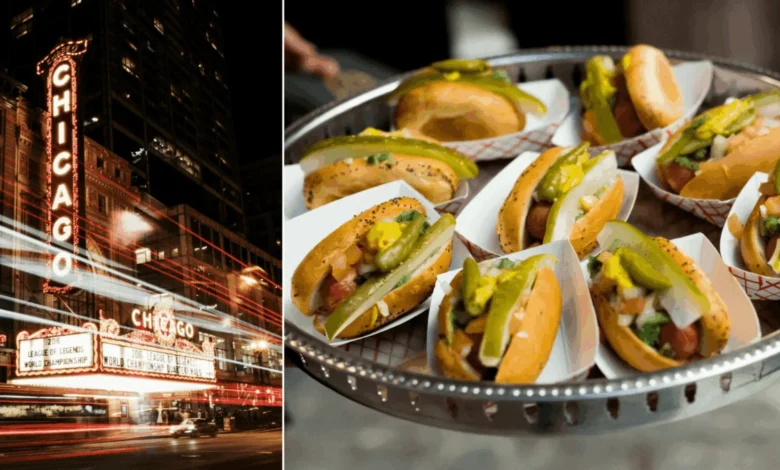
To understand the reverence surrounding the Chicago hot dog, one must first examine its precise architecture. At its foundation is an all-beef frankfurter featuring a natural casing, which delivers a distinct, audible snap upon the initial bite. This sausage rests securely inside a steamed, fluffy poppyseed bun.
The dressing protocol is famously non-negotiable. According to local culinary convention, a traditional Chicago dog is "dragged through the garden," a phrase indicating a topping arrangement of yellow mustard, bright chopped white onions, vibrant neon-green sweet pickle relish, fresh tomato wedges or slices, a crisp dill pickle spear, fiery pickled sport peppers, and a generous dusting of celery salt.
Crucially, the culinary code of Chicago prohibits the application of ketchup. Local purists maintain that the sweetness and acidity of tomato ketchup overpower the delicate balance of the other botanical and savory elements. Violating this unwritten rule marks an outsider instantly, separating casual tourists from those initiated into the deep traditions of the city’s street-food culture.

Historical Context and Evolution
The genesis of the Chicago hot dog is inextricably linked to the waves of immigration that shaped the city during the late 19th and early 20th centuries. German and Austrian Jewish immigrants introduced the frankfurter to the region, but it was during the Great Depression that the modern Chicago dog truly took shape. Street vendors operating pushcarts in the working-class Maxwell Street Market began offering heavily loaded, inexpensive sausages to feed factory workers and unemployed laborers. By piling on affordable, nutrient-dense vegetables—such as onions, pickles, and tomatoes—vendors transformed a simple meat link into a complete, filling meal that could be purchased for mere nickels.
Over the decades, the infrastructure supporting this culinary tradition matured. The establishment of Vienna Beef in 1893, founded by Austrian-Hungarian immigrants Emil Reichel and Sam Ladany during the World’s Columbian Exposition, provided a standardized, high-quality kosher-style beef frank that would eventually become the gold standard for roughly 80 percent of the city’s independent hot dog stands.

Chronology of Iconic Establishments
Chicago’s hot dog landscape is populated by generational institutions, each contributing a unique chapter to the city’s gastronomic narrative.
In 1939, Macedonian immigrant Jimmy Stefanovic took over his relatives’ stand, establishing what is now known as Jim’s Original in University Village. Stefanovic is widely credited with popularizing the Maxwell Street Polish sausage—a garlicky, smoked beef and pork link served with grilled onions and mustard on a plain bun.

Nearly a decade later, in 1948, Maurie and Flaurie Berman revolutionized roadside dining by launching the Superdawg Drive-In in Norwood Park East. Featuring iconic 12-foot hot dog figures on the roof, Superdawg introduced a customized, slightly larger all-beef link accompanied by piccalilli and a pickled green tomato, setting a precedent for architectural and culinary branding.
The post-war economic boom saw further expansion. In 1963, Dick Portillo invested $1,100 to open a small trailer named "The Dog House" in suburban Villa Park, which eventually evolved into Portillo’s, a massive regional empire credited with introducing millions of visitors to classic Chicago street food alongside innovative offerings like the chocolate cake shake.
Entering the 1980s and 1990s, venues like The Wiener’s Circle in Lincoln Park combined traditional char-dogs with sharp-witted service, turning late-night dining into a form of interactive theater. Meanwhile, contemporary chefs in the 21st century have begun elevating the genre, proving that the classic frankfurter can serve as a canvas for high-end culinary experimentation.

Comprehensive Directory of Chicago’s Premier Hot Dog Destinations
For residents and culinary travelers seeking the finest iterations of the craft, the following establishments represent the pinnacle of Chicago hot dog culture, categorized by their distinct styles and neighborhood roots.
Fixin’ Franks (Multiple Locations)
Tucked strategically near the exits of select home-improvement warehouse stores across the city, Fixin’ Franks offers a masterclass in local convenience. This family-owned operation serves a tightly curated, locally sourced menu featuring classic Chicago dogs, Polish sausages, Maxwell Street variations, and elotes. For adventurous diners, the stand offers J.P. Graziano hot giardiniera as an optional topping, adding a signature Chicago heat to the traditional formula.

Byron’s Hot Dogs (Lakeview and Ravenswood)
Operating for over half a century, Byron’s offers a distinct departure from the standard "dragged through the garden" presentation. Having famously supplied hot dogs to the White House during the Obama administration, this 51-year-old institution constructs its standard dog with mustard, relish, onions, tomatoes, pickle spears, and celery salt, while incorporating lettuce, green peppers, and cucumber slices. The resulting "salad approach" delivers an exceptional level of crunch and perceived freshness.
Jim’s Original (University Village and Avondale)
As a cornerstone of Chicago’s late-night and market-street heritage, Jim’s Original remains the definitive authority on the Maxwell Street Polish sausage. Operating continuously from early morning into the early hours of the next day, the open-air stand serves its garlicky smoked links and bone-in pork chop sandwiches smothered in grilled onions and yellow mustard. Patrons gather around outdoor metal counters to consume their meals standing up, participating in a fast-paced tradition that feels perpetually celebratory.
Portillo’s (Multiple Locations)
Serving as an ideal introduction for first-time visitors, Portillo’s maintains rigorous consistency across its sprawling empire. The chain’s steamed Chicago-style hot dogs feature snappy casings and perfectly proportioned toppings. Beyond the franks, the menu is celebrated for its Italian beef sandwiches and the wildly decadent chocolate cake shake, which blends an entire slice of chocolate cake directly into a rich milkshake base.

Red Hot Ranch (Lakeview, Logan Square, Bridgeport, and Skokie)
Operating under the traditional Depression-style methodology—sometimes referred to by locals at its Bridgeport origin as 35th Street Red Hots—Red Hot Ranch strips the hot dog down to its essentials: mustard, onion, relish, and sport peppers, crowned with a generous mound of fresh-cut French fries directly in the paper wrapping. Priced accessibly, these stands also produce what many local critics consider the finest double smashburgers within city limits.
Superdawg Drive-In (Norwood Park East and Wheeling)
Recognizable by the colossal, neon-lit fiberglass hot dog mascots standing watch over the roof, Superdawg remains an operational landmark of carhop culture. The proprietary all-beef frank is notably plumper than industry standards and is served in a custom cardboard box alongside crinkle-cut fries, a pickled green tomato, and piccalilli, preserving a distinct mid-century dining format.
The Duck Inn (Bridgeport)
Demonstrating the versatility of the form, chef Kevin Hickey reimagines the traditional street dog through a fine-dining lens. The Duck Inn Dog utilizes a proprietary sausage crafted from beef, pork, and rich duck fat, nestled inside a toasted brioche poppyseed bun. Dressed with a unified "supercondiment" blending mustard, relish, tomato, and onion, and finished with dill pickles and pickled serranos, this dish represents a sophisticated evolution of working-class comfort food.

The Wiener’s Circle (Lincoln Park)
Operating well past midnight, The Wiener’s Circle is internationally famous for two elements: its sharp-tongued, bantering staff, and its exceptional char-dogs. Unlike the majority of local stands that steam their franks, this Lincoln Park institution grills its sausages over an open flame, yielding a charred exterior and smoky flavor profile. Paired with an order of cheddar fries, it serves as a vital anchor of Chicago’s nocturnal food culture.
Vienna Beef Factory Store (Bridgeport)
For those wishing to trace the historical lineage of the city’s favorite meat link, the Vienna Beef Factory Store provides an immersive pilgrimage. Situated directly across the street from the production facility, the café serves textbook Chicago-style dogs on classic red stools. The adjacent retail shop offers visitors the opportunity to purchase everything from bulk packages of franks to branded merchandise, cementing the brand’s status as a cultural institution.
Wurst Behavior (Albany Park)
Helmed by chef Artur Wnorowski, this casual Polish-American establishment highlights Eastern European sausage-making traditions. In-house creations include pecan-smoked kielbasa dressed with caramelized onions, sport peppers, and hazy IPA mustard, alongside all-beef dogs served with sauerkraut, sour cream, and potato-and-cheese pierogies. The menu serves as a playful homage to the cross-cultural culinary synthesis that continues to drive Chicago’s vibrant street food scene.

Economic and Cultural Implications
The enduring popularity of the Chicago hot dog highlights a broader economic and cultural resilience within the city’s independent restaurant sector. Despite fluctuating supply chain costs and inflationary pressures, hot dog stands continue to function as vital economic anchors and community gathering spaces across diverse neighborhoods. They bridge generational divides, offering affordable access to high-calorie, culturally rich meals that reflect the immigrant history of the Midwest.
Furthermore, the strict adherence to traditional preparation methods acts as a form of cultural preservation. As urban centers experience rapid gentrification and homogenization, the neighborhood hot dog stand remains an egalitarian sanctuary where socioeconomic backgrounds dissolve in favor of a shared appreciation for a uniquely local culinary tradition. Whether purchased from a multi-generational drive-in, a high-end gastropub, or a bustling hardware store counter, the Chicago hot dog remains a testament to the city’s culinary identity—uncompromising, unpretentious, and proudly distinct.