Tirana’s Concrete Ambition: Edi Rama and the High-Stakes Architecture of a Nation in Turmoil

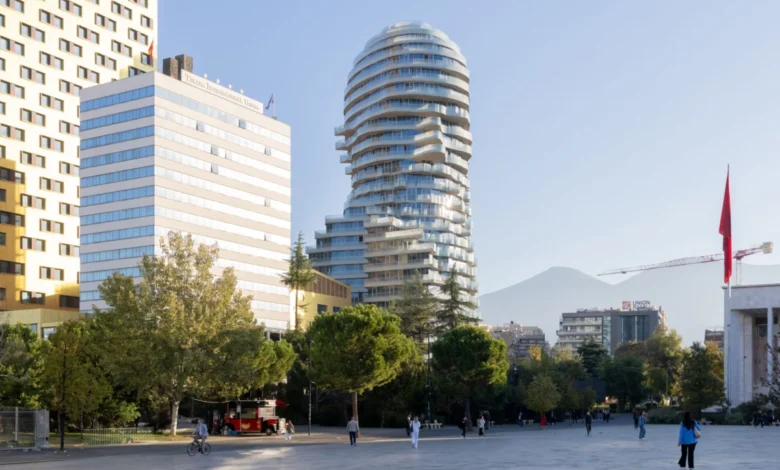
In the heart of Tirana, a city of roughly 600,000 residents, the skyline is undergoing a radical metamorphosis. Towering skyscrapers, avant-garde residential blocks, and bold urban interventions are rising at an unprecedented pace, transforming the Albanian capital into a testing ground for international architectural talent. At the center of this building boom stands Prime Minister Edi Rama, a former professional basketball player and working artist who has held power for 13 years. For Rama, architecture is not merely a matter of urban planning; he describes it as a form of "strong medicine" capable of healing or harming a society. However, as the construction cranes pivot above the city, the atmosphere on the ground is anything but serene. The nation is currently embroiled in a period of intense civil unrest, casting a long shadow over the Prime Minister’s aesthetic vision and raising critical questions about the intersection of state-led urban development, political accountability, and the role of global "starchitects" in a developing economy.

The Chronology of Conflict and Construction
The current tension in Albania is a convergence of long-standing political friction and recent flashpoints. Since his tenure began, first as Mayor of Tirana and later as Prime Minister, Rama has aggressively pursued an urban strategy that relies heavily on foreign design firms. By some accounts, the government has facilitated more than 50 international design competitions for high-profile projects. Of these, foreign firms have claimed the vast majority of commissions, leaving local practitioners to argue that they have been marginalized in their own country.

The friction reached a boiling point in May, when a planned gathering of international architects—the second of its kind hosted by the administration—coincided with mounting protests against the government. Demonstrators, weary of what they describe as corruption, lack of transparency, and the concentration of wealth, adopted the slogan "Starchitects go home!" The frustration was further amplified by reports of potential luxury developments involving international figures, including associates of the Trump family, on sensitive land. By October, these grievances spilled into the streets of Tirana. During a visit by an architectural journalist to document the new builds, the city was rocked by protests. The Boulevard of Martyrs of the Nation, usually a centerpiece of the capital, became a site of vandalism; paving stones were ripped from the ground and hurled at police, and public amenities, including a kiosk in Skanderbeg Square and portions of the iconic Tirana Pyramid, sustained damage.
The "Starchitect" Strategy: A Comparative Analysis

The current climate in Tirana bears a striking resemblance to the 2008 experiment in Ordos, Inner Mongolia, where a wealthy industrialist invited 100 young architects from around the world to design a desert city. In both cases, the projects served as a magnet for global talent, sparking a blend of professional optimism and intense local uncertainty. Rama’s supporters and the foreign architects engaged in the projects argue that this influx of high-level expertise is a necessary "leapfrog" strategy. They contend that by working alongside firms like MVRDV, Stefano Boeri, and 51N4E, local Albanian architects are receiving a de facto masterclass in modern construction, similar to the growth trajectory seen in China two decades ago.
Adelina Greca, who leads the National Territorial Planning Agency, suggests that this cooperation will eventually empower Albanian firms to compete on the global stage. From the perspective of practitioners like Johan Anrys of the Belgian firm 51N4E, the collaboration is mutually beneficial. Anrys notes that his own studio in Tirana employs 20 local architects, suggesting that the presence of foreign firms creates, rather than destroys, opportunities.

However, the opposition views the situation through a different lens. Gent Progni, a protest organizer, argues that the reliance on prestigious international names acts as a form of "architectural laundering." According to this view, the government uses the veneer of high-end design to legitimize projects that lack public consultation, environmental oversight, and economic transparency. The contention is that the focus on "showpiece" architecture distracts from systemic issues, such as the alleged use of construction projects for money laundering and the privatization of public assets.
The Economics of the Boom: Quality vs. Compromise

Beyond the political rhetoric, there are tangible concerns regarding the sustainability and viability of the construction boom. The architectural landscape of Tirana is now a patchwork of color and form: the vertical forest by Stefano Boeri, the Marriott by Marco Casamonti, and the MVRDV-designed condo shaped like a human head—a structure that has sparked intense debate over whether it is a monumental work of art or an architectural one-liner.
Prime Minister Rama himself admits that the reality of building in Albania is not always as pristine as the renderings. He has expressed frustration with developers who cut costs by switching materials mid-project—using cheap printed facades to simulate stone—or who replace foreign architects with local firms once the initial approval phase is secured. These compromises, he acknowledges, are often forced by the economic limitations of the local market. Furthermore, data suggests that the pace of development is uneven; of the more than 500 projects listed in the compendium The Albanian Files, only about 10 percent have reached completion. The presence of partially finished, empty, or stalled buildings serves as a visible reminder of the volatility inherent in this development model.

Governmental Response and Future Outlook
Despite the protests and the calls for his resignation, Prime Minister Rama remains resolute. Having secured the largest electoral mandate of his career, he maintains that his administration’s focus on transforming the physical face of Albania is a long-term benefit for the country. His commitment to this path is such that he has proposed the creation of a museum dedicated to the 60 foreign firms currently working in the country, envisioned as a "store of dreams, hopes and challenges."

The implications of this strategy are significant. If the administration succeeds, Tirana could become a regional hub of modern design and a model for how a post-communist state can reinvent itself through the built environment. If it fails, the capital risks being left with a legacy of hollow skyscrapers and a fractured social contract.
The protests have highlighted a growing demand for a different kind of progress—one characterized by accountability and the inclusion of local voices in the planning process. For the architectural community, the "Tirana experience" serves as a complex case study in the ethics of practice. Architects must weigh the opportunity to design in a rapidly changing environment against the risks of being used to bolster a political agenda that is increasingly contested.

As the dust settles on the streets of Tirana, the question remains whether architecture can truly be the "medicine" Rama believes it to be. For now, the city remains a site of immense physical transformation, where every new facade and every protest sign reflects a nation in the midst of a profound and painful identity crisis. The future of Tirana will likely be defined not just by the height of its towers, but by the ability of its leaders to reconcile their grand architectural visions with the urgent, fundamental needs of the people living in their shadow.