Tragic Anchor Failure Claims Lives of Two Colorado Mountain College Students on West Apostle Mountain

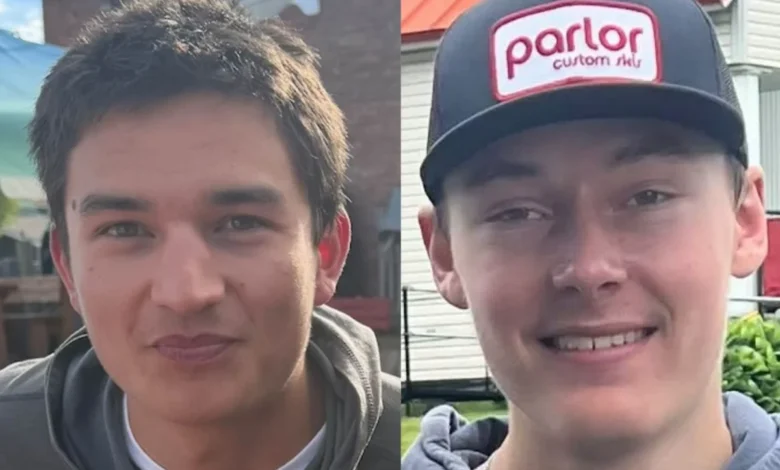
The mountaineering community and the staff at Colorado Mountain College are mourning the loss of 19-year-old Kaden Matsuda and 20-year-old Jackson Donlon, two promising students whose lives were cut short in a climbing accident in Colorado’s Sawatch Range. According to a joint report released on November 3, 2026, by the Chaffee County Sheriff’s Office and the local Coroner’s Office, the pair died following a catastrophic failure of a climbing anchor while descending West Apostle Mountain. The findings, which followed an exhaustive multi-agency search, have provided a definitive—if devastating—explanation for a tragedy that gripped the state in late October.
Chronology of the Expedition and Search
The sequence of events began on October 23, 2026, when Matsuda and Donlon departed from the Colorado Mountain College campus in Leadville. Both young men were experienced in high-altitude environments and were well-regarded by their peers for their technical proficiency. Their objective was a ascent of West Apostle Mountain, a challenging 13,597-foot peak known for its rugged terrain and technical requirements.
When the pair failed to return as scheduled, an intensive search and rescue operation was initiated. The environment proved exceptionally challenging; an early-season snowstorm had moved into the region, depositing up to two feet of snow across the higher elevations of the Sawatch Range. This accumulation not only obscured potential tracks but also increased the risk of secondary incidents, such as avalanches or slips, for the search teams on the ground.
For five days, personnel from various mountain rescue organizations and law enforcement agencies navigated the treacherous conditions. The operation was hampered by near-zero visibility and freezing temperatures. On October 28, search crews finally located the bodies of the two students in a snow-filled basin directly below the site of the fatal fall. Due to the extreme terrain and continued inclement weather, a helicopter recovery mission was required, which was successfully executed the following day.
Technical Analysis of the Accident
The investigative report into the incident focuses heavily on the technical aspects of the descent. Forensic analysis of the scene revealed that the climbers were in the process of rappelling from a high-altitude anchor point. At the time of the failure, Donlon was in the process of descending, while Matsuda was secured to the same anchor system via a personal tether.
The anchor setup was not a single point of failure; rather, it was a complex system that included multiple backups, specifically a piton—a specialized metal spike driven into the rock—and an additional secondary rock anchor. Despite the presence of these redundant systems, investigators concluded that the system suffered a total structural failure.
While the exact mechanical reason for the anchor’s failure remains under investigation, the official report explicitly ruled out human error or lack of preparation. Unlike many mountaineering accidents where investigators can identify missed steps, improper knot-tying, or poor equipment choice, the Chaffee County Sheriff’s Office noted that the setup adhered to standard safety protocols. The failure was categorized as an unpredictable mechanical collapse of the rock or hardware interface, a rare but inherent risk in the sport of technical climbing.
Preparedness and the Role of Environmental Factors
One of the primary questions raised by the public and media in the wake of the accident was the role of the severe weather that blanketed the region shortly after the students began their climb. The Sawatch Range is notorious for rapid, unpredictable weather shifts, and the two feet of snow that fell during the search window initially prompted speculation that the storm might have contributed to the accident.
However, the joint report by the Sheriff’s and Coroner’s offices has officially dismissed the storm as a contributing factor in the initial fall. While the weather undoubtedly complicated the recovery efforts, investigators emphasized that the anchor failure occurred before the most intense period of the storm.
Furthermore, Sheriff Andy Rohrich took the unusual step of publicly commending the students’ level of preparation. In a professional landscape where search and rescue teams often encounter inexperienced hikers who are ill-equipped for mountain conditions, the case of Matsuda and Donlon stands out as a stark exception. "In most similar cases that have led to a devastating conclusion, we find it easy to pick apart what was done wrong," Sheriff Rohrich stated. "That was not the case with Kaden and Jackson. They represent the gold standard of what preparation looks like."
Broader Implications for the Mountaineering Community
The death of two well-prepared, technically proficient students has sent ripples through the Colorado climbing community, forcing a re-evaluation of the risks associated with remote, high-altitude alpine routes. The incident highlights the "illusion of security" that even the most robust anchor systems can provide.
Technical climbing, by its nature, relies on the assumption that rock quality and hardware integrity will hold under the load of the climber. When a "catastrophic failure" occurs—as in this case—it underscores the fragility of the safety chain. Industry experts suggest that while redundancies are essential, the high-altitude environment of the Sawatch Range presents unique geological variables, such as freeze-thaw cycles, which can weaken rock features that appear stable to the naked eye.
For Colorado Mountain College, the loss has been profound. The institution has focused its efforts on providing counseling and support for the students’ families and the wider campus community. The tragedy serves as a somber reminder of the inherent dangers that persist even when individuals operate with the highest level of caution and technical training.
Official Responses and Commemoration
The loss has been felt deeply by the Chaffee County law enforcement and rescue community. Sheriff Rohrich’s remarks reflected a sense of shared grief, noting that the incident serves as a permanent mark on the local rescue units involved.
"Kaden and Jackson lived life at the highest peaks, chasing freedoms and panoramic views that most of us only see in pictures," Sheriff Rohrich said in his statement. "Know that whenever we explore our backcountry in the future, we will think of them as young men who didn’t just look at the world; they climbed it."
As the investigation concludes, the focus shifts from the cause of the accident to the legacy of the two men. Their commitment to their craft and their reputation for meticulous planning have become a focal point of the local response. By documenting the incident with such clarity, authorities have ensured that the narrative remains focused on the reality of the accident—a mechanical failure in an unforgiving environment—rather than conjecture or blame.
The incident remains a case study for mountaineering safety groups, as they analyze the specific mechanics of the failed anchor to determine if any broader warnings or changes to climbing protocols in the Sawatch Range are warranted. For now, the mountain remains closed to reflection and respect, serving as a monument to the two students who sought to reach its summit.
The loss of Kaden Matsuda and Jackson Donlon stands as a poignant reminder that in the high mountains, the margin for error can sometimes be non-existent, and that even the most rigorous adherence to safety standards cannot always account for the unpredictability of the natural world. As their families continue to navigate this period of mourning, the lessons drawn from this tragedy will likely influence safety training and mountain awareness programs in Colorado for years to come.